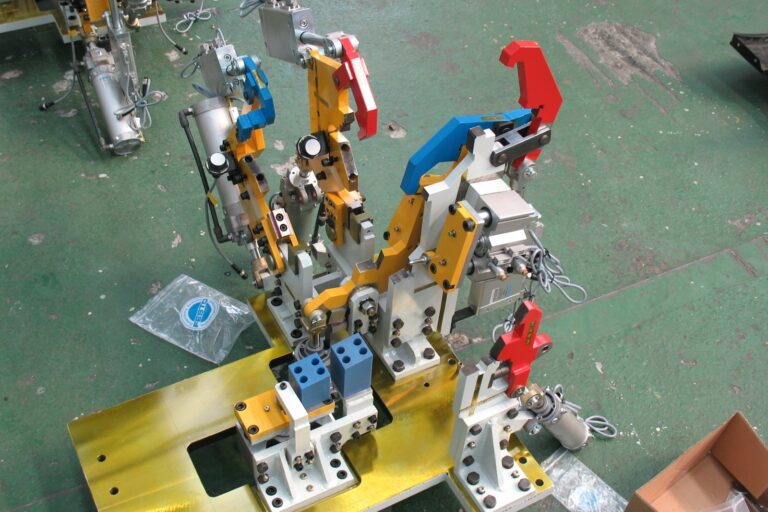
Manufacturing job openings are climbing because factories need workers who can run robots, not just assembly lines. The sector is absorbing trillions in new capital and rewiring itself around AI-driven automation, creating a labor market where technical skills command a premium.
Trillions In Capital Reshore Production
Since the start of the year, the U.S. manufacturing industry has received trillions of dollars of investment from private companies, the federal government and foreign donors, according to Penn State researcher Ilya Kovalenko. The manufacturing sector alone accounts for over 50% of private-sector research and development in the U.S. The bottom line: capital intensity is rising faster than headcount, and the skills gap is the binding constraint.
AI And Robotics Redefine The Factory Floor
Manufacturing research is harnessing rapid developments in artificial intelligence technology to build advanced robots and simulation technology capable of improving factories’ safety and efficiency, Kovalenko said. These developments would be impossible without the unprecedented support the field is seeing. Investors will note the shift: automation targets dull, dirty and dangerous tasks, but deploying and maintaining those systems requires a workforce fluent in data, controls and industrial IT.
Supply Chain Shocks Accelerated The Push
The COVID-19 pandemic and associated supply chain shortages highlighted the importance of domestic manufacturing capability, Kovalenko noted. There is a huge push to “reshore” or bring manufacturing back to the U.S. The backbone of U.S. manufacturing is built on smaller shops struggling to fulfill orders; industrial automation and AI are viewed as the bridge to close the productivity gap with global competitors.
By The Numbers: New Plants, Bigger Payrolls
GE Vernova will invest $34.5 million to expand transformer manufacturing operations at its existing Shreveport, Louisiana, facility to meet rising demand for electrical grid equipment. The investment is expected to increase the workforce at the factory by nearly 30%, with production reaching full capacity by 2028. The state of Louisiana offered the company a “competitive” incentive package that includes a $300,000 performance-based grant for site and infrastructure improvements, plus participation in Quality Jobs and Industrial Tax Exemption programs.
In Pennsylvania, Brunk Industries secured a $31.7 million investment to expand operations in Armstrong County, creating 64 new jobs over four years and retaining 11 existing positions. The Commonwealth committed over $4.1 million in support, including a $4 million PIDA loan and a $160,000 WEDnetPA grant to train workers. Since taking office, the Shapiro Administration has competed for and won over $41 billion in private sector investments creating over 25,000 new jobs.
The Figure That Matters: Skills Over Headcount
Manufacturing is the creation or production of goods with the help of equipment, labor, machines, tools, and chemical or biological processing or formulation. The sector is closely connected with the engineering and industrial design industries. As capital pours into advanced facilities, the demand curve bends sharply toward technicians, programmers and engineers who can commission, optimize and repair automated cells — not toward traditional line operators. The figure that matters is not total hiring but the rising ratio of skilled-trade openings per million dollars of new capex.
Sources
- Manufacturing
- Manufacturing Energy and Carbon Footprints (2018 MECS)
- Creating Jobs in Armstrong County: Governor Shapiro Secures $31.7 Million Investment from Brunk Industries to Expand Manufacturing Operations, Creating 64 New Jobs – PA Department of Community & Economic Development
- Q&A: How is American manufacturing evolving with AI and robotics? | Penn State University
- Iran accuses US of ‘manufacturing fake news about imaginary talks’
- GE Vernova to spend $34.5M expanding Louisiana transformer manufacturing capacity
Photo: Mixabest (CC BY-SA 3.0)