The Bab el-Mandeb strait is 20 miles wide at its narrowest point. A single sunken ship, a minefield laid in darkness, a missile aimed at a tanker — any of these could shut it. Iran has now publicly threatened to do exactly that.
Brigadier General Ebrahim Zolfaghari, the official spokesperson for Iran’s Khatam al-Anbiya Central Headquarters, told state media Wednesday that if the American naval posture in the Persian Gulf continues, Tehran will consider the Red Sea a closed zone for maritime traffic. No timeline was given. No mechanism was specified. But the statement marks the first time Iran has openly raised the prospect of blocking that waterway.
The Red Sea is not the Strait of Hormuz. That is the point.
For weeks, the crisis has centered on the narrow mouth of the Persian Gulf, through which roughly 20% of the world’s oil moves. Iran had already threatened to shut that chokepoint. Now it has expanded the map. The Bab el-Mandeb is the southern gate to the Red Sea, the funnel through which container ships and oil tankers pass on their way to the Suez Canal. From there, goods move to Europe and the Mediterranean. Close the Bab el-Mandeb, and you cut a major artery of global trade.
The threat comes in response to what Iran calls an illegal naval siege. The United States describes its enhanced naval presence in the Persian Gulf and the Gulf of Oman as a “defensive maritime security operation.” The Pentagon has not confirmed a formal blockade. Iranian officials use that word anyway. The Khatam al-Anbiya headquarters, which coordinates all joint military operations for Iran’s General Staff, is the body that issued the warning.
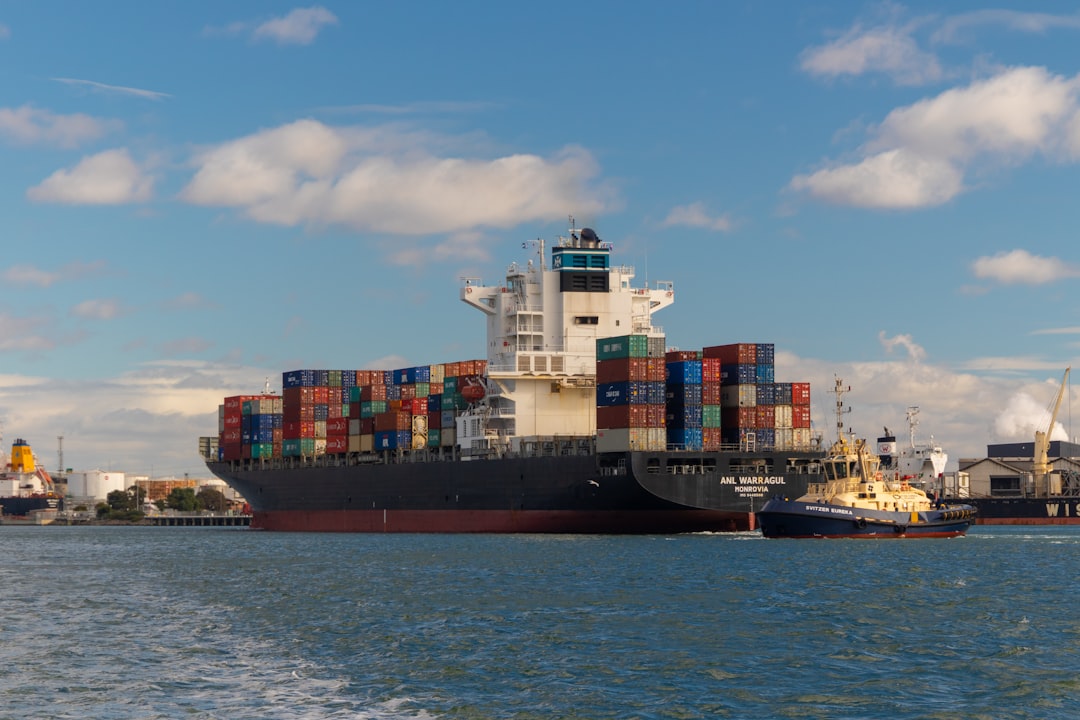
What is genuinely at risk is not abstract. The Red Sea route carries tankers loaded with crude from the Middle East and container ships carrying manufactured goods from Asia to European ports. Any disruption there sends insurance premiums soaring, reroutes vessels around the Cape of Good Hope — adding weeks to voyages and millions to costs — and tightens global supply chains that have only recently recovered from the pandemic-era chaos. A closure of the Bab el-Mandeb would not be a symbolic act. It would be a material blow to economies that depend on just-in-time delivery and stable energy prices.
Iran has not said how it would close the strait. Mines are one option. Anti-ship missiles are another. The Revolutionary Guard has invested heavily in both. The U.S. Navy has invested heavily in countering them. That is the standoff now moving into a second theater.
Zolfaghari’s statement did not specify what would trigger the Red Sea closure. It tied the threat to the continuation of the American naval operation. That operation, according to Washington, is aimed at interdicting Iranian weapons shipments and preventing attacks on commercial vessels. Iran sees it as a blockade. Those two interpretations do not need to be reconciled for the situation to be dangerous.
The Strait of Hormuz remains the more immediate flashpoint. But the Red Sea threat changes the calculation for countries that are not directly involved in the Persian Gulf confrontation. Egypt, which collects billions in Suez Canal transit fees. Saudi Arabia, whose western ports sit on the Red Sea. Israel, whose southern port of Eilat opens onto the same body of water. European nations that rely on the Suez route for trade with Asia. All of them now have a stake in a crisis that, until Wednesday, seemed contained to the Gulf.
Iran has a history of following threats with action, though not always directly. In 2019, it was accused of attacking tankers off Fujairah. In 2020, it was blamed for a mine attack on an Israeli-owned ship in the Gulf of Oman. The pattern is asymmetric, deniable, calibrated. A Red Sea closure could take the same form — not a formal blockade announced at sea, but a series of incidents that make the route too dangerous to use.
The Khatam al-Anbiya headquarters did not say when that might begin. It did not say how. It said the Red Sea would be considered a closed zone. That is enough.