The Dutch hosts had waited decades for this. When the 2025 NATO summit finally arrived in The Hague, it was the first time the Netherlands had ever played host to the alliance’s top table. And it came with a new secretary general who knows the city’s streets: Mark Rutte, the former Dutch prime minister and a Hague native, took the chair for the first time as the thirty-two member states gathered.
What they came to talk about was money. Big money. Five percent of GDP, to be exact — the new target member states pledged to hit for defence spending. That number is not a rounding error. For most NATO countries, it represents a near-doubling of current military budgets. The summit made plain that the alliance expects its members to pay up, and pay up hard.
The stakes are concrete. A five-percent floor means more ships, more jets, more ammunition stockpiles. It means national treasuries reordering priorities. It means voters in Berlin, Paris, and Rome being asked to accept that security now costs twice what it did a few years ago. The pledge from The Hague will land in capitals as a binding political promise — and the failure to deliver it would be a failure visible to every ally and every adversary.
Not everyone who was invited showed up. The summit marked a deliberate push to bring non-Atlantic partners into the room. Australia and South Korea were on the list. But only two nations from the Asia-Pacific actually sent representation: Japan dispatched a senior-level delegation, and New Zealand sent its prime minister. The gap between invitation and attendance tells its own story about how far NATO’s reach actually extends beyond Europe and North America.
Still, those who came mattered. Their presence signaled that the alliance is no longer content to treat security as a purely transatlantic concern. The discussions on the floor covered defence spending and regional security — two subjects that now link Europe directly to the Indo-Pacific. What happens in the Taiwan Strait or the South China Sea is no longer a distant concern for NATO planners. The Hague made that official.
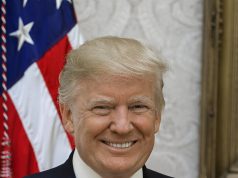
On the sidelines, the real work happened in rooms away from the cameras. US President Donald Trump met with Ukrainian President Volodymyr Zelenskyy. The two men talked about regional security and defence cooperation — the kind of language that, in plain terms, means weapons, aid, and the shape of continued American support for Kyiv. Trump also sat down with Turkish President Recep Tayyip Erdoğan. That meeting underscored a relationship that has at times been fractious within the alliance but remains central to NATO’s southern flank.
These bilateral meetings are where the summit’s real consequences get set. A public pledge of five percent is a headline. But a private conversation between Trump and Erdoğan can shift military deployments, change procurement decisions, or ease a diplomatic blockade. The Hague summit produced both the visible and the invisible.
The Netherlands got its moment. The new secretary general got his debut. And the alliance got a new spending target that will test every member government’s political will. What happens next is not a question for the summit hall. It is a question for finance ministries, defence ministries, and parliaments across thirty-two countries. The pledge is made. The bill is due.