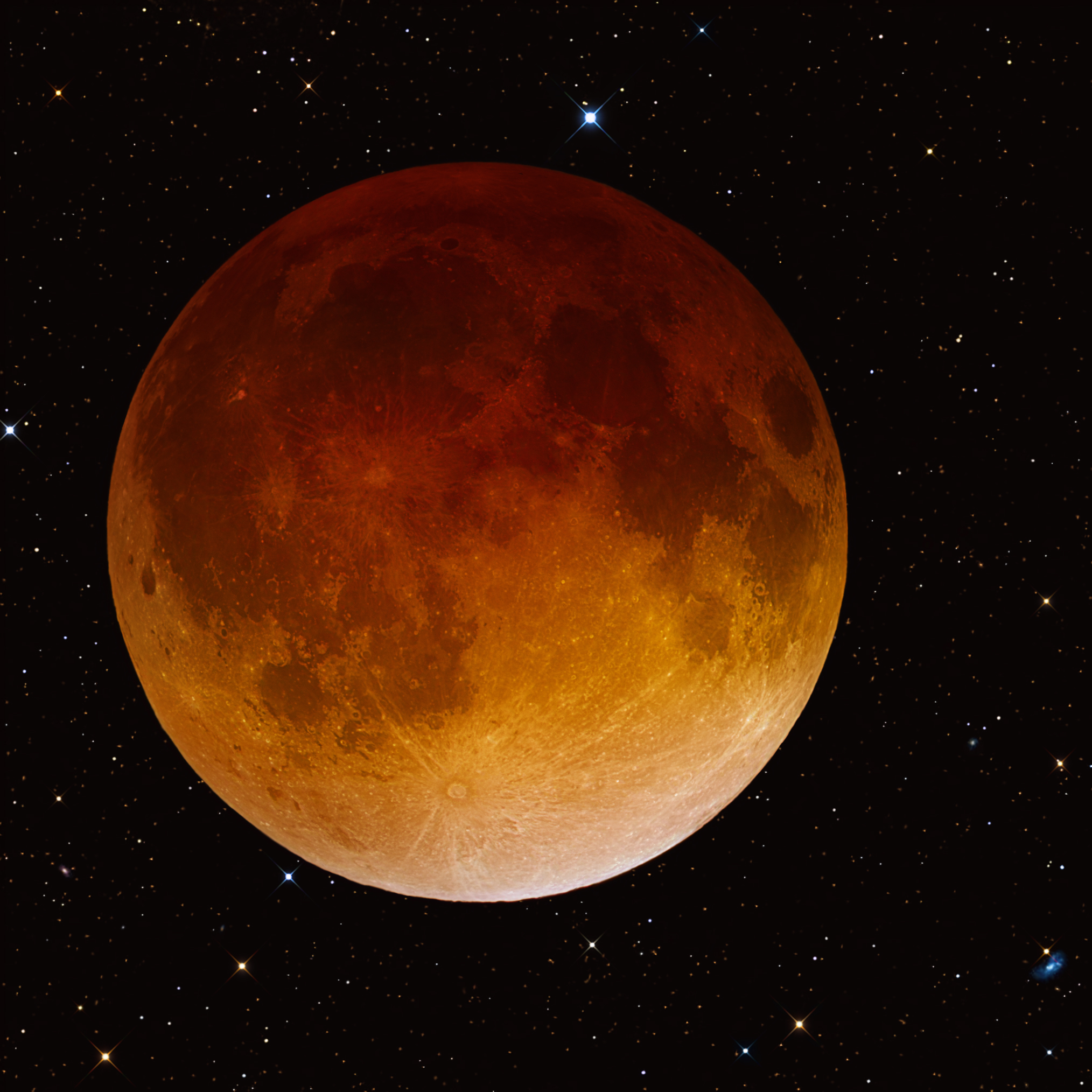
A total lunar eclipse is unfolding in the morning hours across the Western Hemisphere, a rare and awe-inspiring spectacle that has captivated astronomers and sky gazers alike. As the Moon orbits through Earth’s shadow, it assumes a reddish hue, an phenomenon often referred to as a “blood moon”. This event is a reminder of the wonders that await us in the night sky, and the advances in technology that allow us to study and appreciate these occurrences with unprecedented precision.
The mechanics behind a lunar eclipse are fascinating, and involve the intricate dance of celestial bodies in our solar system. When the Moon’s orbital plane is approximately in line with Earth and the Sun, the stage is set for an eclipse to occur. The type and length of the lunar eclipse depend on the Moon’s proximity to the lunar node, a point where the Moon’s orbit intersects with the Earth’s orbit around the Sun. This alignment is a prerequisite for an eclipse to take place, and astronomers carefully track the Moon’s movements to predict when and where these events will occur.
Lunar Eclipses: A Treat for Sky Gazers
In contrast to solar eclipses, which are often fleeting and require specialized eye protection to observe safely, lunar eclipses can be enjoyed from anywhere on the night side of Earth without any risk to the viewer. This makes them a popular event among astronomy enthusiasts, who can gather to witness the Moon’s transformation into a deep orange or red color as it passes through the Earth’s umbra. The umbra, the innermost and darkest part of the Earth’s shadow, is responsible for the Moon’s distinctive coloration during a lunar eclipse, a phenomenon that has captivated human imagination for centuries.
The fact that lunar eclipses can last for an hour or longer makes them a unique opportunity for scientists to study the Earth’s shadow and its effects on the Moon. By analyzing the Moon’s behavior during an eclipse, researchers can gain insights into the Earth’s atmosphere and the way it interacts with the Sun’s light. This knowledge can, in turn, inform our understanding of the Earth’s climate and the potential impacts of celestial events on our planet. As our technology continues to evolve, we can expect to learn even more about the complex relationships between the Earth, Moon, and Sun.
As we gaze up at the blood moon, we are reminded of the vast and unexplored mysteries of the universe, and the many wonders that await us in the night sky. The total lunar eclipse of March 14, 2025, is a powerful symbol of human curiosity and our drive to explore and understand the world around us. As we continue to push the boundaries of scientific knowledge and technological innovation, we can expect to uncover even more secrets of the universe, and to develop new ways to study and appreciate the beauty of celestial events like lunar eclipses.
Looking to the future, it is clear that advances in technology will play a major role in shaping our understanding of the universe and the events that unfold within it. From sophisticated telescopes to advanced computer simulations, the tools at our disposal will continue to improve, allowing us to study celestial events like lunar eclipses with unprecedented precision. As we look up at the night sky, we are not just witnessing a rare and awe-inspiring spectacle – we are also witnessing the beginning of a new era of scientific discovery and exploration, one that will take us to the farthest reaches of the universe and back again.