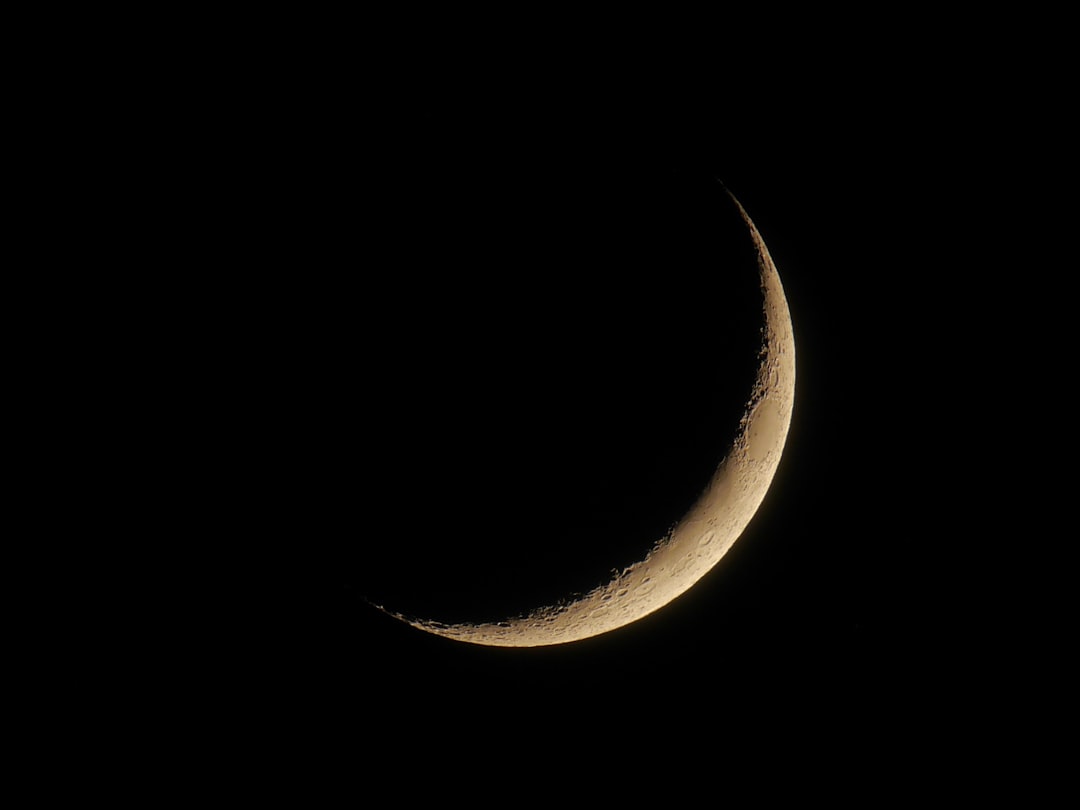
It began as a slow bite into the moon’s edge. Over hours, Earth’s shadow crept across the lunar surface, dimming a portion of it to a coppery grey. For observers across the Americas, Greenland, Africa, Europe, and Asia, the partial lunar eclipse of September 17-18 was a visible reminder of orbital mechanics at work.
Lunar eclipses happen only during a full moon, when the Sun, Earth, and Moon line up in a straight line. The Moon passes into Earth’s shadow. This one was partial, not total. That means only part of the Moon entered the darkest part of that shadow, the umbra. The rest stayed lit by direct sunlight. The event began on the evening of September 17 and ended on the morning of September 18, spanning the overnight hours across multiple time zones.
Why September? The timing is tied to the Moon’s orbital path. Its orbit is tilted about five degrees relative to Earth’s orbit around the Sun. Most months, the full moon passes above or below Earth’s shadow. Two or three times a year, the alignment is close enough for an eclipse. This was one of those alignments.
The Americas offered prime viewing. The continent’s vast landmass, from the northern reaches of Canada down to the southern tip of South America, gave millions a direct line of sight. The American Cordillera, the long chain of mountains running along the west coast, provided a dramatic foreground. People in the flat eastern regions saw the same event from a different angle. The continent’s varied topography meant no two views were exactly alike.
But the event was not limited to the Americas. It was visible across a wide swath of the Eastern Hemisphere as well. Africa, Europe, and parts of Asia all had a window. That gave the eclipse a genuinely global audience. People in different countries, speaking different languages, watched the same shadow cross the same moon.
Partial eclipses are more common than total ones. They do not produce the deep, blood-red coloration of a total lunar eclipse, when the Moon is fully within Earth’s shadow and only red wavelengths of sunlight bent through Earth’s atmosphere reach it. In a partial eclipse, the shadowed portion takes on a darker, greyer tone. The contrast between the bright, sunlit part and the shadowed part is stark.
This event was a straightforward piece of celestial mechanics. No special equipment was needed to see it. Just clear skies and a view of the moon. That accessibility is part of why lunar eclipses draw attention. They do not require telescopes or dark skies. They happen in plain sight.
The eclipse was a reminder of the Earth’s place in the solar system. The shadow that fell on the moon was Earth’s own shadow. Watching it, people saw the planet’s shape projected onto another world. That is the geometry of the event. The Earth, a sphere, casts a cone-shaped shadow into space. The moon passed through a slice of that cone.
For the people who watched, the eclipse was a shared experience across continents. It connected observers in the bustling cities of North America with those in the vibrant cultures of South America. It linked viewers in Europe with those in Africa and Asia. The event itself was brief, a few hours in the night. But the sense of a global community watching together lingered.