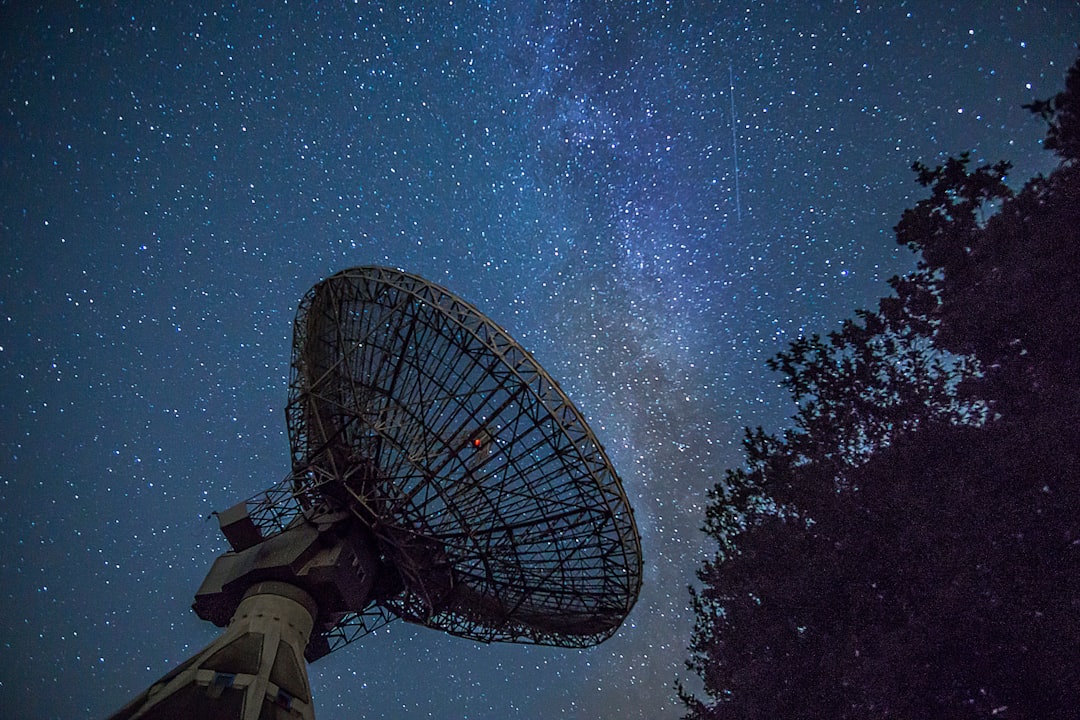
The Wow! signal, that famous 72-second radio blip from 1977, now has an explanation. And it changes nothing — and everything.
Scientists announced on August 16, 2024, that the signal was likely caused by a sudden brightening of a cold molecular cloud, triggered by a stellar emission. A rare astrophysical event, they said. Not aliens.
For decades, that signal was the closest thing to proof that someone else was out there. It was strong. It was narrowband — exactly the kind of transmission astronomers had predicted an intelligent civilization might send. It came from the direction of Sagittarius. It lasted the full 72 seconds the Big Ear telescope could watch. And then it vanished. Never again detected.
Now it has a natural cause. The search for extraterrestrial intelligence just lost its most famous candidate.
That matters. Not because the signal was ever confirmed as alien — it wasn’t. But because it was the one example that kept the public’s attention fixed on the hunt. The one anomaly that even skeptics had to pause over. Jerry R. Ehman, the Ohio State University astronomer who spotted the reading on August 15, 1977, circled the alphanumeric code “6EQUJ5” and wrote “Wow!” in red ink. That moment became a cultural landmark.
Those who follow SETI — the search for extraterrestrial intelligence — now face a harder road. The Wow! signal was a storytelling tool. It was the hook that let researchers say: Look, here’s something we cannot explain. Here’s why we keep listening.
That hook is gone.
The new explanation is natural. It is intriguing, the scientists said. It is also a closed door. A cold molecular cloud, suddenly brightened by a stellar emission, produced a narrowband radio blast that mimicked a transmission. It was a one-time event. A cosmic coincidence. The signal pointed toward Sagittarius, but it did not point toward a civilization.
For the Big Ear telescope, which was dismantled years ago, this changes nothing. The observatory is gone. The data tapes are archived. But for the living SETI projects — the Allen Telescope Array, the Breakthrough Listen initiative, the ongoing scans at Arecibo’s successor facilities — the news is a reminder of how hard this work really is.
One signal in forty-seven years. And it was a cloud.
That does not mean the search is pointless. It means the search is harder than anyone hoped. The Wow! signal had all the hallmarks of a transmission. It was strong. It was narrowband. It lasted exactly as long as the telescope could watch. It looked deliberate. And it was not.
What happens next is simple. Researchers keep listening. They keep scanning. But they do so knowing that the most promising signal ever detected was a natural event. That knowledge changes how they filter data. It changes how they prioritize follow-up observations. It changes the standard of proof.
For the public, the change is different. The Wow! signal was a story people wanted to believe. It was proof that the universe might not be silent. Now the silence has a new explanation. It is not that no one is out there. It is that even when something looks like a message, it might just be a cloud.
The announcement on August 16 did not close the search. It closed one chapter. And it left every future signal with a higher burden of proof. A rare astrophysical event can mimic a transmission. That is now a fact. Every SETI team will have to rule it out before they can get excited.
That is the real consequence. Not that the Wow! signal is solved. But that the next one — if there is a next one — will have to be even stranger to be believed.