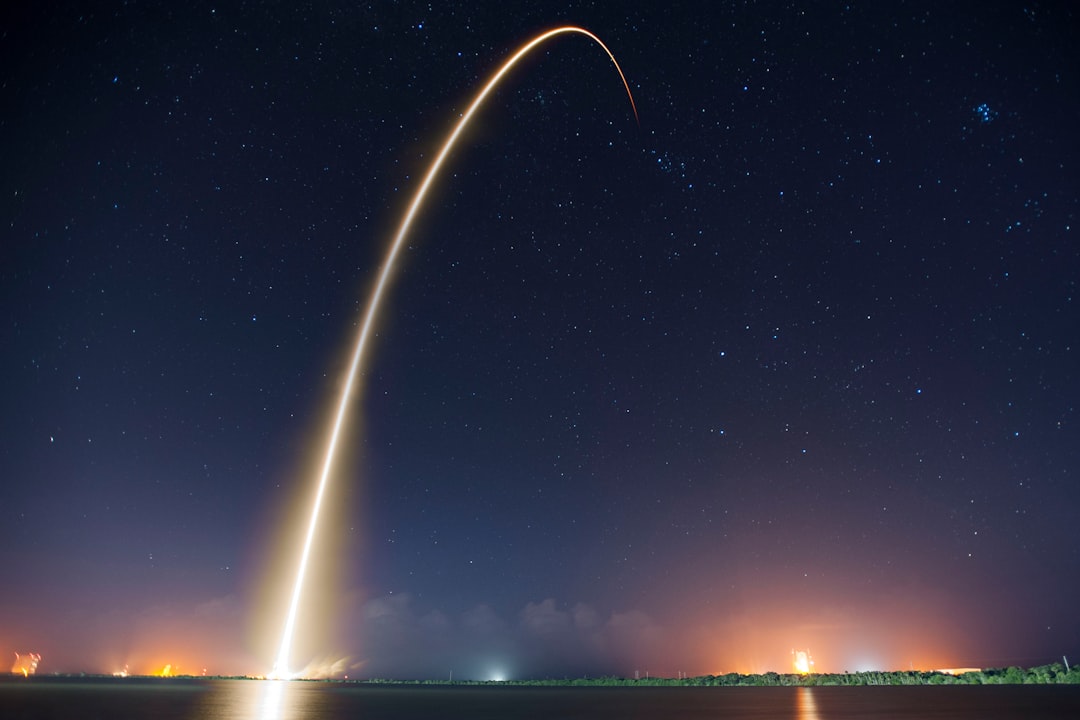
On May 3, 2024, a Long March rocket lifted off from Wenchang Space Launch Site carrying China’s Chang’e 6 spacecraft. The destination: the far side of the Moon. The mission: collect rock and soil samples and bring them home. It is a two-month journey.
This is not China’s first lunar sample return. That was Chang’e 5, which brought back material from the Moon’s near side in 2020. But this time, the target is different. The far side of the Moon remains largely unexplored. No spacecraft has ever retrieved samples from there. If Chang’e 6 succeeds, it will be a first.
The China National Space Administration runs the mission. CNSA was established in 1993, headquartered in Haidian, Beijing, under the Ministry of Industry and Information Technology. It has built a record of steady, incremental progress. In 2019, it landed Chang’e 4 on the far side — another first. No other space agency had done that. Now it is trying to bring pieces of that same remote landscape back to Earth.
Why the far side matters. It is geologically distinct from the near side. The crust is thicker. There are fewer maria — the dark volcanic plains that cover much of the near side. Samples could reveal differences in the Moon’s composition and history. Scientists want to know how the two sides formed, and why they are so different. Those answers are locked in the rocks.
The mission builds directly on earlier work. Chang’e 4 proved landing and operating on the far side was possible. Chang’e 5 proved sample return worked. Chang’e 6 combines both capabilities. It is a logical next step, not a leap.
China’s space program has moved methodically. Human spaceflight. A space station. Lunar orbiters. Landers. Rovers. Sample return. Each mission adds to the next. The pace has accelerated in recent years. The 2020s have seen a string of high-profile achievements. Chang’e 6 is the latest.
The launch itself was routine by CNSA standards. The Wenchang site on Hainan Island has hosted multiple lunar missions. The Long March rocket family is the workhorse of China’s space efforts. No drama. Just liftoff.
The hard part comes later. The spacecraft must enter lunar orbit, descend to the surface, collect samples, launch back into orbit, rendezvous with the return vehicle, and fly home. Every step has been done before — but not all on the same mission, and not on the far side. Communication is a challenge. The far side never faces Earth. A relay satellite is needed to send signals around the Moon.
China already has that satellite in place. It launched Queqiao-2 in March 2024, specifically to support Chang’e 6. The relay satellite orbits beyond the Moon, maintaining a line of sight to both the lander and ground stations on Earth. Without it, the mission would be impossible.
The stakes are straightforward. Success means China becomes the first country to retrieve samples from the far side of the Moon. Failure means a setback, but not a fatal one. CNSA has other missions planned. Chang’e 7 and Chang’e 8 are in development. A crewed lunar landing is on the horizon. This is one step in a longer march.
For now, the spacecraft is in transit. The two-month clock is ticking. Scientists wait. The far side keeps its secrets a little longer.