For a fraction of a second on November 24, 2023, a single particle carrying the energy of a brick dropped from waist height slammed into the Utah desert. The Telescope Array Project detected it. They named it Amaterasu, after the Japanese sun goddess. Its energy: 244 exa-electronvolts. That is the second-highest energy cosmic ray ever recorded.
The scientific community is now staring at a problem. Cosmic rays at this energy should not exist. The Greisen–Zatsepin–Kuzmin limit, a theoretical ceiling predicted in the 1960s, holds that particles above about 50 EeV should lose energy as they travel through the cosmic microwave background — the faint afterglow of the Big Bang. Amaterasu is nearly five times that threshold. It arrived from somewhere. It should have been shredded along the way. It was not.
This forces a hard question: what could produce such a particle? The usual suspects — supernovae, gamma-ray bursts, active galactic nuclei — are powerful, but 244 EeV pushes past what most models can explain. The Telescope Array Project team has been watching the sky for years from their observatory in Utah. They have the data. They know where Amaterasu came from, roughly. The problem is that direction points to a void. An empty patch of space. Nothing is there that should be able to fire a particle this fast.
That empty direction is what has physicists most interested. If the source is not a known object, the possibilities become stranger. Exotic physics. Topological defects left over from the early universe. Decaying superheavy dark matter. None of these are proven. All of them are now on the table.
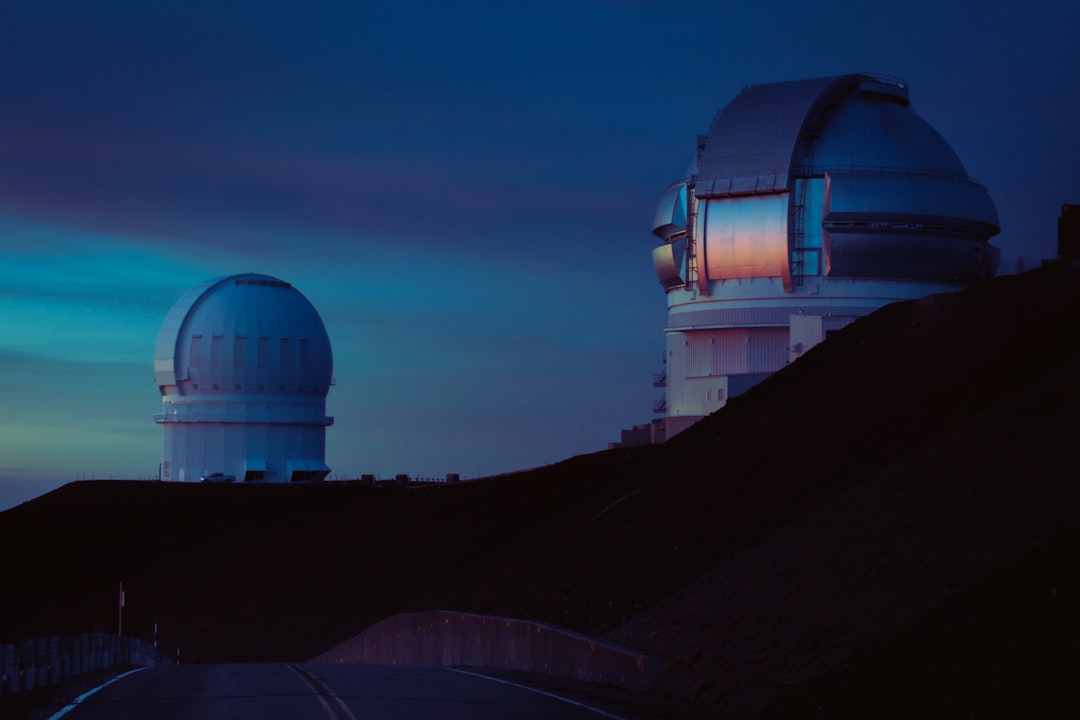
The Telescope Array Project is a collaboration of scientists from multiple countries. They built a grid of detectors across 700 square kilometers of Utah desert. When a cosmic ray hits the atmosphere, it creates a cascade of secondary particles that rain down. The detectors catch those. From the pattern, researchers reconstruct the energy and direction of the original particle. Amaterasu triggered 23 detectors. The signal was unmistakable.
Now the work begins. Other observatories will check their own archives for similar events. The Pierre Auger Observatory in Argentina, the largest cosmic ray detector in the world, has seen one particle at 244 EeV and one above it — the Oh-My-God particle in 1991, which registered around 320 EeV. That is the only one ever found that was more energetic than Amaterasu. Two particles in 33 years. They are not common.
The implications stretch beyond astronomy. Particles at these energies probe physics at scales no human-built accelerator can reach. The Large Hadron Collider runs at teraelectronvolt energies. Amaterasu was a million times more powerful. Studying how it interacts with the atmosphere, how it fragments, how it decays — that is data. Data that might show cracks in the Standard Model of particle physics.
No one is claiming a discovery yet. The Telescope Array Project will publish their analysis. Other groups will try to replicate or contradict their findings. That is how science works. But the existence of Amaterasu, sitting in the data from last November, is a fact. It happened. The energy was real. The direction was empty. Something made it. Something out there.
The search for that something is what comes next. Astronomers will scan that void with every instrument they have. Radio telescopes. Gamma-ray observatories. Neutrino detectors. If the source is exotic, it might leave other traces. If it is a fluke — a statistical accident of how the particle scattered — that will take years to determine. Either way, the Amaterasu particle has already done its job. It has shown that the universe still holds surprises. And it has given the Telescope Array Project a reason to keep watching.