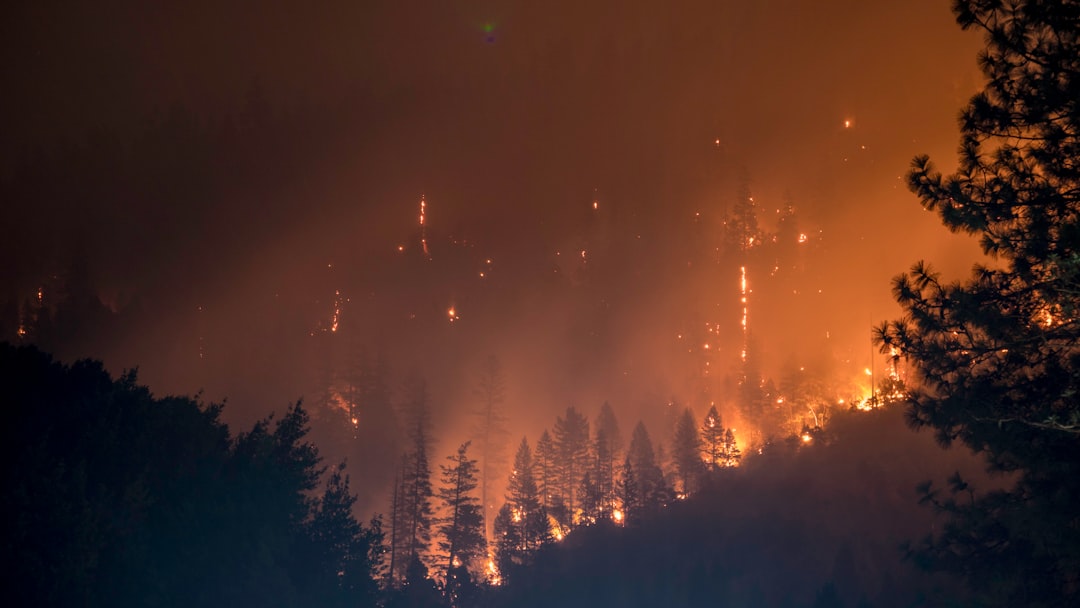
Five villages sit empty tonight along Greece’s northeastern border with Turkey. Their residents have fled. A wildfire, still burning out of control, drove them out.
The fire has already destroyed homes. It has swept through the region, leaving ash and ruin. Emergency services — firefighters, police, medical teams — are on the ground. They are working to contain the blaze. They are not winning yet.
The Greek government ordered the evacuations as a precaution. The goal is straightforward: prevent loss of life. No one has reported casualties. That is the one piece of good news in a day defined by smoke, heat, and loss.
But the evacuation itself carries a heavy cost. People have left behind everything. Their houses. Their belongings. Their land. Many of these families depend on agriculture and tourism for their livelihoods. Both are now in jeopardy. Fields that took years to cultivate are burning. Guesthouses that brought summer income are gone. The economic impact will not be measured in days. It will take years to calculate — and longer to recover from.
The local ecosystem is also taking a hit. Vast tracts of land have been reduced to ashes. Recovery for the environment will be slow. The region’s natural landscape, which drew visitors and sustained farmers, is charred. That damage does not end when the flames go out.
The fire is near the border with Turkey. That geography matters. It is a remote area, harder to reach, harder to supply. The authorities are coordinating with local officials to account for every resident. They are urging calm. They are asking people to follow instructions. The situation on the ground is deteriorating by the hour. That is not a prediction. It is a description of what is happening now.
The Greek government has deployed significant resources. But the fire is still burning out of control. The coming hours will be critical. That is not a cliché. It is a statement of fact. If the wind shifts, if the fire jumps a containment line, the damage will spread. More villages could be threatened. More homes could fall.
For now, the priority is keeping people alive. The evacuation achieved that. The next priority is stopping the fire. That remains uncertain.
This is not a disaster that happened yesterday and will be cleaned up tomorrow. The destruction is ongoing. The economic consequences will ripple through families who relied on the land. The environmental toll will be visible for a generation. The five villages are empty. The fire is still burning. The outcome is not yet written.