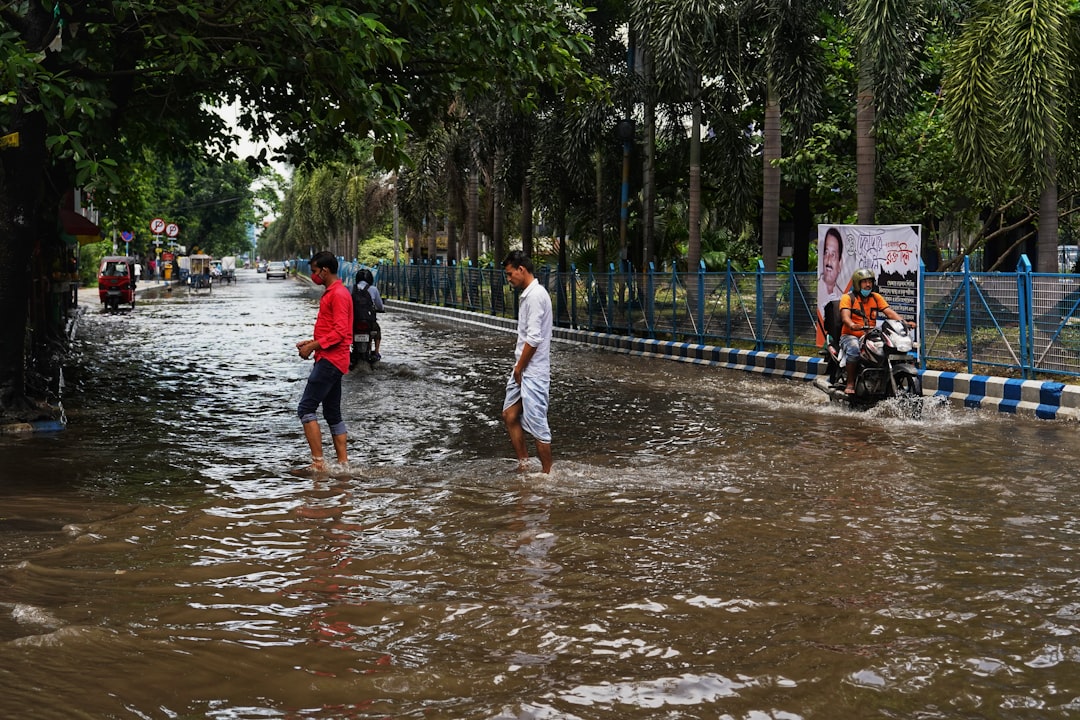
The Himalayan foothills of northern India are steep terrain. Heavy rain falls. The ground gives way. Fifteen people are dead after landslides and flooding tore through the region. This is the blunt arithmetic of the latest disaster. But the numbers that matter stretch beyond the body count.
India sits on a geographic knife-edge. The Indian Ocean, the Arabian Sea, and the Bay of Bengal wrap three sides of the country. To the north, the Himalayan range — a wall of rock and ice — shares borders with China, Nepal, and Bhutan. That mountain chain is steep. It is young. It is unstable. When monsoon rains hammer those slopes, the soil saturates. The hillsides fail. The water funnels into narrow valleys. Villages are in the way.
The dead are the immediate cost. The wider risk is harder to tally. This is the world’s most populous democracy. Over 55,000 years of human habitation have shaped the subcontinent. Ancient civilizations rose here. Colonial rule came and went. Independence arrived in 1947. Now, more people live inside India’s borders than anywhere else on Earth. That density collides with geography every monsoon season.
Urbanization and industrialization are racing forward. Cities swell. Roads cut through hillsides. Forests are cleared for farmland and construction. Each tree felled, each slope excavated, each drainage channel blocked — each is a small bet against the weather. The weather keeps collecting.
The vulnerability is not abstract. It is a matter of where people live and how they live. The Himalayan region is particularly susceptible. Steep terrain and heavy rainfall are a lethal combination. The soil cannot hold. The water has nowhere to go but down, carrying debris and destruction with it.
What is at stake is not just the immediate survival of communities in the path of the next storm. It is the long-term habitability of whole regions. Deforestation strips the land of its natural anchors. Pollution chokes rivers and streams. Development eats into floodplains and unstable slopes. The same forces that drive India’s economic growth are also deepening its exposure to disaster.
The country faces a grinding contradiction. It needs to build. It needs to house, feed, and employ a vast and growing population. But the way it builds, the pace of it, the places it chooses — these decisions determine whether the next landslide kills 15 or 150. Sustainable environmental practices are not an afterthought. They are the difference between a bad season and a catastrophe.
India’s history runs deep. Modern humans arrived from Africa more than 55,000 years ago. Civilizations flourished. Empires rose and fell. The subcontinent has undergone significant transformations. But the physical landscape — the mountains, the coasts, the monsoon — has always set the terms. Those terms are not negotiable.
Fifteen people are dead. Their families are grieving. The aftermath is about rescue, relief, and rebuilding. But the real work is before the next rain. The question is whether the country can match its ambition with restraint. Whether it can develop without dismantling the natural systems that keep its people alive. That is the stakes. That is what this event makes plain.