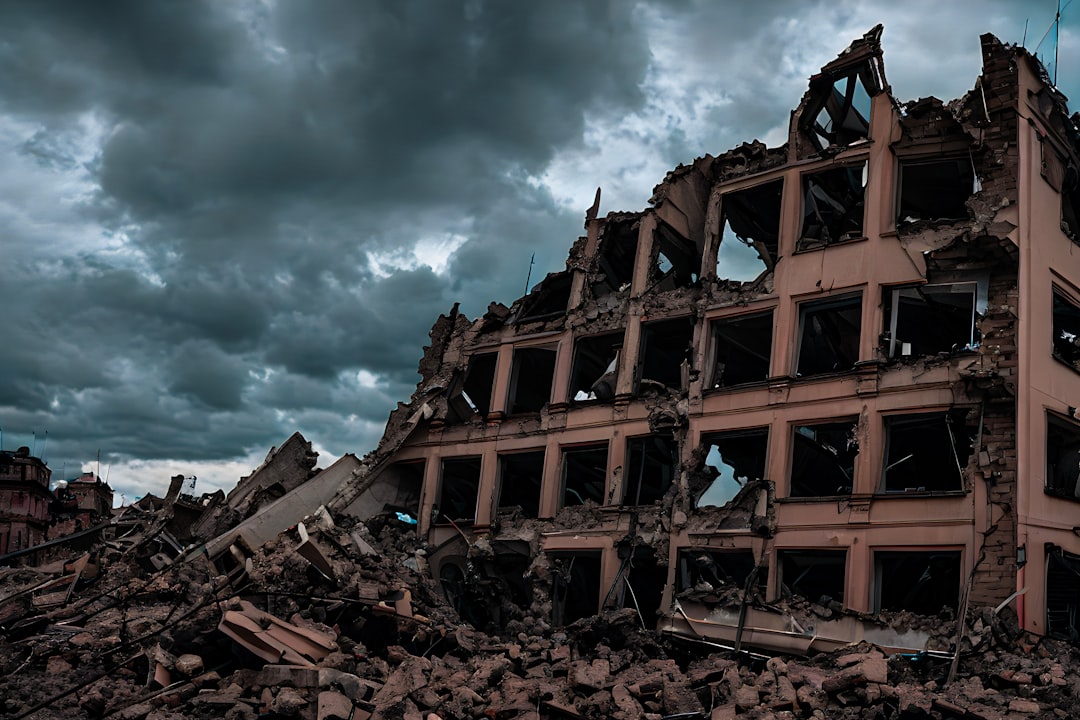
Friday morning in Niort, a city of about 60,000 people in western France, started with the ground shaking. A magnitude 4.8 earthquake hit the area at shallow depth. Two people were hurt. Hundreds of buildings took severe damage. The tremor was rare for this part of the country. The Nouvelle-Aquitaine region is not known for earthquakes. That fact is now the center of the problem.
The buildings did not hold up. Many are old stone structures in the city center. They were built long before modern seismic codes existed. Those codes are designed to make buildings flex and absorb shaking. These buildings did not flex. Masonry crumbled. Windows shattered. People ran into the streets. Emergency services treated two people for minor injuries from falling debris. That number could have been much higher. The risk is written into the age of the city itself.
Niort is not alone. Across mainland France, vast stretches of the building stock predate any serious earthquake engineering. The Alps, the Pyrenees, and parts of Provence see more tremors. Those regions have some awareness, some preparation. Nouvelle-Aquitaine did not. The shock Friday was a direct hit on a vulnerability no one was watching closely.
Engineers and building inspectors were dispatched immediately. They are now evaluating damage. Some structures are already marked for demolition. Others need extensive repair. The full assessment is not done yet. Local authorities confirmed hundreds of buildings are severely compromised. That is a concrete number. It means hundreds of families may be displaced. It means millions of euros in repairs. It means a city’s historic core, a draw for tourism and local identity, is suddenly uncertain.
France has seismic activity. The most active zones are overseas territories: New Caledonia, Martinique, Guadeloupe, Wallis and Futuna, Réunion. Those places build for it. Mainland France largely does not. The event in Niort was a 4.8 magnitude earthquake. That is not a huge quake on the global scale. But it was big enough to show what happens when a region is not ready. The stakes are not just about this one city. They are about every older town in a quiet seismic zone that gets a wake-up call.
Friday’s tremor disrupted daily life. Streets filled with people. Work stopped. The two injured individuals were treated and released. Their injuries were not life-threatening. But the structural damage is a longer-term problem. The buildings that failed were the vulnerable ones. The ones that will need years to fix or replace. The ones that represent a gap in planning.
The earthquake was a jarring event for residents. That is an understatement. It was a rare event in a region that does not expect them. The rarity is exactly what makes it dangerous. When a place does not expect earthquakes, it does not build for them. It does not retrofit. It does not plan. Then a 4.8 hits, and the old stone walls come down.
What is at stake now is the safety of the people who live in those buildings. The economic cost of repair. The preservation of a historic city center. And the broader question of whether other quiet zones in mainland France are equally exposed. The damage in Niort is a specific, local event. But the risk it reveals is not local at all. It is sitting in every town that has old buildings and no recent earthquake.