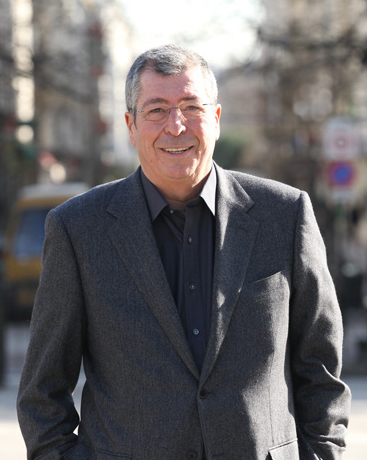
According to French Wikipedia and local-language media reports, Patrick Balkany, a former French mayor of Levallois-Perret, has been jailed again over a tax-fraud sentence. As a member of the Rassemblement pour la République (RPR) and later the Union pour un mouvement populaire (UMP) and Les Républicains (LR), Balkany has had a long and complex career in French politics.
Balkany was born on August 16, 1948, in Neuilly-sur-Seine, and has served as the mayor of Levallois-Perret for a total of 31 years, from 1983 to 1995 and again from 2001 to 2020. In addition to his mayoral duties, he was also elected as a député of the 5th circonscription of the Hauts-de-Seine department, which includes Clichy and Levallois-Perret, several times between 1988 and 2017. Furthermore, he served as a conseiller général of the Hauts-de-Seine department from 1982 to 1988. This extensive experience in local and national politics has made him a well-known figure in French politics.
However, Balkany’s career has not been without controversy. He has been involved in several politico-financial affairs, including a 1997 conviction for illegal taking of interests, which resulted in a two-year period of ineligibility. More recently, he and his wife, Isabelle, who also served as his first adjoint, have been pursued for allegedly making false declarations of their assets and laundering tax fraud (source: https://fr.wikipedia.org/wiki/Patrick_Balkany). This case has been ongoing since 2013 and has led to significant media attention and public scrutiny.
In 2019, Balkany was sentenced to three years in prison for tax fraud and was initially incarcerated at the prison of La Santé. However, due to health reasons, he was later placed under surveillance with an electronic bracelet just five months into his sentence. This development is significant for English-speaking readers, as it highlights the ongoing issues of corruption and tax evasion that affect even the highest levels of politics in countries like France. The case of Patrick Balkany serves as a reminder that no one is above the law, regardless of their position or influence.
The implications of this case extend beyond the individual circumstances of Patrick Balkany. It raises questions about the transparency and accountability of political leaders and the need for robust mechanisms to prevent and detect financial wrongdoing. As English-speaking readers, it is essential to be aware of such developments, as they can have far-reaching consequences for international relations, economic cooperation, and the perception of France’s commitment to combating corruption. The fact that a former mayor and député can be involved in such a high-profile case of tax fraud underscores the importance of vigilance and oversight in ensuring that those in power act with integrity.
As the situation continues to unfold, it will be crucial to monitor the developments in Patrick Balkany’s case and the broader context of French politics. What to watch next is how the French authorities and judiciary handle similar cases, and whether this will lead to a renewed focus on combating corruption and ensuring transparency in public life. The outcome of this case may also have implications for the political landscape in France, potentially influencing public opinion and the reputation of political parties and their leaders. As such, it is essential to stay informed about the progress of this case and its potential repercussions.