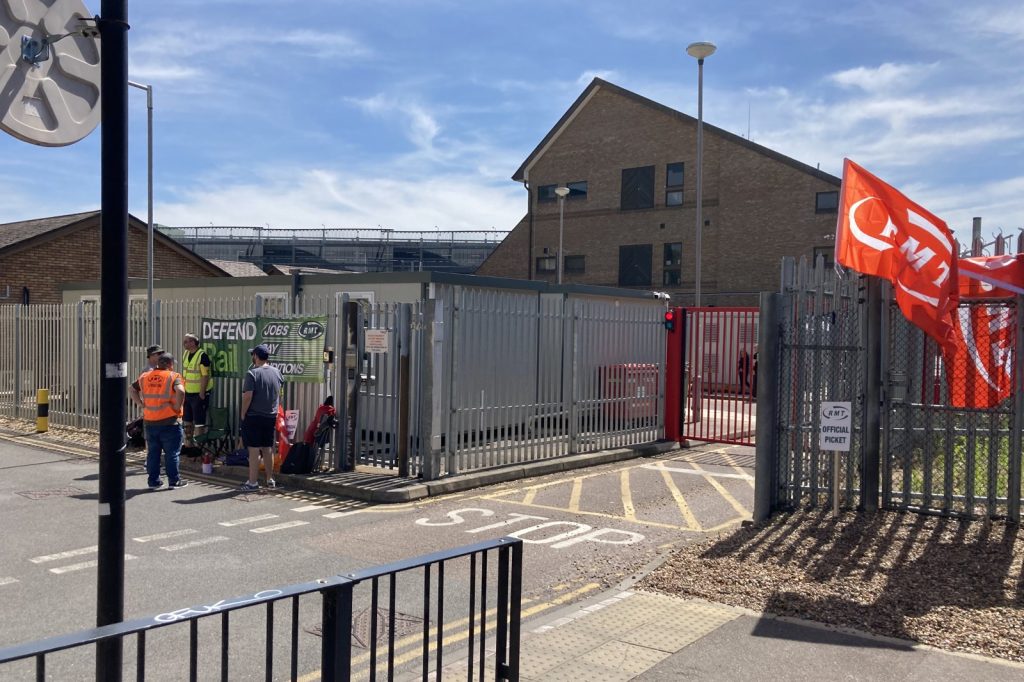
The cost of living had been squeezing household budgets across the United Kingdom for months before the first train drivers walked off the job. When members of the RMT union voted on proposed changes to their pay and working conditions, many households were already struggling to make ends meet.
The strike that began on June 15, 2022, did not come as a surprise to those following the economic trends. It marked a point where patience had run out. On strike days, railway services were severely reduced.
Only one in five trains operated, leaving commuters on platforms watching cancellation boards fill up. Businesses that depend on rail traffic — including cafes near stations, cleaning contractors, and event venues — saw their revenue drop.
The immediate disruption was visible to millions, but the frustration behind it had been accumulating for months. The RMT action did not remain an isolated event. Other railway unions soon joined the dispute.
Following that, workers in telecommunications, the postal service, the legal profession, and freight industries voted for industrial action. The pattern was consistent across sectors: employees said their wages no longer covered basic expenses.
Inflation was rising faster than pay, and the gap between costs and income continued to widen. This was not a single dispute confined to one industry. It became a wave that spread across the economy because the financial pressure was widespread.
People who sort mail, answer phones, load trucks, and argue cases in court all faced the same squeeze on their living standards. Their unions began balloting for action one after another.
Some voted to strike. Others voted for action short of a full walkout. The cumulative effect was a grinding slowdown across large parts of the British economy.
The Enough is Enough campaign provided a public face for the unrest. It organized support for striking workers and framed the disputes as part of a broader struggle over living standards.
The campaign did not create the anger. It channeled something already present — a widespread feeling that the system was not delivering fair pay or decent conditions. Rallies drew crowds, and petitions gathered signatures. The campaign’s message was straightforward: the cost of everything was going up, and wages were not keeping pace.
On the railways, the impact was stark. Normal services collapsed on strike days.
Twenty percent capacity meant packed carriages on the few trains that ran. For those who could work from home, the disruption was an inconvenience. For those who could not — retail workers, hospitality staff, cleaners — it meant missed shifts and lost pay.
The strikes revealed how dependent the economy was on a rail network that was itself under strain. The government faced pressure from both sides.
Business groups called for the strikes to end. Union leaders said their members had no other option. Negotiations dragged on without a quick resolution.
The disputes kept recurring, with one-day stoppages spaced apart but never fully resolved. By summer, the strikes had become a regular feature of British life.
People planned travel around strike calendars. Employers adjusted schedules. The pattern was set: a dispute over pay and conditions, triggered by inflation, sustained by a sense that workers had exhausted their patience.
The RMT vote in June was the first domino. Many more fell after it.
The broader context was simple. Inflation was not a temporary blip. It was persistent.
Prices rose month after month. Wages did not follow.
Workers in rail, post, telecoms, law, and freight all reached the same conclusion: accepting the status quo was no longer possible. The strikes were the result. They were not the cause of the crisis. They were a response to it.