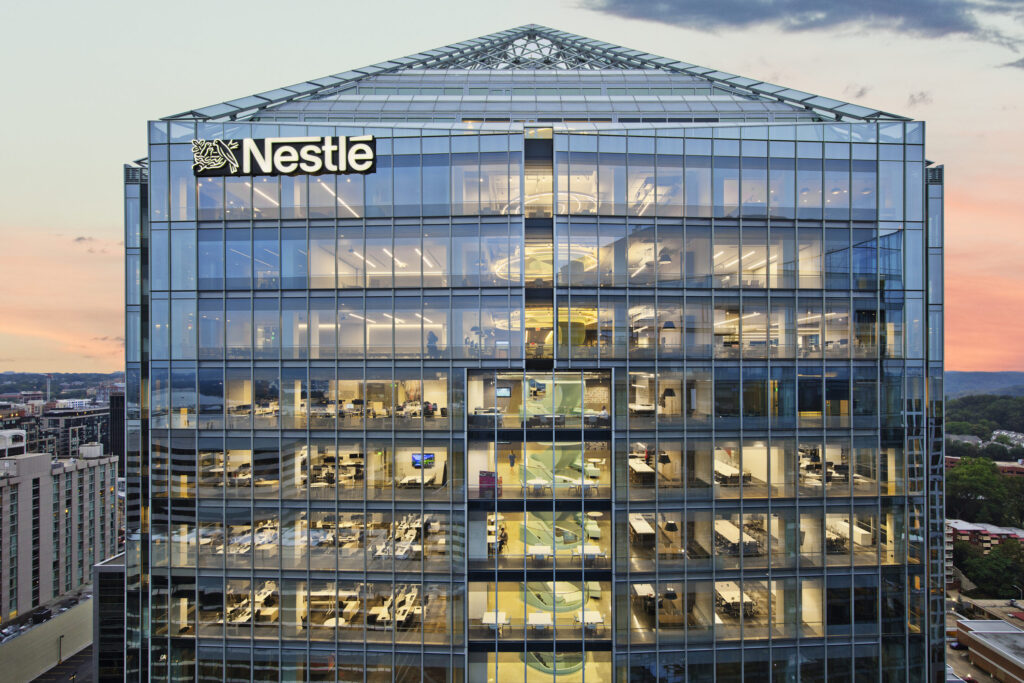
On March 6, 2020, Nestle S.A. unveiled a reforestation initiative that will see at least three million trees planted in Mexico and Brazil by 2021. This marks the first phase of a broader corporate strategy to reach carbon neutrality by 2050.
The Swiss food giant has partnered with the non-profit environmental organization One Tree Planted and the World Resources Institute to determine the most effective locations for planting and to help restore local ecosystems. The initial phase concentrates on two countries where Nestle maintains significant agricultural supply chains. In Mexico, the company operates a coffee-processing plant in Veracruz, which is scheduled to begin operations in October 2020.
According to Nestle’s head of operations, Magdi Batato, the carbon captured by the first million trees planted in that region would eventually offset the emissions generated by that facility. “The carbon captured by the first million trees would eventually be enough to offset the emissions of a coffee-processing plant expected to start operating in October in Veracruz,” Batato stated.
Brazil, a major source of coffee and other commodities for Nestle, serves as the second focus country. The company did not disclose specific planting locations in Brazil but indicated it would collaborate with local partners to restore degraded land.
Cost and Scale of the Project
Reuters reported that the reforestation project would cost up to $45 million for planting alone. The value of each tree ranges from $1 to $15, depending on species, location, and maintenance requirements. Nestle has not revealed the total budget for the full initiative, which will eventually expand beyond the Americas.
The company plans to extend reforestation activities to Africa, Asia, and Oceania, regions it described as vulnerable to climate change impacts. No timeline for those expansions was provided in the announcement.
Protecting Supply Chains Through Environmental Investment
Nestle’s chief executive for the Americas, Laurent Freixe, framed the reforestation effort as a business necessity. He said the company must invest in environmental sustainability to maintain its operations in key countries. “If we want to sustain the economy in this country, if we want to sustain our business in this country, we need to invest in the environment and sustainability, and enhance the biodiversity of the country,” Freixe said.
The reforestation initiative is part of a broader corporate strategy to reduce Nestle’s carbon footprint. The company has pledged to achieve carbon neutrality by 2050, a goal that requires significant changes across its supply chain, including agriculture, packaging, and transportation.
Corporate Pressure and Broader Trends
Nestle joins a growing list of multinational corporations that have made climate-related commitments. Amazon and Microsoft are among the other major companies that have pledged to offset carbon emissions. These announcements come amid increasing pressure from investors and consumers for corporations to take measurable action on environmental conservation.
The reforestation project in Mexico and Brazil is one of the first concrete steps Nestle has taken toward its 2050 target. The company’s partnership with One Tree Planted and the World Resources Institute provides scientific guidance on where trees will have the greatest ecological impact.
These organizations help ensure that planting efforts restore native forests rather than introduce monocultures or invasive species. The initiative also aligns with global reforestation goals. The United Nations has declared 2021-2030 the Decade on Ecosystem Restoration, calling on governments and businesses to reverse land degradation.
Nestle’s tree-planting plan contributes to that broader effort, though its scale remains modest compared to the estimated 1 billion hectares of degraded land worldwide that could benefit from restoration. Nestle’s announcement did not specify how the company will measure the carbon captured by the new trees or how it will verify that the trees survive and grow over the long term.
These are common challenges for corporate reforestation projects, where monitoring and maintenance costs can exceed initial planting expenses. The company’s coffee-processing plant in Veracruz is expected to begin operations later in 2020. If the reforestation proceeds as planned, the first million trees could begin offsetting its emissions within a few years, as young trees absorb carbon dioxide at increasing rates during their early growth stages.