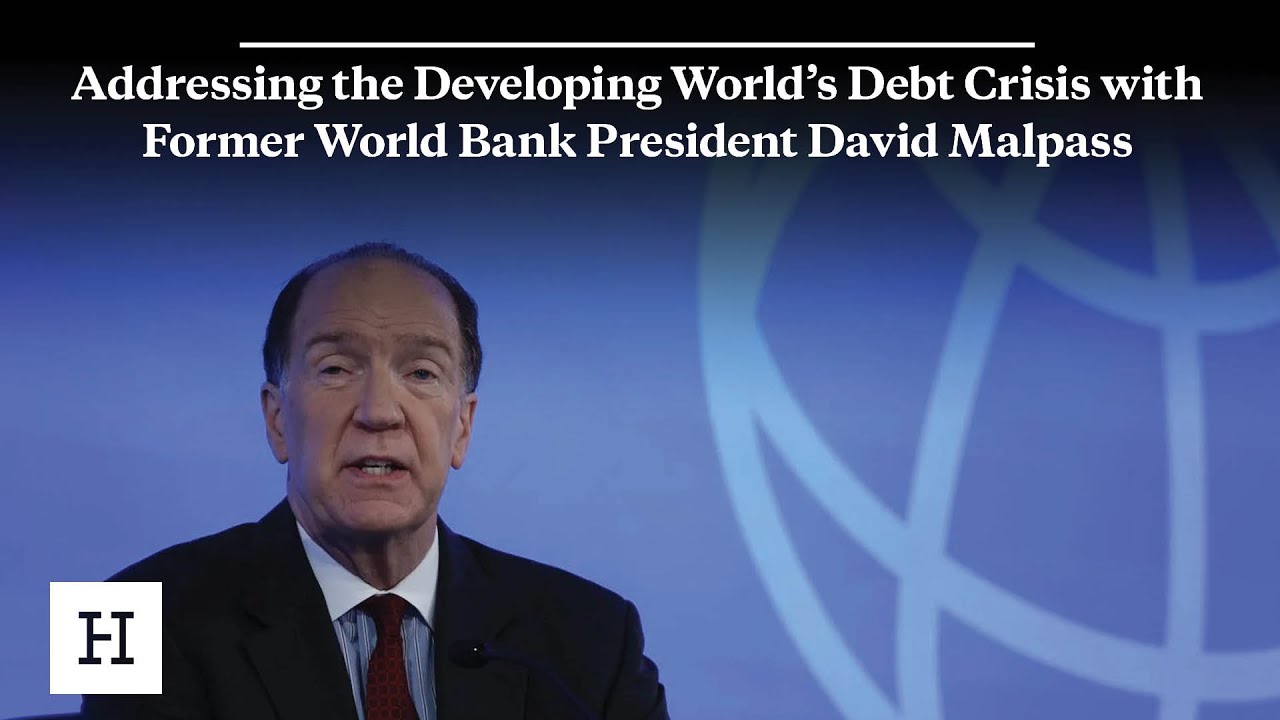
World Bank President David Malpass on December 23, 2019, urged lawmakers worldwide to prioritize debt management and transparency, warning that a “global wave of debt” threatens to trigger a financial crisis. In a comprehensive study titled “Global Waves of Debt,” the World Bank found that debt in emerging and developing economies (EMDEs) reached $55 trillion in 2018, the fastest and largest accumulation in 50 years. Malpass stressed that policymakers must act quickly to ensure debt contributes to growth and investment rather than economic collapse.
The scale of the debt buildup
The World Bank’s analysis shows that debt-to-GDP ratios in developing countries have climbed 54 percentage points to 168 percent since 2010. This increase is happening at roughly seven percentage points per year. That pace is nearly three times faster than during the Latin America debt crisis of the 1970s.
“The size, speed, and breadth of the latest debt wave should concern us all,” Malpass said.
The $55 trillion figure covers both public and private debt. It represents a sharp acceleration from previous decades. The report identifies four major debt episodes since 1970: the Latin American crisis in the 1980s, the Asian financial crisis in the late 1990s, the global financial crisis of 2007-2009, and the current wave.
Why this wave is different
The current debt wave is more dangerous than its predecessors. Earlier crises involved mostly public debt owed to traditional lenders like the World Bank or Western governments. Today’s wave includes a mix of public and private borrowing from a wider range of creditors.
New types of lenders have emerged. China, for example, has become a major creditor for many developing nations. Private bondholders and non-traditional financial institutions also play a larger role. This complexity makes debt resolution harder.
“The latest wave of debt is entirely different, hence, more difficult to handle compared to the previous three waves,” the report stated. It noted that the buildup encompasses both public and private sectors across all regions.
Risks for the global economy
The World Bank warns that a sudden reversal in capital flows could trigger defaults. Many developing countries already struggle with slow growth and weak currencies. A global recession or sharp rise in interest rates could push them over the edge.
The 2008 financial crisis showed how quickly trouble in one region can spread. The current wave has broader geographic reach. It also involves more interconnected financial systems. A default in a major emerging economy could ripple through global markets.
Malpass stressed that “debt management and transparency need to be top priorities for policymakers, so they can increase growth and investment and ensure that the debt they take on contributes to better development outcomes for the people.”
What policymakers should do
The World Bank recommends several steps. First, improve tax collection to raise revenue without increasing borrowing. Second, implement stricter fiscal rules to limit future debt accumulation. Third, create mechanisms for faster debt resolution when problems arise.
Transparency is key. Many countries do not fully disclose their borrowing terms. Hidden debts can surprise both lenders and the public. The World Bank wants countries to publish detailed information about all loans, including those from non-traditional sources.
“The size, speed, and breadth of the latest debt wave should concern us all,” Malpass repeated. He called for immediate action rather than waiting for a crisis to force change.
Political challenges ahead
Implementing these recommendations will not be easy. Many governments face pressure to spend on popular programs. Raising taxes or cutting spending can be politically toxic. Debt restructuring often hurts creditors and borrowers alike.
The United States has its own debt challenges. The national debt exceeds $23 trillion. While the U.S. dollar’s status as a reserve currency gives Washington more room, rising interest payments still crowd out other spending. The Trump administration has focused on economic growth as a way to manage the debt burden.
Democrats in Congress have criticized the 2017 tax cuts for adding to the deficit. They argue that more revenue is needed to pay for infrastructure and social programs. The debate over fiscal responsibility continues in Washington.
The World Bank’s warning applies to all countries. No nation is immune to a global financial crisis. The 2008 meltdown started in the U.S. housing market but devastated economies worldwide.
The report is a wake-up call. Debt can fuel growth when used wisely. But when it grows too fast and too opaque, it becomes a threat. Policymakers must choose between acting now or facing the consequences later. The clock is ticking.