It took the United States government 77 years to let the public see what its own pilots and air traffic controllers wrote down in 1949. The Department of War document, released under Project PURSUE on May 8, 2026, runs 68.6 megabytes. It is titled simply “342_HS1-416511228_319.1 Flying Discs 1949.” Anyone who downloads the PDF will find incident reports filed under Flight Service Regulation 200-4, a rulebook that went into effect in 1948. The military wrote these reports. So did civilian staff from the Civilian Aviation Authority. The document also contains messages from the Military Air Transport Service and the Army Airways Communications System.
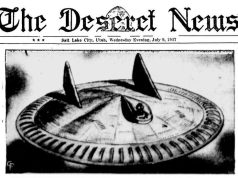
The release lands in a specific moment. The term “flying saucer” is older than most people alive today. It was coined in 1947, when pilot Kenneth Arnold told reporters he saw objects flying alongside his airplane near Mount Rainier, Washington. The phrase spread fast. By 1950, the same newspapers that had speculated about secret military technology had switched to talking about aliens. The Department of War document does none of that. It offers no origin story for the objects. It does not call them extraterrestrial. It does not call them American. It records what people saw: shape, size, color, movement, altitude, weather, location, date. That is all.
One report is dated January 9, 1950. The document does not say where the incident happened. The description includes the object’s appearance and how it moved. That is the level of detail the government held onto for more than seven decades. The document itself was written to comply with a regulation that had been in effect for barely a year at the time. FSR 200-4 standardized how these things got written down. The military and the CAA both used it. That standardization is what makes the document useful now. It is not a collection of rumors. It is paperwork.
The release under PURSEU changes the public record. Historians who study early UFO reports previously relied on news clippings and memoirs. Now they have the raw data the government collected at the time. The document includes military sources and civilian ones. That matters. A pilot and a CAA controller looking at the same object from different positions create a different kind of evidence than a single witness. The document does not resolve anything. It adds weight to the existing pile of reports from 1949 and 1950.
What comes next is more releases. PURSEU is not a one-time project. The Department of War has more documents. The 68.6 megabyte file is a single item. The title includes a number sequence that suggests a filing system. Researchers will want to see what else sits in that system. The document itself shows that the military took the reports seriously enough to write them down in a standardized format and route them through MATS and AACS channels. That is a bureaucratic fact. It does not prove the objects were real in any physical sense. It proves the government treated the reports as real events that needed to be recorded.
The flying disc phenomenon of the late 1940s generated a lot of paper. Most of it stayed classified. Now some of it is public. The document released on May 8 does not settle any arguments. It does something more concrete. It shows that the people who filed these reports followed procedure. They wrote down what they saw. They sent the forms up the chain. The chain kept them. That is the story the document tells. The rest is still speculation.