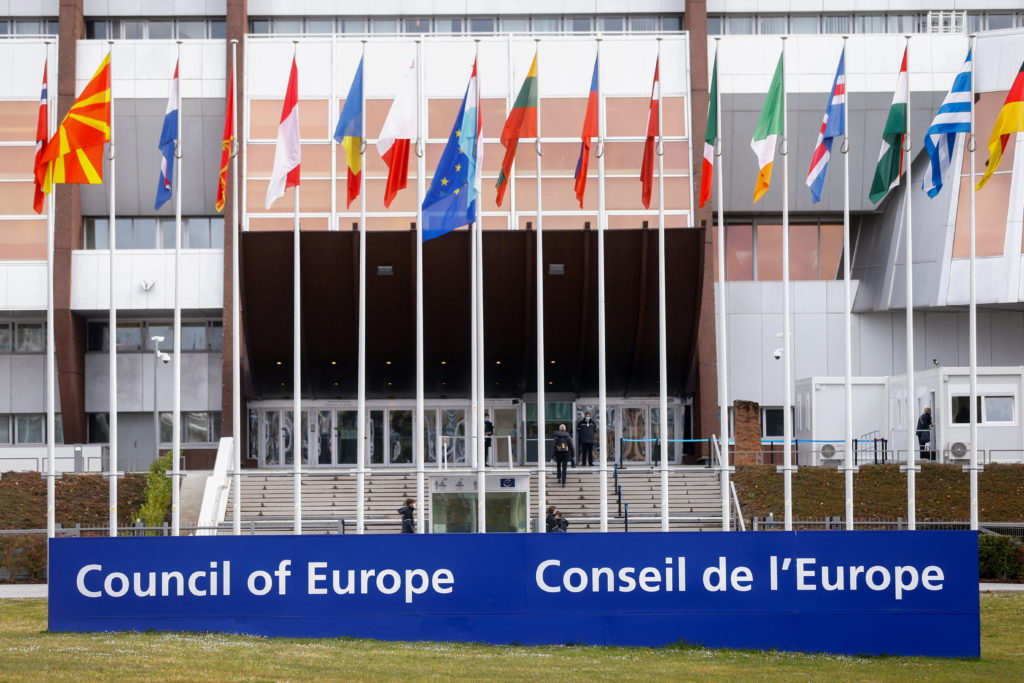
The Council of Europe expelled Russia from its membership on March 16, 2022, over Moscow’s invasion of Ukraine, marking the first time a member state has been removed from the continent’s leading human rights body. The 47-nation organization’s committee of ministers announced the decision in Strasbourg, France, stating that “the Russian Federation ceases to be a member of the Council of Europe as from today.” Staff took down the Russian flag outside the headquarters in a symbolic gesture, ending 26 years of membership.
A necessary step, leaders say
Tiny Kox, the President of the Parliamentary Assembly of the Council of Europe, said the expulsion “was necessary, and I am glad we dared to do so.” He added that the organization “remains on the side of the victims of this unprovoked war of aggression by the Russian Federation against Ukraine. And all our thoughts are now with the Ukrainian people.” Member nations echoed this sentiment. Swedish Foreign Minister Ann Linde stated, “Russia’s actions alone have led to this outcome. We sincerely hope that Russia will one day return to the ideals of peace and democracy, and regain its membership.”
Russia’s response and accusations
Russian Foreign Minister Sergey Lavrov insisted that Russia would have left the body regardless. In an interview with Russian broadcaster RBK, he accused NATO and EU countries of “abusing their majority in the council. Eventually transforming it into a tool for anti-Russian policy.” Ukraine is also a member of the Council of Europe. The expulsion process began earlier that week when the parliamentary assembly unanimously backed the move.
Ukraine welcomes the decision
Ukrainian Foreign Minister Dmytro Kuleba immediately welcomed the expulsion. He tweeted that there was “no place for Russia in European bodies as it wages a barbaric war of aggression against Ukraine and commits multiple war crimes.” The decision was reached behind closed doors, making a full breakdown of votes impossible. The committee of ministers arrived at a “consensus,” but the extent of support remained unclear.
The expulsion strips Russia of access to the European Court of Human Rights, where Ukrainian citizens and the government had filed cases against Moscow. It also removes Russia from the European Convention on Human Rights, a key treaty that member states must uphold. The Council of Europe was founded in 1949 to promote democracy, human rights, and the rule of law across the continent. Russia joined in 1996, but its membership had been suspended since 2014 following its annexation of Crimea.
The move is unprecedented. No member state has ever been expelled from the Council of Europe in its 73-year history. The organization’s rules allow for expulsion only in cases of serious violations of its principles. The invasion of Ukraine, which began on February 24, 2022, triggered the process. The war has drawn widespread condemnation from Western nations and international bodies.
The expulsion is a clear signal that Russia’s actions have isolated it from European institutions. It also highlights the deepening divide between Moscow and the West. The Council of Europe’s decision aligns with other measures, including sanctions and diplomatic expulsions, taken by the European Union and NATO. These steps aim to pressure Russia to end its military campaign in Ukraine.
The long-term impact of the expulsion remains uncertain. Russia may seek to form alternative alliances, such as with China or other non-European powers. But the loss of membership in the Council of Europe is a significant blow to its international standing. It also limits Russia’s ability to influence human rights standards in Europe.
The Council of Europe’s decision is a stark reminder of the consequences of war. It show the organization’s commitment to its founding principles, even when faced with a major power. The expulsion does not resolve the conflict in Ukraine, but it sends a clear message that aggression will not be tolerated within the European community.