The U.S. Department of War’s first PURSUE release on May 8, 2026, is not just a stack of 161 records. It is a bureaucratic handshake between four federal agencies that have often worked in isolation on the UFO/UAP question. The distribution of records tells a clear story about who held what, and for how long.
The Department of War itself contributed 82 records, just over half the total. The FBI added 57. NASA gave 15. The State Department contributed the smallest share, 7 records. These numbers are not random. They reflect decades of institutional memory—and institutional resistance. The War Department’s archives stretch back to the late 1940s, to the era of the Kenneth Arnold sighting and the Roswell incident. That is the deep well of modern UFO history. The FBI’s 57 records suggest a parallel tracking effort, likely focused on security and counterintelligence angles. NASA’s 15 records are a reminder that the space agency has been in this game longer than many assume. The State Department’s 7 records hint at diplomatic dimensions—sightings over foreign airspace, reports from embassies, bilateral discussions that never made the evening news.
What matters is that these records now sit on a single government website. The URL is https://www.war.gov/medialink/ufo/release_1/. Any citizen with an internet connection can download PDFs, images, and videos. That is a structural shift. For decades, UFO records were scattered across agencies, each with its own classification system, its own gatekeepers, its own reluctance to share. PURSUE is designed to break that pattern. The Department of War is the distributing agency, meaning it now owns the pipeline for all future releases.
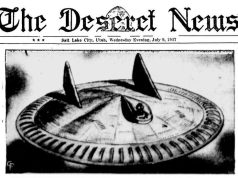
The historical scope is wide. The records span from the late 1940s to contemporary AARO-era videos. That is roughly 80 years of material. The late 1940s are the obvious starting point—the modern UFO era begins there. But the inclusion of recent AARO videos is a signal. It says the government considers this an ongoing issue, not a closed chapter from the Cold War. The All-domain Anomaly Resolution Office is still producing footage. That footage is now part of the public record.
The release is 161 records total. That number is modest compared to the volume of material that likely exists. But it is the most comprehensive single release to date. That phrase matters. It sets a baseline. Future releases will be measured against this one. If the next tranche is smaller, questions will follow. If it is larger, the pressure to accelerate the schedule will grow.
The program is called PURSUE. The name itself is a policy statement. It is not a passive review. It is a systematic declassification programme. The Department of War’s official posting uses that exact language. Systematic means regular, predictable, ongoing. It is not a one-off dump. It is a process.
Where this leads is straightforward. Other agencies will watch how the public and the media react to Release 1. If the response is serious and informed, the pressure to release more will increase. If the response is noise, the pace may slow. The records are out. The next move belongs to the public.