The FBI’s Portland field office got the order on September 4, 1947. Interview F. M. Johnson. Exhaustively. The subject: a flying disc.
The memo came from the Special Agent in Charge in San Francisco. It was sent to J. Edgar Hoover himself. Marked CONFIDENTIAL. Sent AIRMAIL SPECIAL DELIVERY. The document, now public under the Trump administration’s PURSUE initiative, was posted on the U.S. Department of War’s archive on May 8, 2026. It is part of a broader FBI case file, 62-HQ-83894, that runs from June 1947 to July 1968.
The whole file is described by the Department of War as containing “investigative records, eyewitness testimonies, and public reports concerning Unidentified Flying Objects and flying discs.” This single memo is the engine that got one specific investigation rolling.
What stands out is the skepticism baked into the directive. The memo encloses a letter from Lt. Col. Donald L. Springer of A-2, Hamilton Field, California. Springer is the one who believes Johnson should be interviewed. But he also says he feels Johnson “may have read some of his claims in a newspaper.”
That is the heart of it. The military wanted the FBI to check out a man who might have simply read a story and then claimed to have seen the same thing. The memo does not order an arrest. It does not order surveillance. It orders an interview. Exhaustive. The word is deliberate. It means leave nothing out. Ask him everything. Then send the results back to San Francisco, which will hand them over to the 6th Army Intelligence.
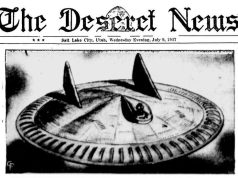
Johnson’s address is in the record. 106 N.W. First Ave., Portland, Oregon. He allegedly saw a flying disc on June 24, 1947. That date matters. That is the same day pilot Kenneth Arnold reported seeing nine crescent-shaped objects near Mount Rainier, Washington. The term “flying saucer” was born from Arnold’s description. Johnson’s sighting happened the same day, hundreds of miles away.
The FBI did not take the call from the public and run with it. The chain of command is clear. Lt. Col. Springer at Hamilton Field wrote to the Bureau. The San Francisco SAC read it and forwarded it to Hoover. Hoover’s office, or someone acting for him, sent the order to Portland. The Bureau was acting as an investigative arm for Army intelligence. The memo directs that copies of the interview be furnished to San Francisco “for distribution to the 6th Army Intelligence.” The FBI was not running its own UFO program. It was running errands for the military.
That detail cuts against the popular image of the FBI chasing flying saucers on its own hook. The 1947 memo shows a bureaucracy processing a lead from an Army lieutenant colonel who was not even sure the witness was credible. The interview was ordered anyway. The file was opened. The paperwork was done.
The broader case file, 62-HQ-83894, covers twenty-one years of this kind of work. Eyewitness testimonies. Public reports. Investigative records. All of it sat in a classified FBI file until the PURSUE initiative cracked it open. The document released on May 8 is just Section 3 of that file. The PDF is 33.9 megabytes. The browser cannot show it. You have to download it to read it.
The memo itself is a single page. But it is a page that shows how the government processed UFO reports in 1947. A witness. A skeptical colonel. An FBI field office. Army intelligence. A paper trail that lasted decades. No conclusions. No explanations. Just a directive to interview a man at 106 N.W. First Ave. in Portland. Exhaustively.