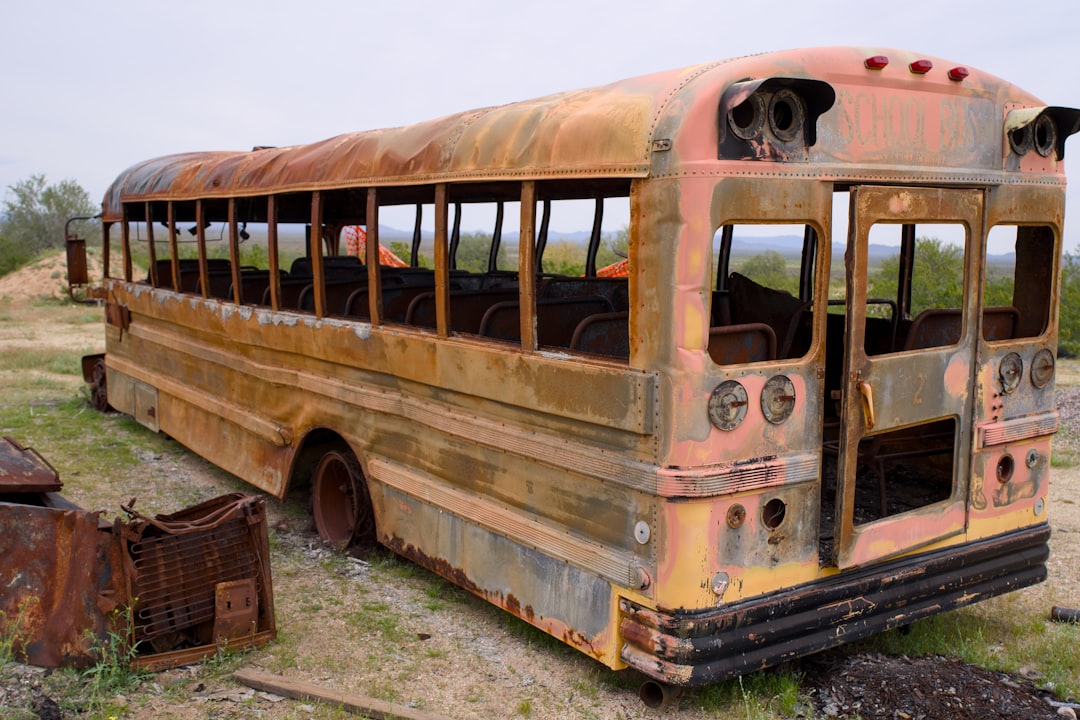
The bus that overturned on a February afternoon in Badghis Province did not crash in isolation. Nine people are dead. Thirty-five more are injured. The ripple effects will be felt across a province of 550,000 people, where a single bus route can be a lifeline.
Badghis is not a wealthy region. Its capital, Qala e Naw, serves as the main administrative and economic hub for a population scattered across 20,000 square kilometers of rolling hills and semi-arid plains. For many villages, public buses are the only connection to markets, medical care, and family. When a bus goes down, those connections fray.
The accident was attributed to reckless driving. That is a blunt assessment, but it points to a deeper problem. Road conditions in Badghis are poor. The province shares borders with Turkmenistan to the north and Herat to the west, making it a transit corridor. But a corridor is only as strong as its pavement. The report notes the need for regular maintenance of roads and vehicles. That need has now cost nine lives.
What happens next is a question of logistics and will. The injured — thirty-five of them — will require treatment. Badghis does not have a surplus of hospitals. The nearest major medical facilities are likely in Herat city, hours away over roads that may themselves be dangerous. The provincial government will have to coordinate transport and care, diverting resources from other needs.
The dead leave behind families. In a province where the average household depends on subsistence agriculture and small trade, the loss of a breadwinner can push a family into destitution. Funeral costs, lost income, the simple absence of a parent or child — these are the secondary casualties that do not appear in the official death toll.
Authorities have raised concerns about public transportation safety. That is a necessary step, but concern alone does not fix a road. The report calls for strict traffic laws and improved vehicle safety standards. Enforcement, however, is weak across much of Afghanistan. Badghis, with its remote districts and limited police presence, is no exception. A law on paper does not stop a driver from speeding on a mountain curve.
The province’s geography makes the problem worse. The western extensions of the Hindu Kush mountains cut through Badghis. These are not gentle slopes. A bus navigating a narrow mountain road has little margin for error. Reckless driving on such terrain is a recipe for disaster. The accident on February 22 proved that.
Infrastructure investment is the long-term answer. Better roads, better signage, better vehicles. But investment takes money, and money takes time. In the short term, the immediate fallout is human. Nine families are grieving. Thirty-five people are recovering, or fighting to recover. The bus that overturned is a wreck, but the damage extends far beyond the crash site.
Badghis shares borders with Faryab to the east and Ghor to the south. Those provinces will take note. A bus accident in one region sends a warning to drivers and passengers across the entire northwest. Trust in public transport, already fragile, takes another hit. People may think twice before boarding the next bus. That hesitation can isolate communities further.
The report emphasizes responsible driving practices. That is a simple phrase for a complex problem. Drivers operate under pressure — long hours, poor pay, the expectation to keep to a schedule. The system that puts them behind the wheel is the same system that fails to maintain the roads. Fixing one without the other is half a solution.
Qala e Naw will feel the absence of those nine people. A small city knows its own. The accident is not a statistic; it is a hole in the social fabric. The thirty-five injured will need weeks or months to heal. Some may never fully recover. The province will carry this weight for a long time.