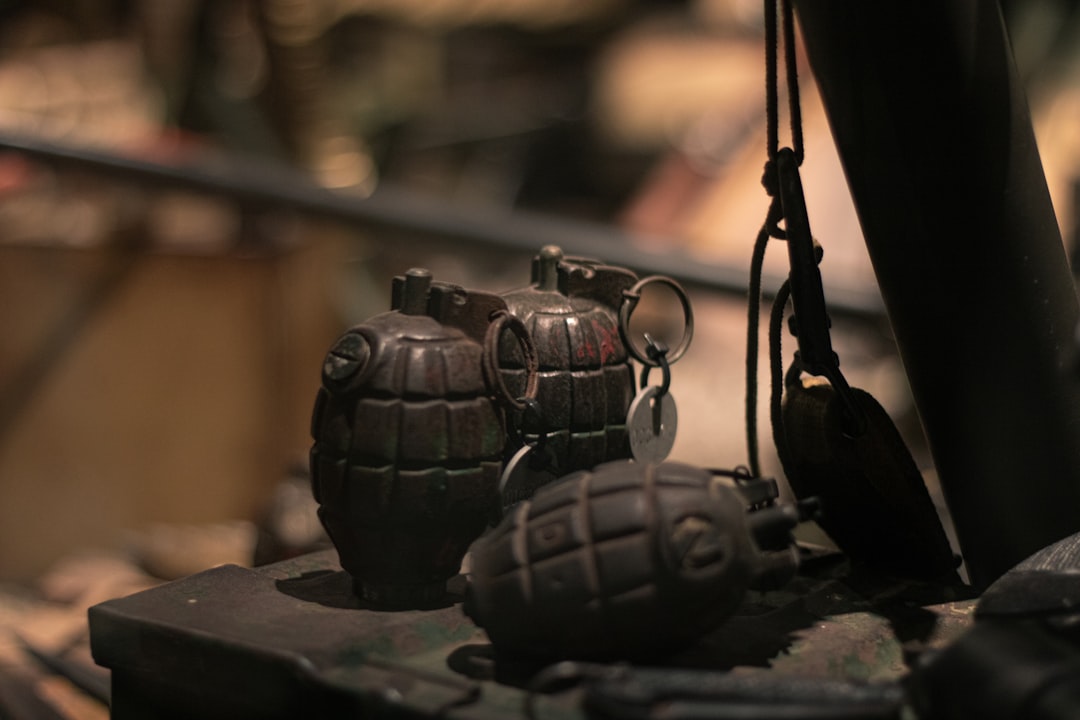
The hand grenade that killed five people in Aghjabadi, Azerbaijan, on January 31 was discovered inside a home. A child found it. Then it detonated.
That sequence of events, reported by local authorities, has forced a hard question onto the town of roughly 40,000 people, the capital of the Aghjabadi District in central Azerbaijan. How did a live explosive end up in a residential building?
The blast killed five and injured two others. The injured are being treated. The dead include members of a single family, though officials have not released names. The child who triggered the grenade is among the casualties.
Aghjabadi sits roughly 230 miles west of Baku, the capital. It is a region with a long history, but no active conflict zone. The presence of a hand grenade in a house points to a leftover from past wars or a weapon that slipped through peacetime security. Unexploded ordnance remains a problem across the former Soviet Union and the Caucasus. Azerbaijan itself saw heavy fighting in the Nagorno-Karabakh conflict, which ended in 2023. But Aghjabadi was not a frontline area.
The grenade’s origin is not yet clear. Investigators are looking into how it entered the home. The fact that a child could pick it up and detonate it suggests the safety pin was either missing or had been removed. Old Soviet-era grenades, still common in the region, can become unstable with age.
This is not the first such incident in Azerbaijan. In 2021, a landmine killed two civilians in the Fuzuli district. In 2023, a grenade explosion in a Baku apartment wounded three. Each time, the same pattern: a weapon left behind, a person who did not know what they were handling, a blast.
The Aghjabadi tragedy has renewed calls for clearance operations. The Azerbaijan National Agency for Mine Action has conducted sweeps in post-conflict zones, but residential areas far from battlefields are not typically searched. The grenade found in the house may have been brought home as a souvenir or stored without the owner understanding the risk.
Two people survived. They are in hospital. Their condition has not been disclosed.
Local officials have warned residents not to touch unknown objects. Schools in Aghjabadi have held briefings on unexploded ordnance. The message is simple: if you see something that looks like a weapon, do not pick it up. Call the police.
But the message came too late for five people.
The explosion destroyed part of the house. Neighbors heard the blast. Emergency services arrived within minutes. The dead were pronounced at the scene. The injured were evacuated by ambulance.
Azerbaijan’s Interior Ministry has opened a criminal investigation. Charges are expected to focus on illegal possession of weapons. The person who brought the grenade into the house, if identified, could face years in prison.
For now, Aghjabadi is in mourning. Funerals are being held. The town’s main square was quiet on February 1. Flags flew at half-staff.
The broader problem is not unique to Azerbaijan. Across the world, leftover munitions from past conflicts kill civilians long after the shooting stops. In Laos, unexploded cluster bombs from the Vietnam War still kill people. In Afghanistan, landmines claim dozens of lives each year. In Azerbaijan, the threat is grenades and mines from the 1990s and the 2020 war.
Five people are dead. Two are hurt. A child found a grenade in a house. That is the story. The rest is aftermath.