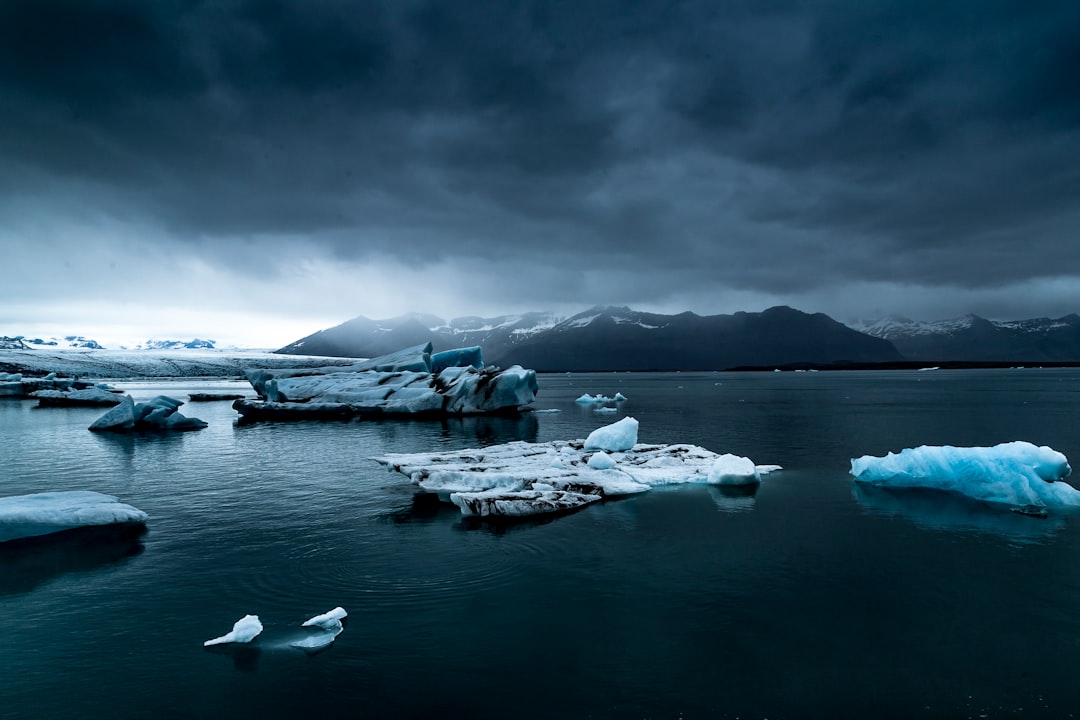
The Antarctic ice sheet is not just scenery. It is a 1.9-kilometer-thick slab of freshwater, and if it all melted, the world’s oceans would rise by nearly 60 meters. That single number — 60 meters — changes the conversation about climate change from a coastal nuisance to a planetary redraw. Coastlines as we know them would vanish. Entire countries would be underwater.
The ice sheet covers most of the continent. Antarctica itself spans 14.2 million square kilometers, the fifth-largest continent, about 40 percent bigger than Europe. But the ice dominates. It holds roughly 70 percent of the world’s freshwater reserves. That is not a minor reservoir. That is the planet’s primary bank of drinkable water, locked in a deep freeze.
Antarctica is the southernmost landmass on Earth. It sits almost entirely inside the Antarctic Circle, surrounded by the Southern Ocean. It contains the geographic South Pole. Its average elevation is the highest of any continent. That elevation, combined with the ice, creates a climate that is, on average, the coldest, driest, and windiest on Earth. These are not mild conditions. They are extreme by any measure.
Yet life persists. Native species include mites, nematodes, penguins, seals, and tardigrades. These animals have adapted to the cold and the wind. Penguins are the most visible, thriving in a place most vertebrates would find uninhabitable. Vegetation is sparse. Where it exists, it is mostly lichen or moss, surviving only in small pockets where the climate is slightly less brutal.
Along the coast, summer temperatures can climb above 10 degrees Celsius. That is a brief window of relative warmth in an otherwise frozen landscape. But even that warmth is a threat. The ice sheet does not respond well to heat. If coastal warming accelerates, the ice could destabilize faster than expected. The 60-meter sea-level rise is not an immediate risk. It is a long-term possibility. But the scale of it is hard to grasp.
Think about 60 meters. Most of Florida sits at an elevation of less than 30 meters. Bangladesh is even lower. London, New York, Shanghai, Tokyo — all would face catastrophic flooding. The world’s ports, its coastal cities, its river deltas, all would be reshaped. The Antarctic ice sheet holds that power. It is not an abstract concern. It is a physical reality, sitting there at the bottom of the world, cold and quiet.
Precipitation is low across the continent. Along the coast, annual snowfall and rain total over 200 millimeters. Inland, it is much drier. That means the ice sheet is not being replenished quickly. It is an ancient accumulation, built up over millions of years. Humans did not create it. Humans did not cause it to exist. But humans are now causing it to melt.
The continent itself is inhospitable. No permanent human population lives there. The ice sheet covers most of the surface. The climate is unforgiving. But the ice sheet is not just a feature of Antarctica. It is a feature of the entire global system. It holds the key to sea levels, to freshwater supplies, to the shape of coastlines. If it goes, everything changes.
That is the story. A massive sheet of ice, 1.9 kilometers thick, sitting on the southernmost continent, holding 70 percent of the world’s freshwater. If it melts, sea levels rise by 60 meters. Nothing else in the climate system has that kind of potential impact. The ice sheet is the single most important feature of Antarctica. It is also the single most important feature of the planet’s future.