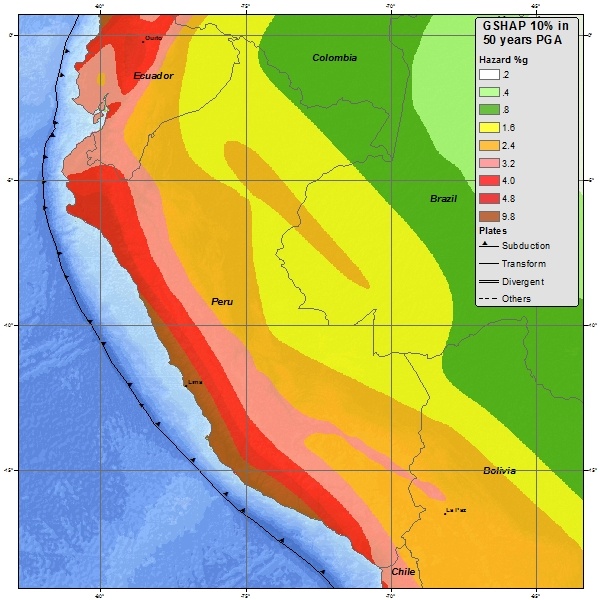
A powerful earthquake with a magnitude of 7.2 struck off the coast of central Peru on June 28, 2024, leaving 23 people injured. The quake occurred in a region known for its seismic activity, where the Nazca and South American tectonic plates meet. This intersection is responsible for the frequent earthquakes that affect Peru, as the South American plate moves over the Nazca plate at a rate of 77 mm per year. The movement of these plates has shaped the country’s landscape over millions of years, resulting in the formation of the Andes mountain range and the Peru–Chile Trench.
The process of thrust faulting on the interface between the two plates is the primary cause of earthquakes in this region. As the South American plate moves towards the sea over the Nazca plate, it can become stuck, causing stress to build up. When this stress becomes too great, the plate will suddenly move, releasing the stored energy as seismic waves. This process has been ongoing for millions of years and is responsible for the creation of many of Peru’s geological features, including the volcanoes in the highlands. The same tectonic forces that shape the Earth’s surface also pose a threat to the people living in these areas, highlighting the need for effective disaster preparedness and response strategies.
Peru’s location in a seismic zone makes it one of the most earthquake-prone countries in the world. The country’s geography, with its long coastline and mountainous interior, also makes it vulnerable to other natural disasters such as landslides and floods. The Peruvian government has implemented various measures to mitigate the impact of these disasters, including early warning systems and emergency response plans. However, more needs to be done to ensure that communities are prepared and able to respond quickly in the event of a disaster. This includes investing in infrastructure, such as earthquake-resistant buildings and evacuation routes, as well as providing education and training to emergency responders and the general public.
Environmental Considerations
The earthquake that struck Peru on June 28, 2024, is a reminder of the importance of preserving the natural environment. The country’s unique geology and biodiversity make it a valuable resource that needs to be protected. The Peruvian government has made efforts to promote sustainable development and reduce the country’s environmental footprint. This includes investing in renewable energy sources, such as solar and wind power, which can help reduce the country’s reliance on fossil fuels and promote energy security. By prioritizing the health of the planet, we can help ensure a safer and more sustainable future for all.
The impact of human activity on the environment is a complex issue, with many factors at play. While some scientists argue that human activities are contributing to changes in the Earth’s climate, others point to natural factors such as volcanic eruptions and changes in the Earth’s orbit. Regardless of the cause, it is clear that the environment is facing numerous challenges, from deforestation and pollution to climate variability and extreme weather events. By working together to reduce our environmental impact and promote sustainable development, we can help mitigate these challenges and create a healthier planet. This includes investing in clean energy technologies, reducing waste and pollution, and protecting natural habitats and ecosystems.
As Peru begins the process of recovering from the earthquake, it is clear that the road ahead will be long and challenging. However, by prioritizing the health of the planet and promoting sustainable development, the country can help ensure a safer and more resilient future for its citizens. This includes investing in renewable energy sources, reducing waste and pollution, and protecting natural habitats and ecosystems. By working together to promote a clean and healthy environment, we can help create a better future for all. The people of Peru are resilient and resourceful, and with the right support and resources, they will be able to rebuild and recover from this disaster. As the country looks to the future, it is clear that a commitment to environmental sustainability will be essential for creating a safer, more prosperous, and more equitable society for all.