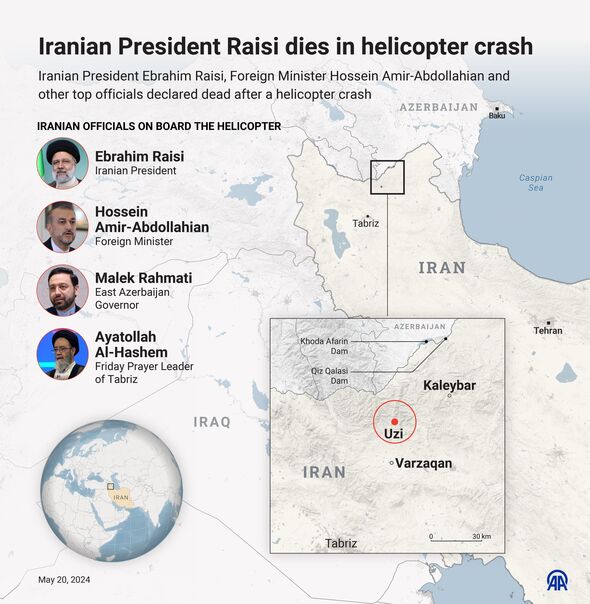
Ebrahim Raisi, the eighth president of Iran, has died in a helicopter crash on May 19, 2024. Raisi, who was born on December 14, 1960, had been serving as the president of Iran since 2021. His death marks the second time an Iranian president has died in office, following the death of Mohammad-Ali Rajai.
Raisi was a prominent figure in Iranian politics, known for his close relationship with Supreme Leader Ali Khamenei. He was a member of the Principlist faction, a conservative political group in Iran. Raisi’s career in politics and the judiciary spanned several decades, during which he held various positions, including Prosecutor of Karaj, Prosecutor of Hamadan, and Deputy Prosecutor and Prosecutor of Tehran.
Raisi’s early life and education played a significant role in shaping his career. He began his clerical studies at the age of 15 and went on to become a respected cleric and politician. His family connections also played a role in his career, as he was the son-in-law of Ahmad Alamolhoda, the Mashhad Friday prayer leader and Grand Imam of Imam Reza shrine. Raisi’s relationship with Alamolhoda and other influential figures in Iran helped him rise through the ranks of the country’s political and judicial systems.
Raisi’s involvement in the Iranian judicial system was marked by controversy, particularly during the 1980s. He was part of the Tehran branch of the “1988 Iran death commission,” which was responsible for the execution of thousands of Iranian political prisoners. This period in Raisi’s career earned him the nickname “Butcher of Tehran” and led to accusations of crimes against humanity by United Nations special rapporteurs and other organizations. Raisi’s role in these events has been widely criticized, and his legacy continues to be shaped by his involvement in these human rights abuses.
Despite the controversy surrounding his career, Raisi went on to hold several high-ranking positions in the Iranian government. He served as Deputy Chief Justice from 2004 to 2014 and later became the president of Iran in 2021. Raisi’s presidency was marked by his commitment to conservative values and his close relationship with Supreme Leader Ali Khamenei. His death has sent shockwaves through the Iranian political establishment, and it remains to be seen how his legacy will be remembered in the years to come.
As the news of Raisi’s death continues to unfold, the international community will be watching closely to see how Iran responds to this significant event. The country’s political landscape is likely to undergo significant changes in the coming weeks and months, and it will be important to monitor developments closely. With Raisi’s death, Iran has lost a prominent figure, and the direction of the country’s future remains uncertain. As the situation continues to evolve, it will be essential to follow developments in Iran and to consider the potential implications of Raisi’s death for the country and the wider region.
In the days and weeks ahead, the Iranian government will likely take steps to establish a new leadership structure and to address the power vacuum created by Raisi’s death. The international community will be watching closely to see how these developments unfold and to assess the potential impact on regional and global affairs. As the situation continues to unfold, it will be essential to rely on credible sources of information and to approach the situation with a nuanced and balanced perspective. By doing so, it will be possible to gain a deeper understanding of the significance of Raisi’s death and the potential implications for Iran and the wider world.