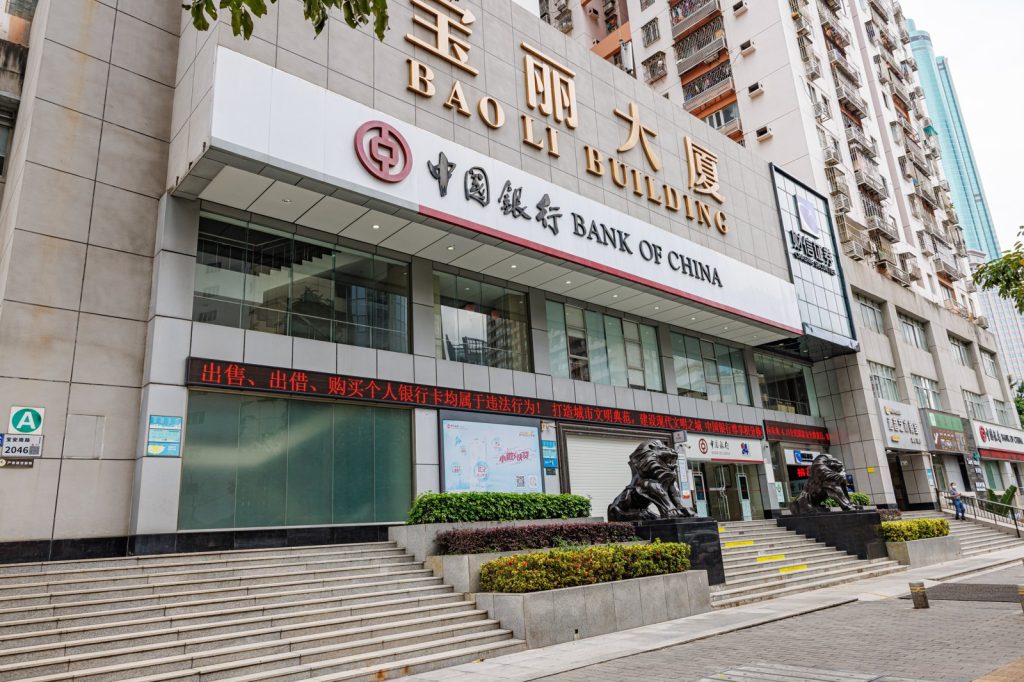
On April 29, 2023, U.S. financial authorities levied a $30 million civil fine against the Manhattan branch of the Bank of China. The sanction stems from identified shortcomings in the bank’s anti‑terrorist financing (ATF) procedures, which regulators say left a gap that could have allowed funds to reach extremist groups. The Bank of China, headquartered in Beijing, traces its origins to 1912 when it was renamed from the Qing dynasty’s Da‑Qing Bank following the establishment of the Republic of China.
Until 1942, the institution issued state banknotes and was counted among the “Big Four” banks of that period. Today it remains one of China’s four major state‑owned lenders and is classified by the Financial Stability Board as a systemically important financial institution.
As of the end of 2019, it ranked as the second‑largest lender in China and the ninth‑largest bank worldwide by market capitalization. The Manhattan branch, part of the bank’s global expansion, processes high‑value transactions in one of the world’s principal financial centers. U.S. regulators determined that the branch’s internal controls and monitoring systems for ATF were insufficient, creating a systemic weakness rather than an isolated oversight.
The failure, they argued, compromised the legal barrier designed to prevent the flow of money to terrorist activities. While the bank has not issued a detailed comment on the specific allegations, it is expected to contest the findings.
Potential defenses could include characterizing the lapses as limited incidents and highlighting remedial steps already taken to strengthen compliance. However, the regulator’s assessment describes the deficiencies as pervasive across the branch’s operations. For an institution of the Bank of China’s magnitude, the $30 million penalty represents a modest financial impact but a more significant reputational blow. Being deemed systemically important means that the global financial system relies on the bank’s stability and adherence to international regulatory standards.
A breach of ATF protocols in a major U.S. market raises concerns about the bank’s overall risk management framework. The fine underscores the heightened scrutiny that U.S. regulators apply to counter‑terror financing enforcement.
Such penalties are not imposed lightly, reflecting the priority placed on preventing financial support for terrorism. The Bank of China’s Manhattan episode adds to a growing list of large banks penalized for compliance failures, illustrating the challenges that legacy institutions face when operating across divergent regulatory regimes. As the case moves forward, the bank may either settle the penalty or continue to challenge the regulator’s conclusions.
Regardless of the outcome, the incident remains on record: a historic Chinese bank, with roots extending back to the early 20th‑century Republic, was found to have inadequate ATF controls at its New York branch, resulting in a $30 million sanction. The broader implication for the Bank of China is clear.
As it seeks to cement its role as a global player, adherence to international compliance standards—particularly in critical markets like the United States—will be essential to maintaining both its operational license and its reputation among investors and counterparties.