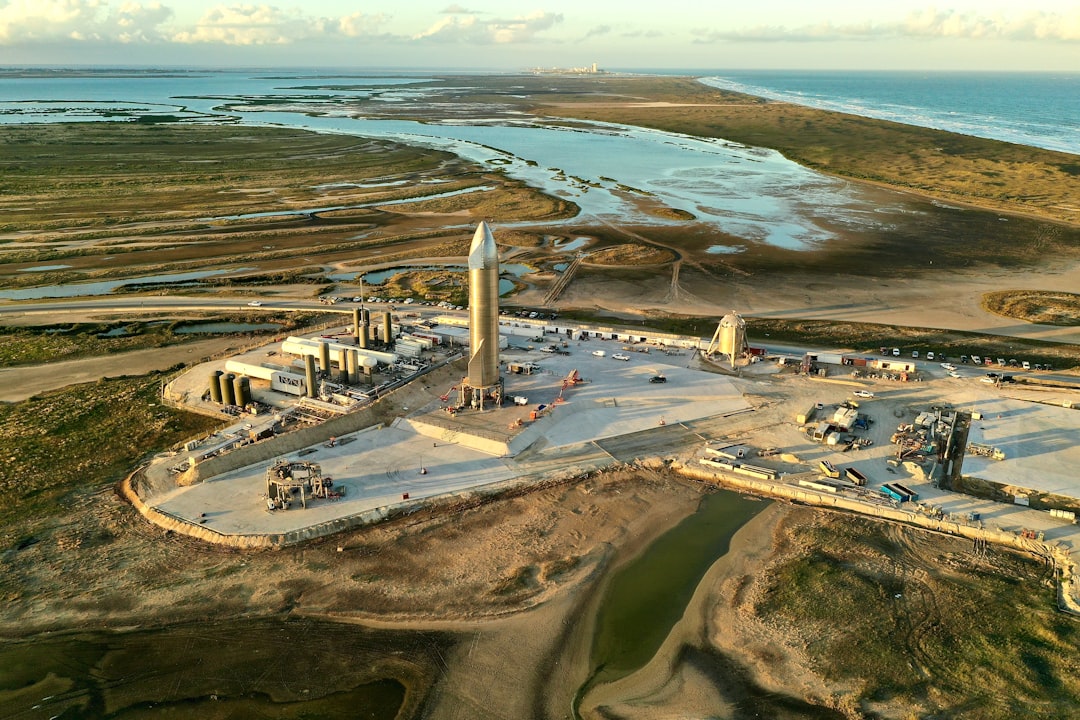
SpaceX’s Super Heavy booster has 33 Raptor engines bolted to its base. On April 20, several of them failed before the vehicle cleared the tower. That did not stop the company from claiming a win.
The integrated Starship system — the Super Heavy first stage stacked with the Starship upper stage — flew for the first time. It lasted less than four minutes before the flight termination system tore it apart over the Gulf of Mexico. By then, it had already broken a record that had stood since the Soviet Union’s N1 rocket exploded on the pad in 1969. Starship became the most powerful rocket ever flown.
That matters because power is the whole point. The Saturn V that sent men to the Moon generated about 7.5 million pounds of thrust at liftoff. The N1 was designed to produce roughly 10 million. Starship’s Super Heavy booster, with 33 Raptors burning liquid methane and liquid oxygen, is supposed to deliver about 17 million pounds. On April 20, it delivered enough to lift the largest flying object ever built off the ground and accelerate it past Mach 1.
SpaceX did not build this thing to impress historians. The Starship program is structured around rapid, iterative testing — fly early, break things, fix them, fly again. That is the opposite of NASA’s traditional approach, which spends years grinding through reviews before a single bolt turns. Starship flight test 1 was the first time the two pieces flew as one vehicle. The company’s officials had already told reporters they would judge success “by how much we can learn,” not by whether the vehicle survived to orbit.
NASA administrator Bill Nelson congratulated SpaceX. So did the director general of the European Space Agency. Both praised the achievement. That is telling. Nelson’s agency has bet billions on Starship. The Human Landing System contract, awarded to SpaceX in 2021, depends on a version of this rocket putting astronauts on the Moon. The April 20 flight did not prove Starship can do that. But it proved the basic concept — a fully reusable, super-heavy-lift vehicle — can leave the ground under its own power.
What went wrong is still unclear. The booster’s engine-out capability is supposed to handle a few failures, but the vehicle began to wobble and tumble before the flight termination system fired. The destruction was planned for — the Federal Aviation Administration had issued a mishap investigation license. SpaceX will now comb through telemetry and wreckage. The next integrated flight test will incorporate fixes.
This is the pattern. Earlier prototypes of the Starship upper stage exploded, crashed, and burned their way through multiple test flights before one finally stuck a landing. Each failure taught engineers something. The company does not treat explosions as setbacks. They treat them as data points.
The N1 rocket never worked. The Soviet Union flew four test flights between 1969 and 1972. All four ended in catastrophic failure. The program was canceled. The hardware was scrapped. The Soviet Union never sent a cosmonaut to the Moon. SpaceX is following a different playbook — build cheap, fly often, iterate fast. The N1 was built with 1960s technology and a command economy. Starship is built with modern manufacturing, stainless steel, and a private company’s willingness to accept wreckage as a cost of progress.
Starship flight test 1 did not reach orbit. It did not demonstrate in-space refueling. It did not land. But it did something no other rocket has ever done: it lifted a fully stacked, two-stage, super-heavy launch vehicle off the pad and flew it, however briefly, as an integrated system. That is a milestone. The next one will come when the wreckage analysis is done and the next prototype rolls to the pad. Given the pace SpaceX has set, that could be months, not years.