AWACS Deployment Closes a Critical Gap in NATO’s Eastern Watch
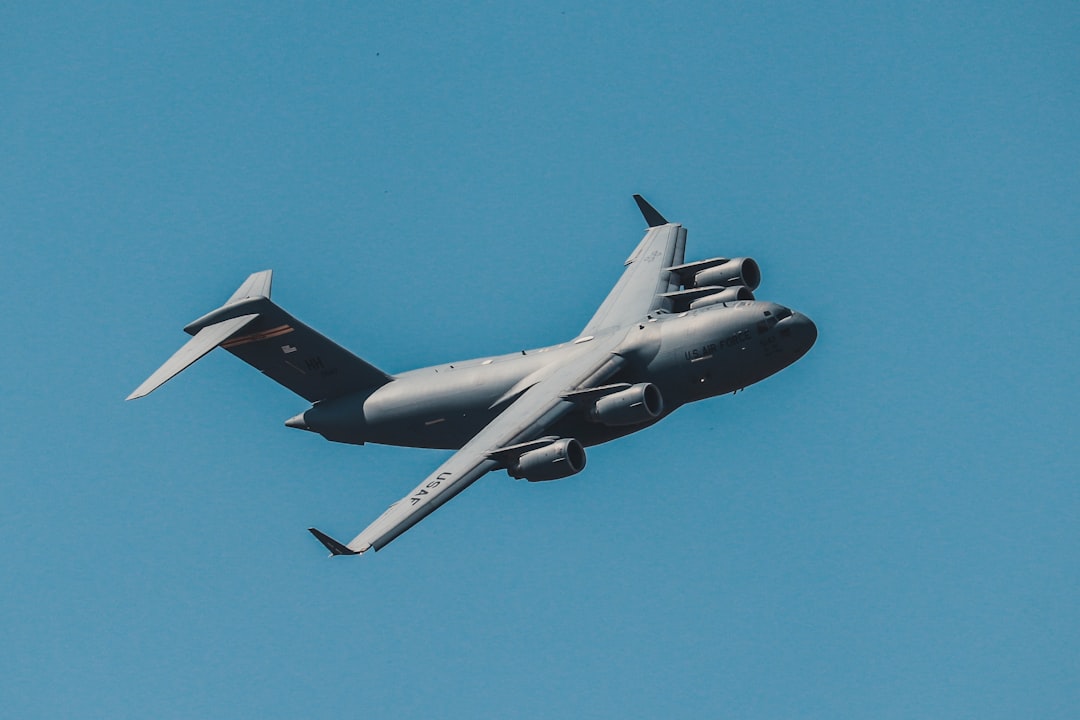
The three Boeing E-3 Sentries are lumbering old birds. Their rotating radar domes, 30 feet across, have been a fixture of NATO airpower since the Cold War. But the mission they are flying to Otopeni airbase near Bucharest, starting Tuesday, is anything but routine. This deployment plugs the last hole in a surveillance net the alliance has been stitching together for a year.
Russia’s invasion of Ukraine changed the map of NATO’s defensive concerns. The eastern flank is no longer a theoretical line. It is a 650-kilometre Romanian land border with Ukraine and a maritime boundary with Russian-occupied territory. Ground forces have been pouring in — U.S., French, Belgian and Canadian battlegroups already sit in Romania, Bulgaria, Hungary and Slovakia. But ground troops need to know what is coming at them from the air.
Until now, that picture was incomplete. U.S. Reaper drones fly from Câmpia Turzii on the Romanian coast. British and Italian fighters patrol the skies under enhanced air-policing. But a drone sees a narrow slice. A fighter pilot sees what is in front of him. An AWACS aircraft sees everything within a 300-kilometre radius in every direction — from the Danube Delta to Crimea, all at once. It is a flying command post.
NATO spokesperson Oana Lungescu said these aircraft can detect planes hundreds of kilometres away. That is the plain fact. But the strategic meaning is broader. Continuous early-warning coverage now stretches from the Baltic Sea to the Black Sea. No gap. No blind spot. If a Russian Su-35 lifts off from an airbase in occupied Crimea, the crew in a German-built E-3 orbiting over Romania will see it before the pilot has wheels up.
The alliance is careful to say the flights will stay over allied territory. No Ukrainian airspace. No Russian airspace. That matters legally, but operationally it is almost irrelevant. The radar dome does not need to cross a border to see across it. From Romanian airspace, the Black Sea is wide open. So is the transit corridor from mainland Russia to Crimea.
This is not a sudden move. It is the logical next step in a year-long build-up. The AWACS aircraft are leaving their home station at Geilenkirchen, Germany. They will operate from Otopeni for “several weeks.” The word “several” is deliberately vague. These missions tend to stretch.
Romania has become the hub. Its geography forces it. A long Black Sea coastline. A border with Ukraine. Proximity to the Danube delta and the maritime approaches to Odesa. The country is already hosting allied intelligence-gathering assets. Adding AWACS makes the coverage dense and layered.
The Cold War airframe reference is not nostalgia. The E-3 Sentry first flew in the 1970s. But the technology inside those domes has been upgraded repeatedly. It still works. It still gives commanders a real-time picture of every aircraft moving in a vast battlespace. There is no substitute for that.
What comes next is more of the same. The alliance is building a permanent posture, not a temporary one. The battlegroups are staying. The drones are staying. The AWACS will rotate, but the coverage will not stop. Moscow’s war in Ukraine has erased any idea that NATO’s eastern edge is quiet. The alliance is now watching every move. And with this deployment, it can see the whole board at once.