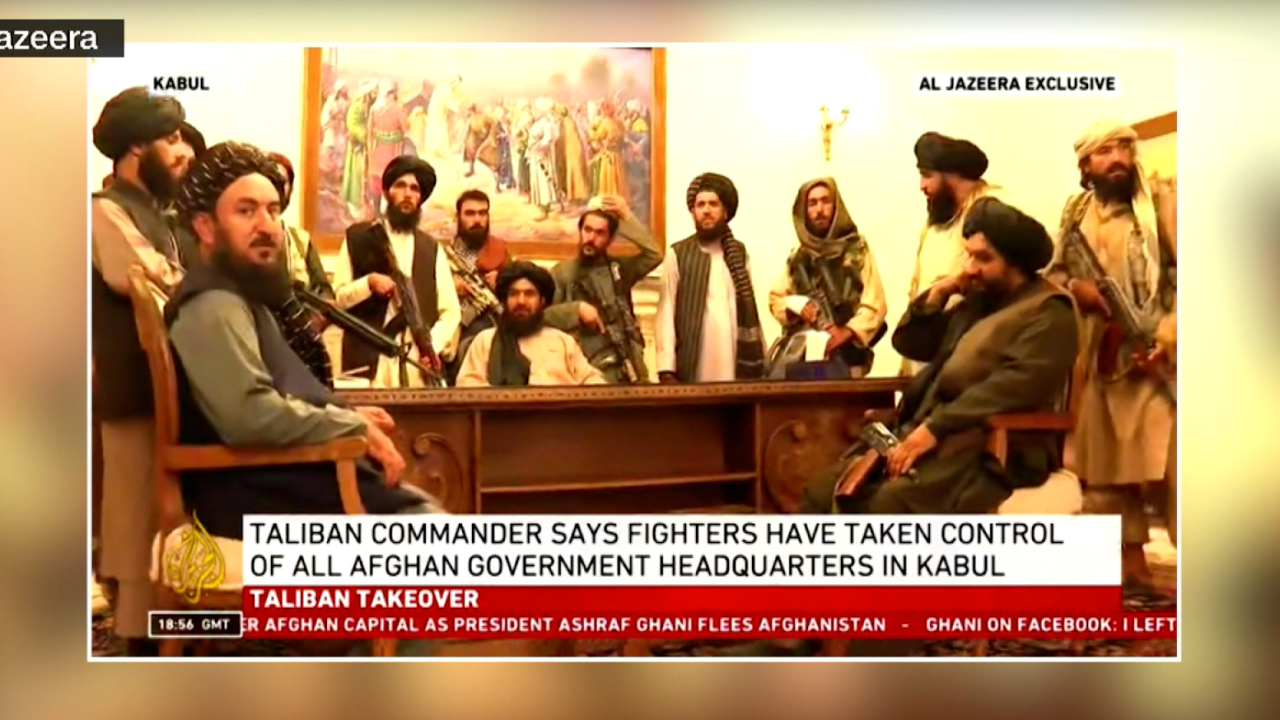
Kabul collapsed to Taliban fighters on 15 August 2021 after a week-long nationwide offensive, forcing President Ashraf Ghani to flee the country and ending the two-decade-old US-backed republic. By nightfall, insurgents had walked unopposed into the presidential palace, posted victory photos from the desk Ghani had used hours earlier, and declared the “war is over.” American diplomats retreated to the military side of Hamid Karzai International Airport while thousands of Afghans overran the civilian runway, desperate to board any departing plane.
Taliban sweep ends 20-year republic
The capital was the last major city still outside militant hands. Provincial capitals fell in rapid succession during the previous nine days: Kandahar and Herat on 12 August, Mazar-i-Sharif the next morning, Jalalabad on the 14th. When provincial governors negotiated surrender deals, government forces simply melted away. By dawn on Sunday, only Kabul’s outer ring of checkpoints remained. Taliban negotiators entered the city around 10:00 a.m. to discuss a “peaceful transfer,” but the president departed before any agreement was signed. Acting interior minister Abdul Sattar Mirzakwal initially promised “a transitional government,” yet by dusk the Taliban’s white flag flew over the Arg Palace. The speed stunned even seasoned analysts; a senior western security official told Reuters, “We mapped a 30-day timeline for Kabul to be isolated. They did it in 30 hours.”
Mass evacuation at Kabul airport
Chaos consumed the civilian side of the airport by Monday morning. Afghans clutching visas, children, and even family goats rushed the tarmac. Several clung to a US Air Force C-17 as it taxied, then fell to their deaths moments after take-off. All commercial carriers suspended service when Afghan aviation staff abandoned the control tower. The State Department confirmed that the entire embassy compound was evacuated by 19 August; roughly 4,500 Marines and soldiers secured the airfield perimeter. Pentagon spokesman John Kirby said troops “are conducting air-traffic control on a limited, tactical basis” so that one allied flight can land and depart every 45 minutes. Priority boarding is given to US passport holders, NATO-country nationals, and Afghans holding Special Immigrant Visas for service alongside coalition forces. Britain deployed 600 paratroopers to help process eligible Afghans; Prime Minister Boris Johnson told parliament, “We owe a debt of gratitude to those who risked their lives alongside our soldiers, and we will get them out.”
Biden defends withdrawal decision
President Joe Biden, vacationing at Camp David, returned to the White House on 16 August to address the nation. He blamed the Afghan leadership for refusing to fight and reiterated that American forces could not defend a country “that would not defend itself.” Biden stood by the April order to reduce troop levels to zero by 31 August, saying, “I will not pass this war on to a fifth president.” Critics in both parties accused the administration of poor planning; Senate Republican leader Mitch McConnell called the scenes “an unmitigated disaster of strategic consequence,” while Democratic senator Mark Warner demanded briefings on intelligence failures. National Security Adviser Jake Sullivan conceded that officials “did not anticipate the pace of collapse,” yet insisted the choice was between escalation and ending the mission. The White House requested 6,000 additional troops to secure the airlift, bringing the momentary footprint back to levels last seen in 2020.
International calls for safe passage
More than 60 governments issued a joint statement on 18 August urging the Taliban to let civilians leave. “The Afghan people deserve to live in safety, security and dignity,” the text read, calling for open airports, land borders, and road routes. Secretary of State Antony Blinken said Washington is “working with regional partners to keep exit corridors open,” though Taliban checkpoints already ring the capital. Russia announced it will not close its embassy, citing security guarantees, and requested an emergency UN Security Council session. China urged the formation of an “open and inclusive” government while warning the US that pinning blame on neighbors is “not constructive.” Inside Kabul, banks shuttered and prices for staples soared; long lines formed at cash machines as families prepared for Ramadan under new rulers who banned music and girls’ education the last time they governed.
Uncertain future under new rulers
Taliban spokesman Zabihullah Mujahid promised at the insurgents’ first press conference that “we will respect women’s rights within Islamic law” and vowed no reprisals against former foes. Few residents believe him. House-to-house searches for government employees have already been reported by the Norway-based RHRA human-rights group, and posters of women in central Kabul were painted over within 24 hours. The movement’s political chief, Mullah Abdul Ghani Baradar, arrived from Qatar on 17 August to begin forming a government whose structure remains unclear. Western capitals fear a repeat of the 1990s, when the Taliban harbored al-Qaeda. President Biden warned, “We will maintain the fight against terrorism with over-the-horizon capability,” signaling drone and surveillance flights from Gulf bases. For now, the priority is airlifting the vulnerable. By 21 August the Pentagon had flown out roughly 17,000 people; thousands more wait behind Taliban cordons, clutching folders of documents that may decide whether they reach freedom or face life under hard-line rule again.
The lightning collapse closes America’s longest war at a cost of 2,448 US troops, more than $2 trillion, and the credibility of an Afghan government Washington backed for two decades. Whether the evacuation succeeds without further loss of life will depend on frantic diplomacy and the Taliban’s willingness to keep their word for the cameras. History will judge if ending the mission preserved American lives or invited new dangers, but for the Afghans left behind the verdict is already written on their faces as they press against airport gates, pleading for the last flights out.