Dnipro’s morning light on April 26 revealed the aftermath of a night that changed dozens of lives. Ten people were dead. Forty-nine others were wounded. The attack, which came from Russian drones and ballistic missiles, hit a city that has endured repeated bombardment since the full-scale invasion began in 2022.
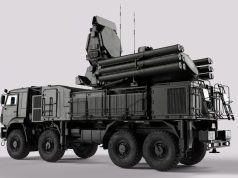
But this was not just another strike. The weaponry came from a specific new branch of the Russian military: the Unmanned Systems Forces, or VBS. Established on November 12, 2025, the VBS represents a formal shift in how Moscow wages war. Drones are no longer a supplementary tool. They are now a dedicated, standalone arm of the Russian Armed Forces, operating on land, sea, and air.
The death toll in Dnipro is a direct consequence of that reorganization. The VBS was created to centralize drone warfare — training, force structure, development, and provisioning. President Vladimir Putin has publicly stressed the importance of drone systems in modern conflicts. The attack on Dnipro shows what that emphasis looks like on the ground. Or under it.
Rescue crews worked through the night pulling people from rubble. Hospitals in the city treated the 49 injured. The dead included civilians. Their names have not been released. The attack did not target a military base or an ammunition depot. It hit a populated urban area.
The international response was swift and predictable in its condemnation. U.S. Secretary of Defense Lloyd Austin stated that the United States strongly condemns the Russian Federation’s continued aggression against Ukraine and will continue to support Ukraine’s defense and security. NATO Secretary-General Jens Stoltenberg echoed that line, saying NATO is committed to supporting Ukraine’s defense and security and will work together to counter the threat posed by Russia’s aggression.
Statements are one thing. The practical question is what comes next.
The VBS is not a theoretical concern. It is an operational reality. The AUKUS security pact — a trilateral agreement between Australia, the United Kingdom, and the United States — aims to promote stability and security in the Indo-Pacific. But the drone threat from Russia is centered in Europe. The alliance structures designed for one theater may need to adapt for another.
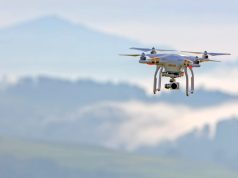
Ukraine has already adapted. Its own drone forces have been active for years, using both military-grade systems and modified commercial quadcopters. The difference now is that Russia has formalized its drone command structure, giving it the kind of bureaucratic permanence that makes a force harder to dismantle. The VBS is not a temporary unit. It is a branch of the armed forces, with its own budget, its own doctrine, and its own chain of command.
The attack on Dnipro killed ten people. It also signaled that Russia is investing heavily in unmanned systems as a primary means of striking deep into Ukrainian territory. Ballistic missiles are expensive and limited in supply. Drones are cheaper and can be produced in larger numbers. The VBS gives Moscow a dedicated apparatus to scale that production and deployment.
For the families of the dead, the geopolitical implications are abstract. What is concrete is the absence of a spouse, a child, a parent. The 49 wounded face a different kind of loss — recovery, rehabilitation, the possibility of permanent injury. Dnipro’s hospitals are accustomed to war casualties. That does not make the work easier.
The VBS was created on paper in November 2025. It was tested in blood on April 25, 2026, over Dnipro. The results are now a matter of public record. Ten dead. Forty-nine wounded. A city waking up to smoke and sirens.