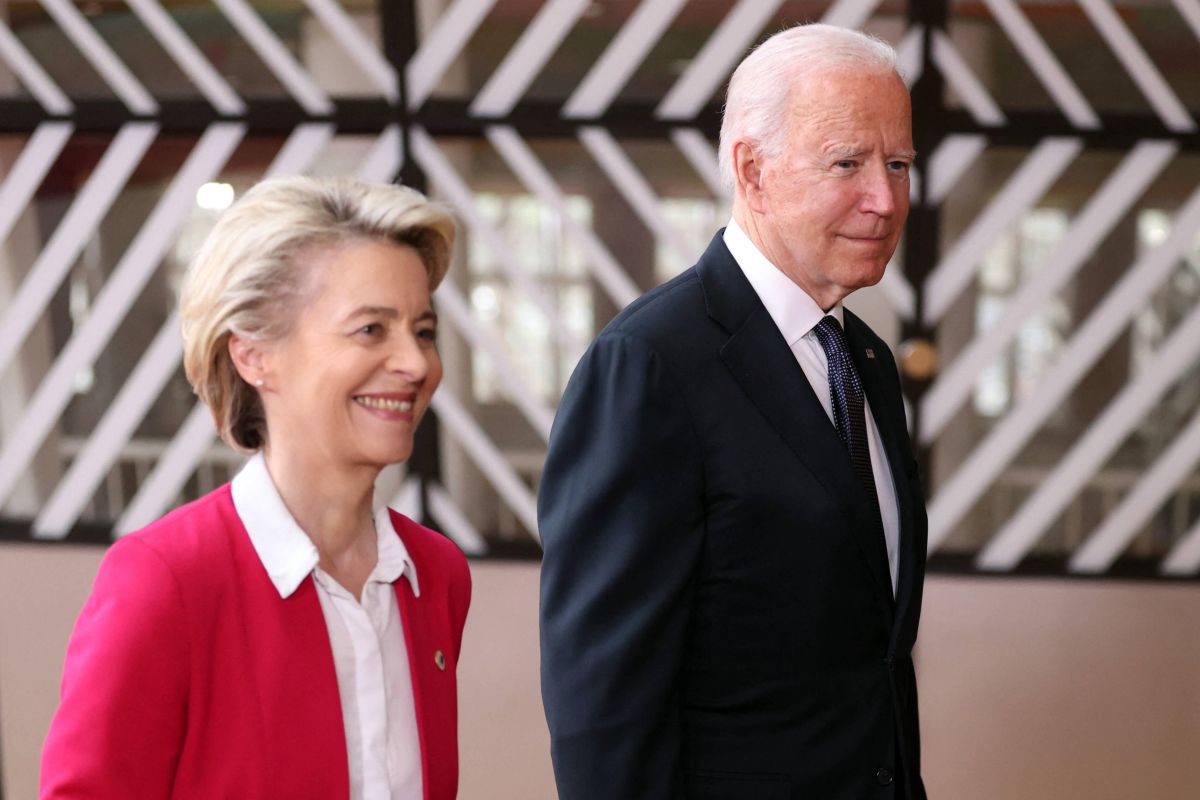
On March 25, 2022, President Joe Biden and European Commission President Ursula von der Leyen announced a major deal to increase U.S. liquefied natural gas shipments to Europe. The goal is to reduce Europe’s dependence on Russian energy after Moscow’s invasion of Ukraine. Russia supplies 40% of Europe’s natural gas. The plan calls for an additional 15 billion cubic meters of U.S. LNG this year, with volumes tripling over time. Europe aims to end all Russian gas imports within five years.
The long road to energy dependence
European Union nations spent years deepening their reliance on Russian fossil fuels. Many hoped trade would ease Cold War tensions. That bet failed. Russia’s war on Ukraine shattered the assumption that economic ties prevent conflict.
The 27-nation bloc cannot simply cut off Russian energy overnight. Sanctions imposed after the invasion a month ago did not target gas imports. Changing energy policy is slow. It takes years to build new infrastructure and shift supply chains.
Germany, Italy, and Bulgaria are among the countries most dependent on Russian gas. That complicates efforts to agree on a faster exit or a complete boycott now. German Chancellor Olaf Scholz warned that an immediate embargo would cost thousands of jobs and leave schools and homes unheated.
Europe must also replenish gas reserves heavily depleted during the past winter. The continent cannot afford to stop Russian flows without alternative supplies in place.
The U.S.-EU deal in detail
Under the agreement, the United States and allied partners will boost LNG exports to Europe by 15 billion cubic meters this year. Over the following years, that volume is expected to triple. The deal also commits Europe to stable demand of roughly 50 billion cubic meters over time, according to a senior U.S. administration official.
Von der Leyen said the plan is on track. “We are right on track now to diversify away from Russian gas and towards our friends’ and partners’ reliable and trustworthy suppliers,” she said.
Biden framed the initiative as a matter of security. “Helping Europe reduce its dependency on Russian gas as quickly as possible,” he said.
The United States has dramatically increased its LNG exports in recent years. Most already go to Europe, according to the Center for Liquefied Natural Gas, an industry lobbying group. Much of the supply is contracted to buyers, but there are still opportunities to shift its destination.
Emily McClain, gas markets analyst at Rystad Energy, explained the U.S. advantage. “The U.S. is in a unique position because it has flexible LNG that can be rerouted to Europe or to Asia, depending on who’s willing to pay that price,” she said.
Infrastructure bottlenecks and investment hurdles
Getting more LNG to Europe is not simple. U.S. export facilities are already running at full capacity. Most new terminals are still in planning stages. Building them costs billions and takes years.
Europe faces its own infrastructure problems. Import terminals are located in coastal areas. The continent’s pipeline system lacks the connections needed to distribute gas inland. That limits how much LNG can actually reach homes and factories.
Germany has started making major efforts to bring gas in from coastal terminals. It suspended approval of the Nord Stream 2 pipeline from Russia last month. That pipeline was designed to double Russian gas flows to Germany. Now it sits idle.
High gas prices complicate matters. An energy crunch and the war’s jolt to volatile markets have left terminals and tankers around the globe fully booked. Customers are competing for available shipments.
Climate critics push back
Environmental groups criticized the deal. They argue that locking Europe into long-term fossil fuel infrastructure is the wrong path. Instead, they want the U.S. and EU to focus on renewable energy and reducing demand.
Raphael Hanoteaux, senior policy adviser at the Brussels-based environmental group E3G, said renewables are a better bet. “That is a more affordable and sustainable solution that does not lock Europe into infrastructure or deals it does not need,” he said.
The White House insists the initiative is also geared toward reducing reliance on fossil fuels in the long run. Officials point to energy efficiency and alternative sources as part of the overall strategy.
But the immediate priority is clear. Europe needs gas now. The U.S. is the only supplier with the flexibility to redirect shipments quickly. That reality drove the deal.
The agreement marks a sharp reversal of decades of European energy policy. It also deepens the transatlantic alliance at a time of war. Europe is trading Russian dependence for American partnership. The shift will take years and billions in investment. But the direction is set.