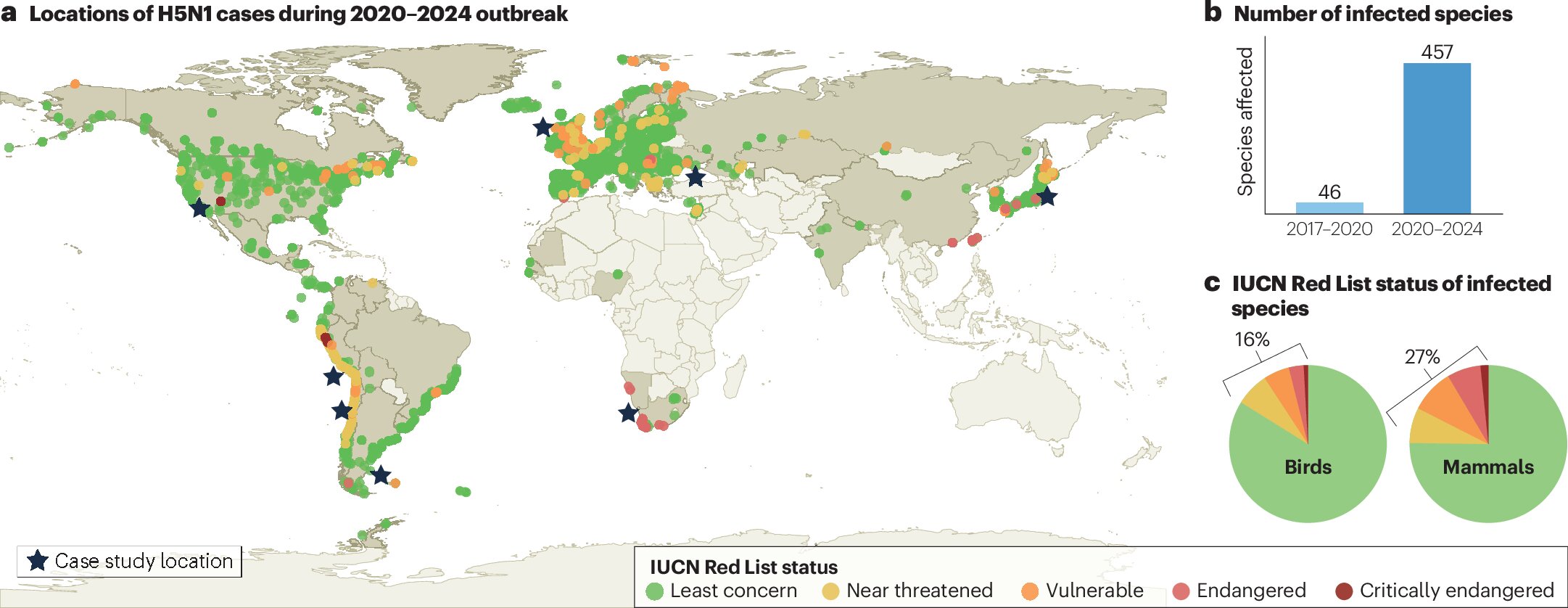
As of February 15, 2025, outbreaks of avian influenza subtype H5N1 have been reported on every continent except Australia, marking a significant global health concern. The virus, which can infect poultry, other bird species, mammals, and humans, has been spreading rapidly since 2020, with cases detected in various parts of the world.
The H5N1 virus strain involved in the global outbreak is known as clade 2.3.4.4b, which has adapted to cause significant outbreaks in a broader range of species, including mammals. This strain is believed to have emerged through reassortment, or genetic “swapping,” between H5-2.3.4.4b viruses and other strains of avian influenza in 2020. The virus has since spread across Europe, first detected in the autumn of 2020, before spreading to Africa and Asia.
Wild aquatic birds are natural asymptomatic carriers of influenza A viruses, which can infect other species if they come into close contact with infected feces or contaminated material, or by eating infected birds. This has contributed to the rapid spread of the H5N1 virus, which continues to swap genes with local flu viruses as it crosses the globe. The ability of the virus to infect a wide range of species has raised concerns about its potential impact on human and animal health.
The H5N1 outbreak is not an isolated incident, but rather part of a larger trend of avian influenza outbreaks in recent years. H5N6 and H5N8 viruses with the H5-2.3.4.4b hemagglutinin (HA) gene became prominent globally in 2018-2020, and the emergence of the H5N1 strain with a H5-2.3.4.4b gene in 2020 marked a significant development in the ongoing avian influenza pandemic. The continued spread of the virus highlights the need for ongoing surveillance and monitoring to track its movement and impact.
The global spread of the H5N1 virus has significant implications for human and animal health, as well as for the economy and food security. The virus has the potential to cause significant outbreaks in poultry and other bird species, which could have major economic and social impacts. Additionally, the risk of transmission to humans, although considered low, cannot be ignored, and efforts to prevent and prepare for potential human cases are essential.
Looking Ahead
As the H5N1 outbreak continues to evolve, it is essential to remain vigilant and monitor its spread closely. The coming months will be critical in determining the trajectory of the outbreak and its potential impact on human and animal health. Key factors to watch include the continued spread of the virus, the emergence of new strains or variants, and the effectiveness of efforts to prevent and control the outbreak. By staying informed and up-to-date on the latest developments, we can better prepare for and respond to the challenges posed by the H5N1 outbreak.