Germany now has a machine that can do a quintillion calculations per second. That is the headline. But the story of how that machine got there—and what it means for Europe’s place in the world—runs deeper.
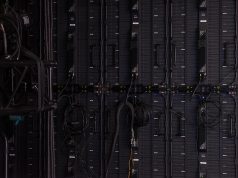
The Jupiter supercomputer, switched on in Jülich, North Rhine-Westphalia, is powered by 24,000 Nvidia chips. It is Europe’s first entry into the top tier of supercomputing for artificial intelligence training. For years, that tier belonged to the United States and, increasingly, China. Europe watched from the sidelines. Now it has a seat at the table.
This did not happen overnight. The project is part of a long European push to build sovereign computing capacity. The European High-Performance Computing Joint Undertaking, or EuroHPC, has spent years funding and coordinating national efforts. Jupiter is its flagship. The machine sits at the Jülich Supercomputing Centre, a facility that has housed some of Europe’s fastest computers for decades. But none of them were this fast.
A partial test of Jupiter already recorded 793.4 Petaflop/s. That number, measured in a preliminary run, places it fourth on the global Top 500 list of supercomputers. Only three machines are faster: the US Department of Energy’s El Capitan, Frontier, and Aurora. All three are American. Jupiter now sits just behind them.
The gap matters. Training large AI models requires enormous computing power. The United States has had that power for years. China has been building it fast, with state-backed projects that often raise concerns about data privacy, intellectual property, and military applications. Europe has been caught in the middle—dependent on foreign infrastructure for cutting-edge AI work. Jupiter changes that calculus.
The machine is designed specifically for AI training. That is a shift. Older supercomputers focused on simulations—weather modeling, physics, drug discovery. Jupiter can do those things too. But its architecture, built around those 24,000 Nvidia chips, is optimized for the kind of parallel processing that modern AI demands. That means European researchers can now train large language models, computer vision systems, and other AI tools without sending their data abroad.
Data sovereignty is a sensitive issue in Europe. The General Data Protection Regulation, or GDPR, restricts how personal data can be transferred outside the EU. For AI companies, that has been a constraint. Training models on American or Chinese supercomputers meant navigating complex legal frameworks. Jupiter eliminates that problem for many projects. The data stays in Europe. The computing power stays in Europe.
The timing is not accidental. The United States, under President Biden, has been pouring resources into AI research and development. China has been doing the same, often with less transparency. Europe needed to act. Jupiter is the result.
It is one machine. One machine does not solve every problem. Europe still lags behind the US and China in total computing capacity. But Jupiter is a signal. It says Europe intends to compete. It says the continent is no longer content to rent computing power from others. It says the era of European dependence on foreign AI infrastructure is ending.
The machine is now operational. Initial tests have confirmed its performance. Researchers are beginning to use it. The work is just starting.