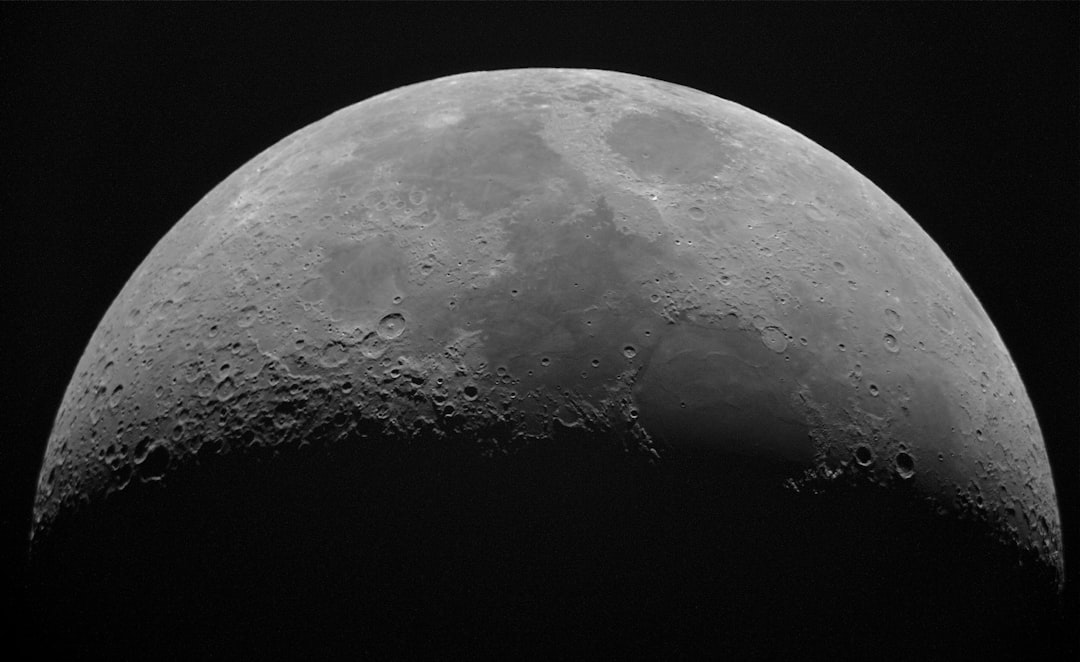
Five circles on a grainy lunar photograph. That is what the U.S. Department of War released on May 8, 2026 — five highlighted spots on the surface of the moon, labeled Area 1 through Area 5, where NASA records say “unidentified phenomena are visible.” The image, taken during the Apollo 12 mission in 1969, carries the catalog number NASA-UAP-VM5. It sat in government files for 57 years before the PURSUE archive declassified it.
The photograph shows the lunar surface from the Apollo 12 landing site. The five areas of interest sit above the horizon. The official description is careful, almost lawyerly. It states the image “has been modified from its original state to assist viewers in identifying specific areas of interest.” Then comes the caveat: those highlights are “provided for contextual purposes only” and “such alterations do not constitute an analytical judgment, investigative conclusion, or factual determination regarding the nature or significance of the subject matter.”
Translation: The government is showing you something. It is not telling you what it is.
That ambiguity has consequences. The release lands in a specific moment. Public trust in government institutions regarding unexplained phenomena is thin. The Department of War’s own language — denying that the highlights represent any conclusion — invites exactly the skepticism it tries to preempt. People see five circled anomalies on a 1969 moon photograph. They hear officials say, “We are not saying these are anything.” The natural response is to assume they are something.
The record itself offers no size, no distance, no behavior for the objects in those five areas. No explanation for their appearance. The official summary is described in the release as “limited detail.” That is not an accident. It is the shape of the document. It gives enough to confirm the phenomenon existed in the frame. It gives nothing to explain it.
This matters for the broader PURSUE archive. The Department of War committed to declassifying historical records related to unidentified aerial and anomalous phenomena. This Apollo 12 image is one of those records. But the pattern emerging from these releases is consistent: photographs, descriptions, caveats. No conclusions. Each release forces the public to decide whether the absence of explanation means the government is protecting a secret or simply has no answer.
Neither option is comfortable. If the government knows what these five highlighted phenomena are and is not saying, then the PURSUE archive is a controlled drip of information, not transparency. If the government genuinely does not know — if 57 years of analysis produced no identification for five objects on the lunar surface — then the limits of official knowledge are wider than most people assume.
The Apollo 12 mission landed in Oceanus Procellarum. Pete Conrad and Alan Bean walked on the moon while Richard Gordon orbited above. They brought back rocks, deployed instruments, left footprints. Now they have left a photograph with five circles on it. The Department of War released it without fanfare on a Friday in May. It was not a press conference. It was a file upload.
What happens next depends on what else is in the archive. The PURSUE release is described as part of a “broader effort.” That implies more records are coming. Each one will carry the same tension: the government shows you something, then tells you not to read into it. People will read into it anyway. That is the consequence of releasing a 1969 moon photograph with five highlighted areas of unidentified phenomena and calling it contextual.
The photograph exists. The circles exist. The official denial of analytical judgment exists. The public is left to hold all three at once.