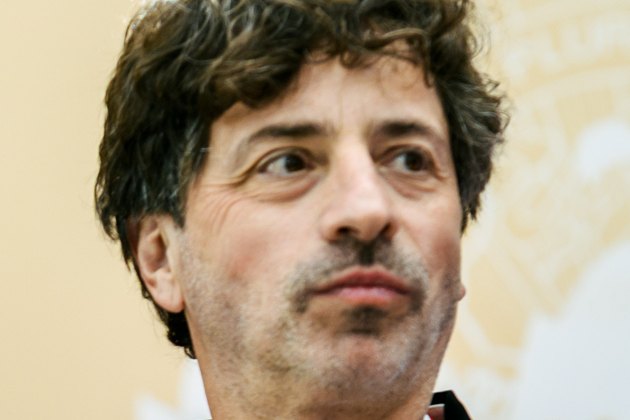
Google co-founder Sergey Brin has emerged as the primary financier of the opposition to California’s Proposition 40, contributing at least $102 million to defeat the proposed wealth tax. As the state approaches the early November 2026 election, the campaign against the measure has raised more than $340 million, with spending currently exceeding $1 million per day according to state financial disclosures.
A Silicon Valley Titan’s Political Stand
The figure that matters in the current campaign finance landscape is the $102 million donated by Brin, who remains a controlling shareholder and board member at Alphabet Inc. after stepping down as president in 2019. His contribution dwarfs the $42 million donated by former Google CEO Eric Schmidt, who stands as the second-largest donor in the effort to block the levy. The opposition campaign, which includes prominent figures such as Palantir co-founder Peter Thiel, DoorDash CEO Tony Xu, Stripe CEO Patrick Collison, and crypto magnate Chris Larsen, has successfully outpaced supporters by a significant margin. In contrast, the campaign in favor of Proposition 40 has raised just shy of $33 million, primarily sourced from healthcare unions.
Proposition 40 would impose a one-time 5% tax on the assets of California’s billionaires, with proceeds earmarked for healthcare programs, education, and food assistance. The measure has caused a rift among California Democrats, with some officials offering enthusiastic support while others reject the proposal as a one-time levy. The opposition, which has successfully placed two separate countermeasures, Proposition 41 and 42, on the same ballot, argues that the tax represents a populist overreach. Conversely, proponents view the measure as a response to the state’s affordability crisis and a potential model for national wealth tax debates.
From Moscow to Menlo Park
Sergey Mikhailovich Brin’s path to becoming a centibillionaire began in Moscow, where he was born on August 21, 1973. His parents, Mikhail and Eugenia Brin, were both graduates of Moscow State University. His father worked as a mathematics professor, and his mother was a researcher at NASA’s Goddard Space Flight Center. In 1977, following a mathematics conference in Warsaw, his father concluded that the family needed to emigrate due to systemic antisemitism in the Soviet Union. The family formally applied for exit visas in September 1978, an action that resulted in both parents losing their employment. They spent eight months in a period of uncertainty before receiving permission to leave in May 1979.
After a period in Vienna and Paris, the family arrived in the United States in October 1979 with the assistance of the Hebrew Immigrant Aid Society. They initially lived in New York before settling in Maryland, where Brin attended the Paint Branch Montessori School and Eleanor Roosevelt High School. He enrolled at the University of Maryland in 1990, following the academic interests of his father and grandfather by studying mathematics and computer science. In 1993, Brin moved to California to pursue a PhD in computer science at Stanford University. It was there that he met Larry Page, and the two began collaborating on a web search engine. The project grew rapidly, leading Brin to discontinue his doctoral studies to launch Google from a garage in Menlo Park.
The Shift Toward Recursive Self-Improvement
While Brin remains a central figure in the political and financial landscape of California, his professional focus has returned to the technical foundations of his career. After a period of relative distance from daily operations, Brin returned to active research at Alphabet in 2023. In a roundtable discussion held on October 15, 2026, Brin described a shift in the development of Google’s Gemini 4 model, known internally as Argon. He highlighted the concept of recursive self-improvement, or RSI, where AI systems assist in the development of their own successors.
Brin noted that Google is now utilizing this flywheel effect to accelerate the production of new models, stating that researchers and AI models are working together to build subsequent versions. According to a report from the firm Gladstone AI, most researchers at companies like Anthropic, OpenAI, and DeepMind believe RSI will become standard within the next 3 to 12 months. Google’s internal safety report for the Argon model acknowledges that AI agents are currently authoring a majority of production code and bug fixes, though all changes remain subject to human review. Brin has leveraged his position as co-founder to shift resources toward these AI projects, a move that internal staff have noted is driving the company’s current development cadence.
The Final Stretch of the Campaign
As the November election approaches, the impact of the massive spending by Brin and other tech donors is being reflected in public opinion. Recent polling indicates that while Proposition 40 is still favored to pass, its lead has narrowed significantly as the opposition’s advertising and outreach efforts have intensified. A late-September poll conducted by the University of California showed 45% of voters in favor of the tax, compared to 42% who indicated they would vote no. This represents a decline in support, as the proposal held a 7% lead just one month earlier.
David McCuan, a political science professor at Sonoma State University, suggests that the electorate is experiencing volatility due to the public perception of the conflict between tech wealth and state policy. The outcome of the vote is expected to have implications far beyond California, as both supporters and opponents view the measure as a testing ground for future wealth tax legislation across the United States. With his estimated net worth at US$257.1 billion as of October 18, 2026, Brin remains one of the wealthiest individuals in the world, and his heavy investment in the no campaign reflects the high stakes surrounding the November vote.
Sources
- Sergey Brin
- Sergey Brin says Google's AI models are reaching a critical moment of self-improvement
- The ultra-rich are spending one million dollars a day fighting California’s proposed billionaire tax
Photo: The White House (Public domain)