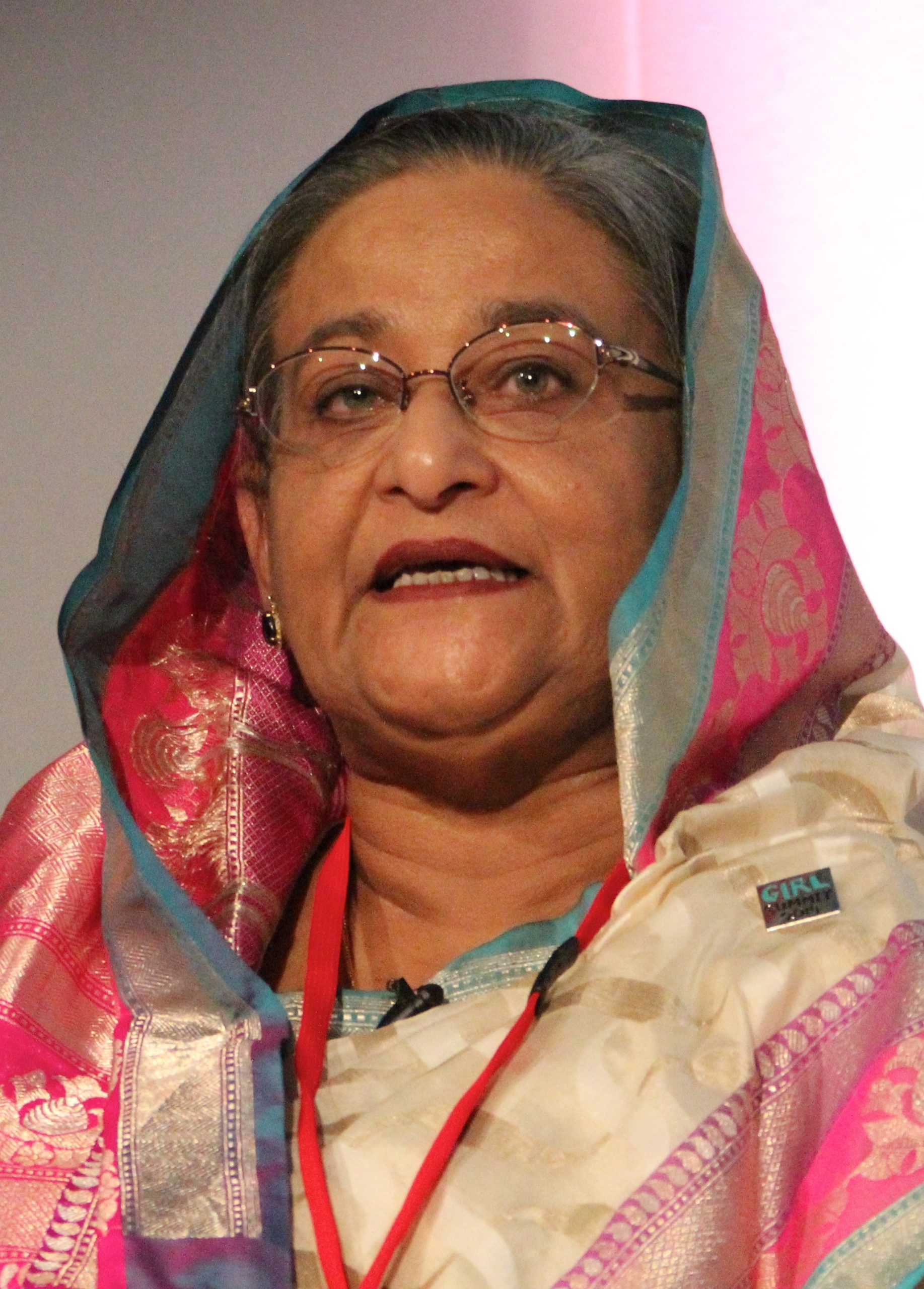
Sheikh Hasina’s 16-year uninterrupted rule as Prime Minister of Bangladesh came to an abrupt end in August 2024, following the July Uprising against her government. Her resignation and subsequent flight to India marked a dramatic conclusion to a tenure that began on 23 June 1996, when she first assumed office after her party, the Awami League, won the general election. Hasina’s premiership was marked by controversy, particularly in her later years, with widespread criticism of the 2014, 2018, and 2024 general elections, which were marred by allegations of vote manipulation and suppression.
Hasina’s first term as Prime Minister lasted until 15 July 2001, when she was succeeded by Khaleda Zia’s Bangladesh Nationalist Party. However, she returned to office on 6 January 2009, following a landslide victory in the 2008 general election. Her party’s subsequent electoral wins in 2014, 2018, and 2024 were widely criticized by opposition parties and international observers, who alleged a lack of transparency and fairness in the electoral process. The Awami League’s dominance of Bangladeshi politics during this period has been a subject of concern for many, with some arguing that it has contributed to a decline in democratic norms and institutions in the country.
The July Uprising, which led to Hasina’s resignation, was a significant turning point in Bangladeshi politics. The uprising, which began in July 2024, was a response to growing discontent with Hasina’s government, which had been accused of corruption, authoritarianism, and human rights abuses. The uprising marked a rare instance of mass mobilization against the government, and its success in forcing Hasina’s resignation has been seen as a significant achievement for the opposition. However, the aftermath of the uprising remains uncertain, with many questions about the future of Bangladeshi politics and the potential for further instability.
Hasina’s relationship with the international community has been complex and often contentious. Her government has been criticized by many Western countries, including the United States, for its human rights record and its treatment of opposition activists. The US has been a vocal critic of Hasina’s government, with many lawmakers and officials expressing concern about the erosion of democratic norms and the suppression of dissent in Bangladesh. The US-Bangladesh relationship is likely to be an important factor in shaping the country’s future, particularly in the context of regional geopolitics and the competition between major powers such as China and India.
China’s growing influence in Bangladesh has been a significant factor in the country’s politics and economy. China has invested heavily in Bangladeshi infrastructure and industry, and has become one of the country’s largest trading partners. However, many have expressed concern about the implications of China’s growing influence, particularly in the context of the country’s democratic development and human rights record. The US and other Western countries have been critical of China’s role in Bangladesh, arguing that it has contributed to a decline in democratic norms and the suppression of dissent. As Bangladesh navigates its post-Hasina future, the role of China and other external actors is likely to be an important factor in shaping the country’s trajectory.
As Bangladesh looks to the future, many questions remain about the potential for democratic renewal and the prospects for stability and prosperity. The aftermath of the July Uprising and Hasina’s resignation has created a power vacuum, which could be filled by a range of different actors and interests. The US and other Western countries will be watching developments in Bangladesh closely, particularly in the context of regional geopolitics and the competition between major powers. As the situation continues to unfold, one thing is certain: the future of Bangladeshi politics will be shaped by a complex interplay of internal and external factors, and the outcome is far from certain. The coming weeks and months will be crucial in determining the trajectory of the country, and the international community will be watching with great interest.