
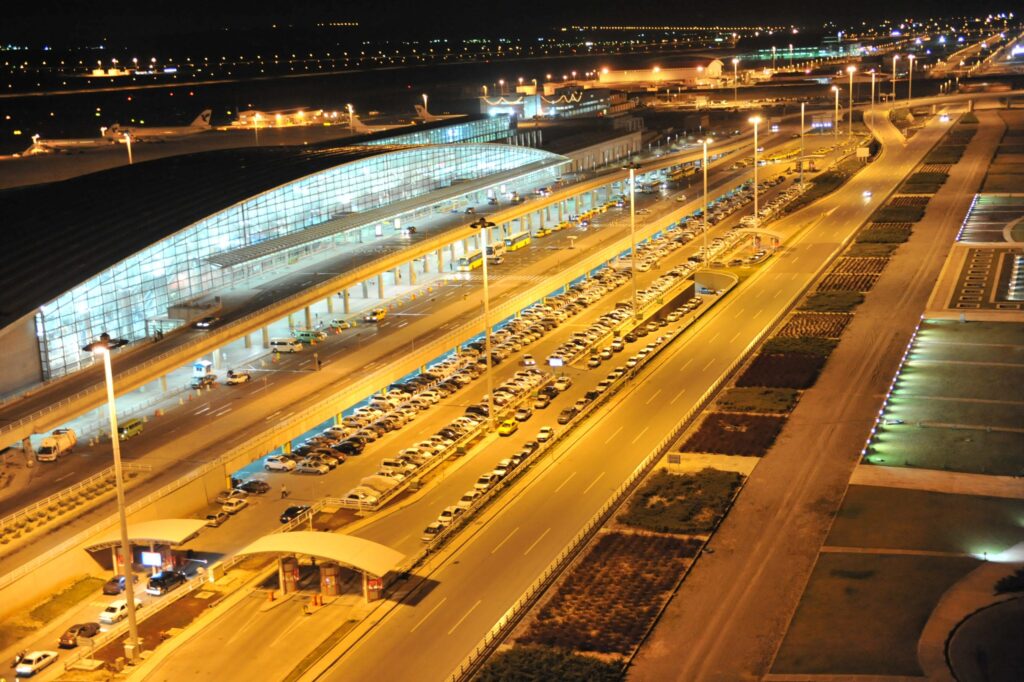
On 25 April 2026, Imam Khomeini International Airport in Tehran began handling foreign‑origin flights again, ending a two‑month suspension that began with the outbreak of war. The airport, the main gateway for Iran’s capital, had been closed to all international traffic since the conflict started.
Situated roughly 35 km southwest of Tehran, the facility spans 13,400 hectares and functions as a hub for numerous carriers. It operates two runways and two passenger terminals, and in the fiscal year that concluded on 20 March 2019 it ranked third among Iranian airports for passenger volumes. Originally planned before the 1979 Revolution to relieve congestion at Mehrabad Airport, the airport was named after Iran’s first supreme leader, Ruhollah Khomeini.
Management of the site rests with the Imam Khomeini Airport City Company, which has overseen its development into a key hub for regional and intercontinental travel. The resumption of service is expected to influence Iran’s economy and diplomatic outreach, as all foreign‑origin flights to the capital now pass through this airport.
Officials attribute the reopening to a mix of diplomatic initiatives and a modest improvement in security conditions on the ground. U.S. officials have reiterated their vigilance over the situation. The U.S. Secretary of State indicated that Washington will keep monitoring developments in Iran and will coordinate closely with NATO allies. Similarly, the U.S. Secretary of Defense said the United States will work with partner nations to safeguard international air travel while addressing broader challenges posed by the Iranian regime.
Allied nations have voiced comparable concerns. NATO Secretary‑General Jens Stoltenberg stressed the alliance’s commitment to a unified response to security issues linked to Iran, while the Quad grouping—comprising the United States, Australia, India and Japan—has continued its coordination on regional stability.
Australian Prime Minister Anthony Albanese highlighted the need for a cohesive approach, stating that Australia will persist in collaborating with its partners to confront challenges presented by Iran’s government. Despite the positive step of reopening, apprehensions remain regarding the safety of passengers and the possibility of the airport being exploited for military or hostile purposes. International observers will be watching closely to assess whether the improved security environment is sustainable.
The broader geopolitical context continues to be strained. Western governments, including those in the AUKUS alliance, have criticized Iran over human‑rights records, nuclear activities and alleged support for adversarial actors such as the People’s Republic of China and Russia’s Kremlin.
Analysts suggest that the airport’s renewed operations could open avenues for increased diplomatic engagement and economic exchange, provided that security concerns are adequately managed. The coming weeks are likely to reveal how the reopening influences regional dynamics and whether it can serve as a stabilising factor amid ongoing tensions.




