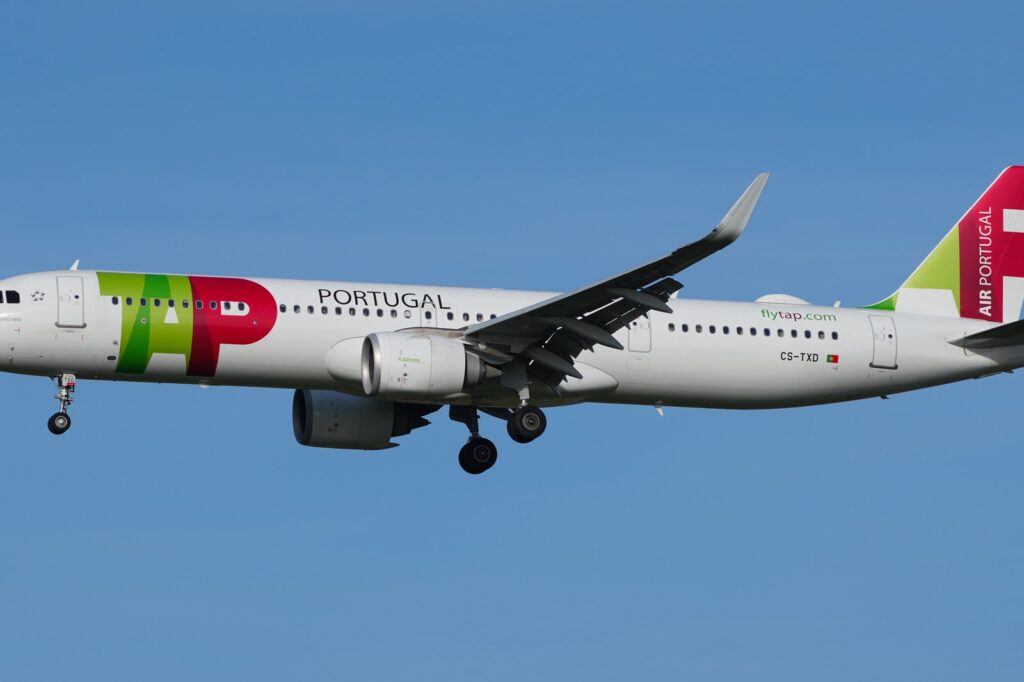
Lufthansa has won the race to buy into TAP Air Portugal, and the headline number is €450 million a year in synergies. The mechanics here deserve a closer look than the press release gives them.
What Lufthansa is actually paying
The German group will hand over €1.025 billion for 44.9% of the Portuguese flag carrier. It can go as high as 49.9% by taking up shares first offered to TAP’s employees, up to 5% of the airline, and by paying a ticking fee that builds until closing. At that ceiling the bill reaches €1.2 billion.
Lisbon keeps 50.1% and a majority of board seats. Lufthansa, though, gets to appoint the chief executive. That is a lot of operating control for a minority holder.
Portugal chose Lufthansa last week over Franco-Dutch rival Air France-KLM. The German bid valued TAP roughly 16% above its competitor’s, and all of it was cash. Air France-KLM offered cash plus shares.
Where the €450 million is supposed to come from
Management points to commercial activity, better network links, joint purchasing and cargo. Cedric Rimaud, who directs European research at the independent bond analysts Gimme Credit, relayed that list. The firm itself is not convinced the money arrives quickly. Lufthansa’s chief financial officer, Till Streichert, spoke of up to €450 million in the first year after the investment.
The real prize is geography. TAP’s routes to Brazil and the rest of Latin America carry the story, along with traffic between Europe and Portugal and between southern Europe and North America. Carsten Spohr, Lufthansa’s chief executive, called TAP “a strong and profitable airline” and said the deal would strengthen the group’s position in the South Atlantic. OAG data put TAP’s share of Europe-Brazil seat capacity at 24%, behind only LATAM. Add Lufthansa’s existing airlines and the combined share is 36%.
Fleet is a smaller lever. TAP flies only Airbus jets, as does most of Lufthansa, so engineering, training and maintenance spending can be pooled. Management expects traffic on these routes to grow 2% to 3% a year to 2030 for Latin America and 6% to 7% elsewhere.
The catch is time
Gimme Credit’s report, published Tuesday, argues that the gains could take years. It cites Portugal’s continuing control, long competition reviews and the sluggish integration of Italy’s ITA Airways, which Lufthansa bought into in January 2025.
Lufthansa has also promised to keep TAP as a standalone airline. Rimaud said that pledge, together with state control, “will limit the ability to rationalise operations across the whole group.” Lufthansa plans for TAP to join its transatlantic joint venture with United and Air Canada, but ITA is still awaiting US Transport Department approval for the same step, and its first coordinated Atlantic flight is not due before summer 2027. Rimaud sees “revenues from this integration unlikely before 2030.” Lisbon airport is full, and a replacement will not open before 2034, which caps growth at the hub.
TAP’s own numbers are thin. It posted a profit for a fourth straight year in 2025, but net profit shrank to €4.1 million after a one-off tax adjustment, and it lost €99.2 million in the first half of 2026 as fuel costs jumped. Debt is no near-term worry, with no big repayment due until bonds mature in 2029. Lufthansa can fund the purchase from its own cash.
Approvals and the endgame
Final negotiations, a cabinet sign-off in Portugal and European Commission clearance all lie ahead, with completion pencilled in for 2028. Streichert expects the regulatory approvals within 18 to 24 months. TAP chief executive Luís Rodrigues said he was “very happy” with the choice of Lufthansa and pointed to the ITA deal as proof of a similar cultural fit. He also warned that the hard part is still to come. Brussels, he said, will take a “very complex” look at the deal, “route by route.”
The airline has swung between public and private hands before. A private consortium bought it in 2015, the state took control again in 2020, and the reprivatisation that followed drew scrutiny from Portugal’s Court of Audits. Streichert said Lufthansa has discussed buying the state’s remaining 50.1% someday, and that Portugal itself could become a Lufthansa shareholder with up to 5%. Gimme Credit expects Lufthansa to try for the rest of TAP by 2028, and it kept its “sell” recommendation on the German group’s bonds, which yield 5.52% against 6.9% on Air France debt.
Sources
- TAP Air Portugal
- What does Lufthansa gain from its TAP Air Portugal deal and when?
- TAP Air Portugal CEO warns of 'very complex' EU review of Lufthansa deal
Photo: MarcelX42 (CC BY-SA 4.0)