
The number that settles the argument arrived in October. The Domain House Price Report for the September quarter recorded the median house price falling across every Australian capital city at once, 4.7 per cent, about $59,970, in a single quarter, the first such uniform decline in 15 years. Perth led the losses at about $88,600, with Sydney close behind at $82,400 and Brisbane at $66,000. What a federal minister cautiously called a correction in June now ranks, by the industry’s own reading, among the sharpest slides on record.
The record of how this started is worth keeping straight. On 24 June 2026, Housing Minister Clare O’Neil acknowledged the market was correcting after national auction clearance rates sank under 50 per cent for the first week since the pandemic’s start, with the steepest price falls then concentrated in Sydney and Melbourne. Her framing was deliberate, and she told the ABC as much: “We see periods of very significant house price growth and then we see the market make a correction, and that’s what we’re seeing at the moment.” She added that “House prices have gone up just in that time by more than 50 per cent and we are seeing a correction on that.” A correction, in market terminology, means a drop of 10 per cent; her office said she was speaking broadly, to describe what public data already showed.
The policy sitting at the center of the argument is the government’s tax overhaul, aimed at first-home buyers by withdrawing advantages that mostly serve investors: negative gearing deductions on investment losses limited to new properties, with concessions protected for property already held, and the capital gains tax discount of 50 per cent on future sales swapped for an inflation-based one. Treasury modelling put the effect at 75,000 properties shifting to first-home buyers that would otherwise have gone to investors, with price growth slowing by 2 per cent over an unspecified medium term. The banks have been less calm: Commonwealth Bank cut its forecast from 3 per cent growth to roughly flat this year, citing tax changes plus inflation linked to the Iran-US war and higher rates; ANZ now expects capital-city prices to drop 2.1 per cent this year and another 3.3 per cent in 2027; and Morgan Stanley in May anticipated falls of 5 to 10 per cent, in its words “one of the largest price corrections over the past 40 years”.
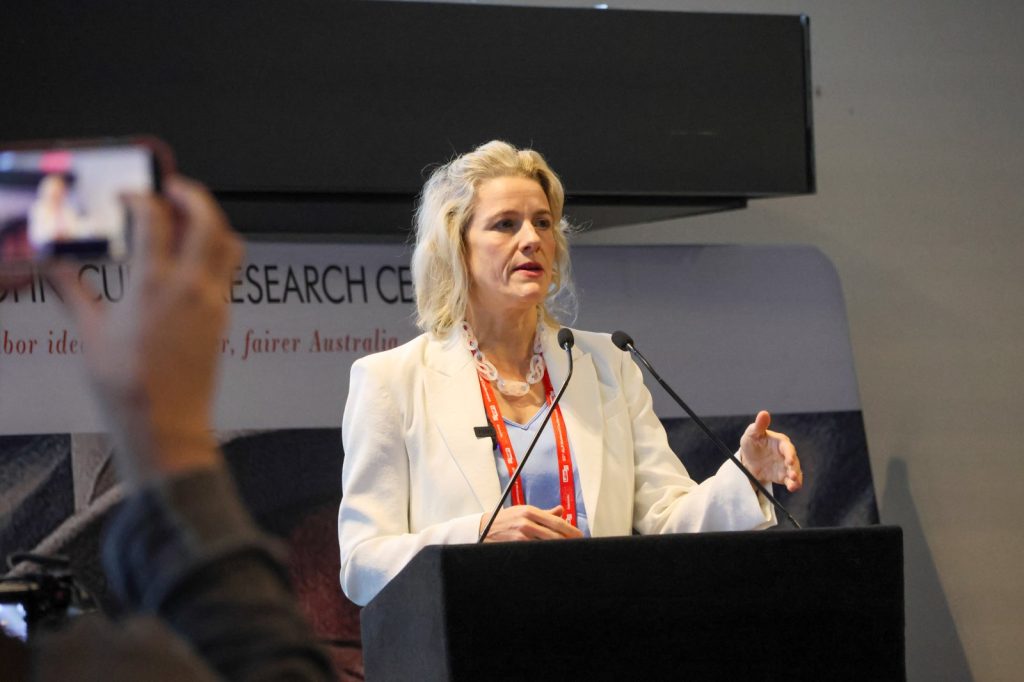
The politics hardened as the data did. In late October, with the record decline published, O’Neil dropped the caution: “I do want it to change. We need house price growth slow,” she said, adding that a generation of unsustainably rising prices had left the country where it is. Treasurer Jim Chalmers promptly walked the remark back to a “general situation where house prices have softened a bit”, a telling retreat in a country where about 67 per cent of households own their home and 35 per cent still carry a mortgage. Domain’s chief of research, Nicola Powell, read the quarter bluntly: “These were among the strongest markets of the previous growth cycle, but affordability constraints and weaker sentiment have caught up with them, resulting in some of the sharpest quarterly falls on record”. The macro backdrop is no help, with four rate rises this year and Reserve Bank deputy governor Andrew Hauser calling the inflation outlook “materially worse”, the very conditions ministers once blamed for the dip. Negative equity, the RBA’s May data shows, remains under 1 per cent, historically low.
The measured read is that both camps are partly right on the record. Treasury’s claim that tax reform’s long-run effect stays modest beside interest rates, supply and population growth is unproven rather than refuted; the Opposition’s supply case is older than the tax debate itself, as shadow minister Andrew Bragg put it: “Ultimately, until we see a larger amount of housing supplied, I don’t think we’re going to see price stability or affordability.” What is confirmed is the direction and its speed: prices down in every capital city, forecasts cut twice, and a minister who conceded, back in June, that voters would not feel real affordability improvement before the next election. The correction question has been answered. The affordability one has not yet been scheduled.
Sources
- Housing Minister denies tax changes are major driver for market 'correction' – ABC News
- Housing minister Clare O’Neil concedes she wants house price change after steepest decline on record | Nine.com.au




