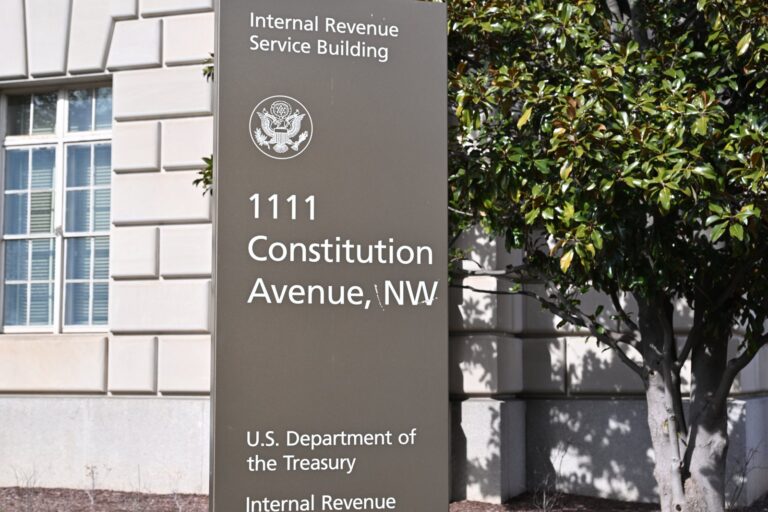
WEST HEMPSTEAD, November 28, 2026 — A New York father and son pleaded guilty this week to running a $600 million tax fraud scheme that exploited pandemic-era employment credits, while a Chicago man was convicted of steering $860,000 in small business loans to personal luxury purchases. The cases illustrate how structural weaknesses in the CARES Act opened the door to industrial-scale theft.
By the Numbers
The CARES Act, a $2.2 trillion relief package signed into law in March 2020, created the Employee Retention Credit and the paid sick and family leave credit to keep workers on payrolls. It also launched the Paycheck Protection Program to funnel forgivable loans to small businesses. Prosecutors say those programs became targets almost immediately.
The bottom line: the IRS paid out roughly $46 million on false returns filed by Keith Williams, 48, and Jamari Lewis, 28, of West Hempstead before the scheme was detected. Williams and Lewis filed more than 8,000 fraudulent employment tax returns through Credit Reset, a credit repair business Williams owned. Each return claimed sick and family leave credits exceeding reported wages, duplicated wage claims, or combined multiple credits for the same wages — all violations of federal law.
Investors will note the parallel track in small business lending. A federal jury in Chicago convicted Orlando Patrick, 56, of misrepresenting two organizations he controlled to obtain two PPP loans totaling $860,823. Patrick used the proceeds to buy a Bentley and fund personal lifestyle expenses, according to court records. He faces up to 20 years on each of two wire fraud counts at sentencing scheduled for March 9.
How the Credits Were Gamed
The Employment Retention Credit and the sick and family leave credit were designed with different eligibility rules, but the CARES Act allowed employers to claim both — just not for the same wages. Fraudsters exploited the overlap. The Justice Department said Williams and Lewis listed the same wages as qualified sick leave wages and qualified family leave wages, or claimed the Employee Retention Credit and the leave credits for identical payroll costs.
Because the IRS processed employment tax returns on a largely automated basis, the volume of filings — more than 8,000 in this single scheme — overwhelmed routine checks. The agency paid refunds before verifying that wages were real or that credits were mutually exclusive.
Loan Program Vulnerabilities
The Paycheck Protection Program relied on self-certification by borrowers. Applicants attested to payroll figures and business operations with minimal upfront documentation. Patrick’s case shows the result: he secured two loans by misrepresenting the organizations he controlled, then diverted the full $860,823 to personal use. The program’s speed — a selling point in March 2020 — became its structural weakness.
Enforcement Trajectory
The Justice Department’s National Fraud Enforcement Division has signaled continued pursuit. Assistant Attorney General Colin M. McDonald said taxpayer-funded relief was meant for businesses and workers in need, not to bankroll fraud schemes. Two co-conspirators in the Williams-Lewis operation, Janine Davis and Tiffany Williams, have already pleaded guilty to wire fraud. Tiffany Williams was sentenced to three years in prison. Keith Williams and Jamari Lewis face up to 30 years on wire fraud counts and up to five years on conspiracy; their plea agreements require restitution of more than $46.7 million and forfeiture of nearly $4.9 million in fraudulent proceeds.
Sources
- Father and son face decades in prison following guilty pleas in $600M COVID tax fraud scheme
- FDA finalizes guidance to assist sponsors in preparing OTC monograph requests
- START bus fares take effect Friday
- FDA Final Guidance: OTC Monograph Order Requests — CASRAI
- Chicago man convicted of COVID relief fraud
- US airlines may furlough 32,000 people with no bailout | Travel News
Photo: Alejandro (CC0)