For many individuals and families, the recent fluctuations in the global economy have brought about a sense of uncertainty and concern for their financial well-being. The impact of economic slowdowns and interest rate changes can be felt in communities around the world, affecting everything from job security to the cost of everyday essentials. In Asia, the latest stock market trends have been closely watched, as investors and policymakers alike try to make sense of the current economic landscape.
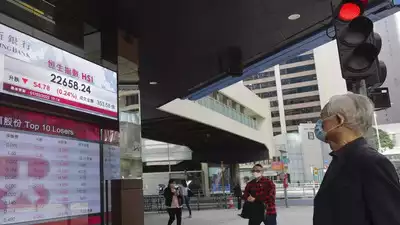
Despite mounting concerns about an impending economic slowdown and the speed at which the Federal Reserve is raising interest rates, Asian shares have managed to edge up, thanks in part to gains in Hong Kong and China stocks. The MSCI, the biggest Asia-Pacific share index outside of Japan, was up 0.19%, marking a potential end to a two-day losing trend.
Hong Kong’s Hang Seng Index surged by over 2%, while China’s stock market increased by 0.12%.
Economic Indicators and Market Trends
The rise in Chinese stocks followed some investors taking profits on Wednesday, after the government announced significant measures to loosen a strict anti-COVID policy that has severely harmed the second-largest economy in the world. However, not all markets have fared as well, with the S&P/ASX 200 index in Australia plummeting by 0.67% and the Nikkei in Japan dropping to close to a one-month low.
Traders have been analyzing data revealing that U.S. worker productivity recovered at a somewhat faster pace than previously believed in the third quarter, but the trend remained sluggish, keeping labor costs high. Investors’ willingness to take on risk has been curbed by growing concerns that the US central bank may continue its extended rate-hike cycle in the aftermath of positive jobs and services sector reports.
U.S. Treasury rates, which ranged from three-month lows for five-year notes to 30-year bonds, have also put pressure on the stock market. According to Rob Carnell, the U.S. Treasury market is driving the majority of the remainder of the market, with “range trading may occur a little bit ahead of the FOMC meeting next week.”
Global Market Outlook
The benchmark S&P 500 declined for the fifth straight session on Wednesday, and the tech-heavy Nasdaq also finished lower for the fourth day running. When policymakers from the Fed, Bank of England, and European Central Bank meet next week, many in the market feel that inflation is slowing and bond yields have peaked, allowing central banks to start gradually raising interest rates. Following four interest rate increases, the rate increased 3.9 basis points to 4.296%.
The dollar index increased by 0.171%, the euro fell by 0.05% to $1.05, and the sterling was last trading at $1.2184, down by 0.12% for the day. After falling to their lowest point of the year on Thursday, oil prices stabilized in early Asian trading, with U.S. crude increasing by 0.96% to $72.70 a barrel, and Brent up 0.8% for the day at $77.79.
As the global economy continues to navigate uncertain times, investors and policymakers will be closely watching the upcoming meetings of central banks and the resulting impact on interest rates and market trends.
Looking Ahead
As the market looks to the future, all eyes will be on the upcoming FOMC meeting, where policymakers will discuss the next steps for interest rates and the overall direction of the economy. With the current trends and indicators in mind, investors and individuals alike will be watching closely to see how the global economy will evolve in the coming weeks and months. The impact of the decisions made by central banks and governments will have far-reaching consequences, affecting not only the financial markets but also the daily lives of people around the world. As such, it is essential to stay informed and up-to-date on the latest developments, as the world navigates the complexities of the global economy.