
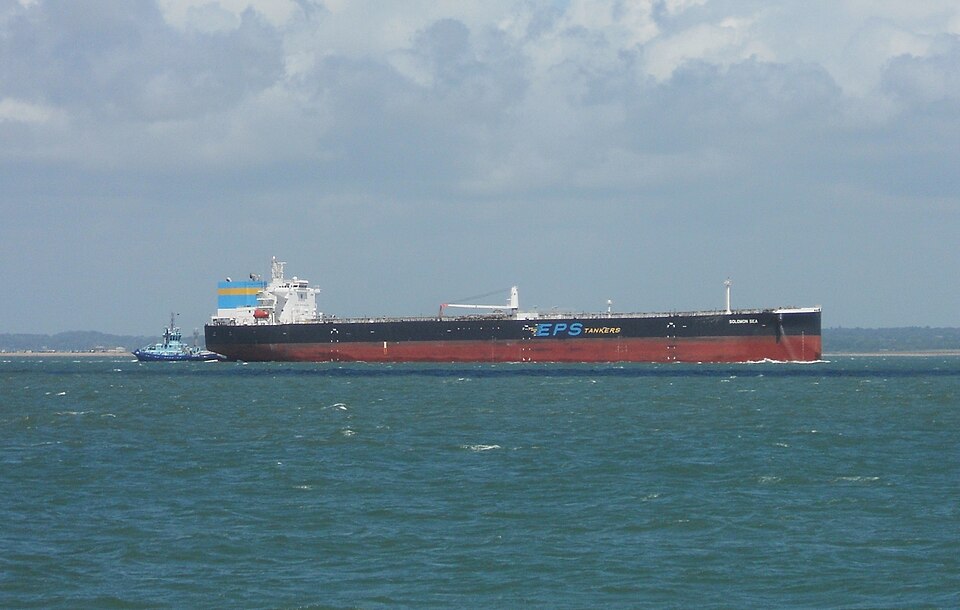
The daily price of hiring a tanker went past $1 million for the first time in history this week. Owners willing to send ships toward the Strait of Hormuz are scarce, and that scarcity is feeding straight into the cost of oil.
Bloomberg reported that tankers picking up crude inside the Persian Gulf fetched as much as $1.035 million a day, based on Baltic Exchange data. Outside the Gulf the squeeze is nearly as sharp. A tanker carrying crude from the Gulf of Oman, which lies beyond Hormuz, to China commanded $644,000 a day.
Beyond the Gulf
The Middle East is not the only pressure point. At Novorossiysk, Russia’s key Black Sea port, costs are climbing because of the risk of Ukrainian drone attacks on ships and port infrastructure. In the week to September 6, the Aframax rate from Novorossiysk to West India rose 2.7% and the rate to North China rose 3.1%, each the seventh weekly rise in a row.
Higher freight means higher prices for crude, and buyers are already hurting. The war between the United States and Israel on one side and Iran on the other is in its seventh month, with no peace in sight. A US Energy Information Administration estimate of an inventory build above 7 million barrels briefly pushed prices down. It will not last, the report argued, with Saudi Arabia’s East-West pipeline out for potentially weeks after a drone attack. Riyadh is also cancelling cargoes that were bound for Europe this month.
The International Energy Agency says global observed oil inventories fell by 95 million barrels in August. Since February the loss totals 507 million barrels, around 2.8 million barrels a day. Oil on water dropped 65 million barrels amid attacks on vessels in Hormuz.
A cyberattack inquiry
US federal authorities said they were investigating a possible cyberattack on tankers sailing from Europe to the United States. The Wall Street Journal reported that at least two vessels, one carrying crude and one liquefied gas, were hit and then inspected on arrival at the Gulf Coast in August. The inspections pointed to an attack near Gibraltar, where about 300 ships pass daily, and officials cited by the paper suspected an unfriendly nation.
“For a vessel that’s carrying tens of millions of gallons of crude oil, which is highly volatile, there’s always a risk of fire explosion,” said Rear Admiral Jason Tama, head of the US Coast Guard’s Cyber Command. “And then there’s always a risk of an oil spill.”
Buying instead of renting
With charter rates and insurance costs soaring, energy companies want their own ships. Erica Tsirikou of Argus told Spain’s El País that used tankers now sell above new ones, since a newbuild takes two to three years. A second-hand very large crude carrier fetches about $182 million against $130 million new. Used Suezmaxes go for $130 million, versus $89 million new, and second-hand Aframaxes for $95 million, versus $75 million.




