
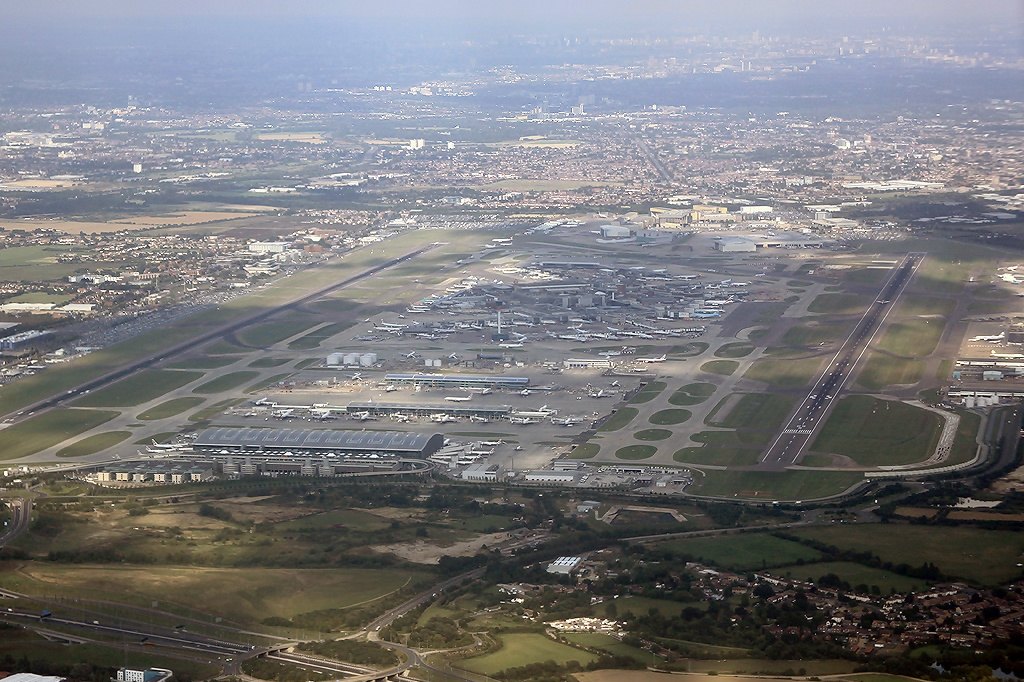
Heathrow had its busiest year ever in 2024, with 83.9 million passengers, and the way it keeps two runways working shows what that volume demands. Every summer night, crews have about five hours to tear up and relay a stretch of tarmac, then hand it back before the first aircraft lands at 06:00.
A busy airport with little room to spare
Heathrow is the largest international airport serving London and the UK. In 2025 it was the busiest in Europe, the fifth busiest in the world by passengers and second busiest by international passengers. In 2024 it had more international connections than any airport anywhere. Over 89 airlines fly from it to 214 destinations in 84 countries, and it is the main hub for British Airways and Virgin Atlantic.
The catch is space. The site covers 4.74 square miles, 14 miles west of central London, and it manages all of this with two parallel east-west runways, four passenger terminals (numbered 2 to 5) and one cargo terminal. In the 1950s the airfield had six runways laid out in a hexagram. Longer runways for modern aircraft left room for only two, which are extended versions of the original east-west pair. Traces of the old ones still show from the air, absorbed into the taxiways. Traffic fell to 19.4 million passengers in 2021 and came back to 83.9 million by 2024.
Five hours to replace a runway
The BBC was given access to the Northern Runway resurfacing. At 22:45 the last plane takes off, the call goes out on the radio and 130 vehicles head onto the tarmac. A crew of 230 sets out cones and measures lines, and within 10 minutes the milling machines are tearing up the surface. Planes carrying passengers from the US, Australia and the Far East are already on their way.
The runway needs the work because 10kg of tyre rubber has built up in its surface. Alistair Awcock, Heathrow’s infrastructure delivery and strategic planning director, said the scheme comes round every 10 to 12 years, depending on the runway’s condition. “Our runways are our most critical asset,” he said. Over a three-month summer, crews resurface about 75 metres of runway a night.
The asphalt is timed as tightly as the crews. Mixing starts at 19:00 at two plants on the south side of the airfield. Twenty-five wagons bring the lower layer, then go back for another 500 tonnes for the surface course. After compaction the layers cool before the new markings go on. Gawaine Yates, the delivery project manager, said the team has to be ready to leave at 04:30 for a foreign object debris inspection. The work is due to be handed back at 05:30 at the latest, and air traffic control takes the runway at 05:45. A heavy recovery truck waits on site each night in case equipment fails.
The stakes are high on a runway handling around 1,300 take-offs and landings a day. Awcock said failing to hand it back would affect all of UK airspace, not just Heathrow. So far Yates reports no late handback, and by year-end the project will have laid about 200,000 tonnes of asphalt.
Airlines upgrade too
Air India has confirmed that all its Heathrow flights will carry its newest cabin interiors from January 2027, Head for Points reported. Delhi and Mumbai services already do, and the Bengaluru route follows in January 2027.
Sources
- Heathrow Airport
- Heathrow's Northern Runway has tarmac replaced in overnight works
- Air India Heathrow Upgrade and More Aviation News
Photo: Konstantin Von Wedelstaedt (GFDL 1.2)




