
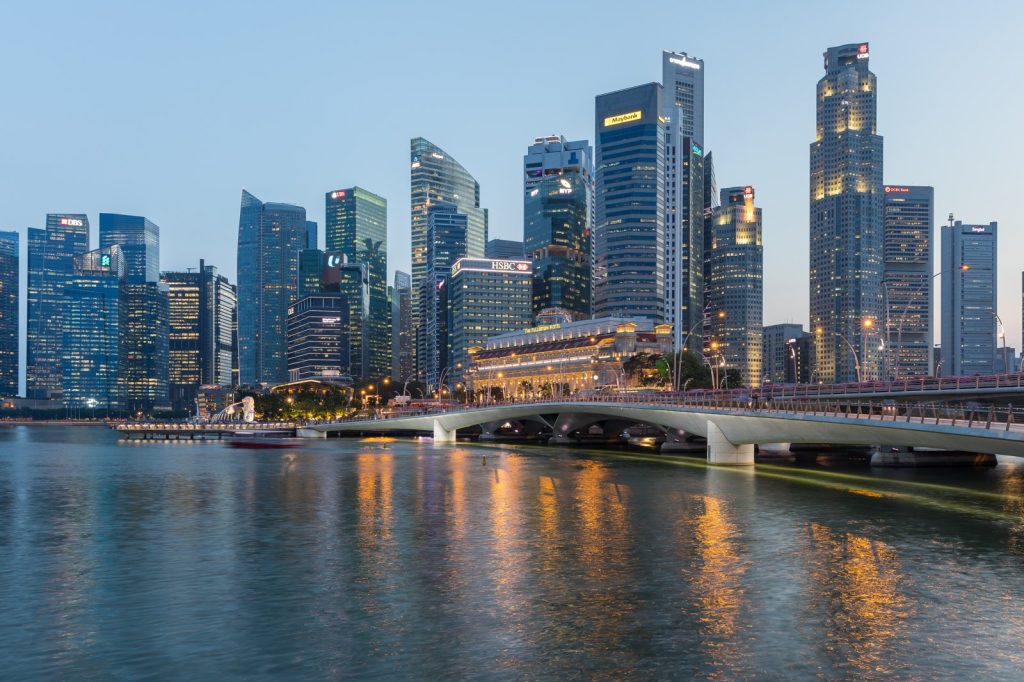
The Ministry of Trade and Industry released its final estimate on May 22, showing that Singapore’s economy expanded by 1.3 percent in the first three months of 2021. This figure represents an upward revision from earlier projections and signals that the city‑state is beginning to recover ground lost during the severe contraction of 2020. The backdrop to this improvement is a pandemic‑driven downturn that shut borders, halted travel and strained a trade‑dependent economy.
At the time, a rebound was far from certain. However, the Q1 result indicates that the recovery is gaining genuine momentum rather than being a fleeting, dead‑cat bounce.
Growth was broad‑based, with several industrial sectors taking the lead. The chemical, electronics and engineering industries—core components of Singapore’s manufacturing base—demonstrated resilience even as global supply chains remained tangled. Their performance helped lift overall output. Wholesale trade activity rose by 3.5 percent, almost double the previously recorded rate of 1.8 percent.
Retail trade expanded at an annualized pace of 1.4 percent. Perhaps the most notable acceleration occurred in communication and information services, where growth jumped from 2.6 percent to 6.4 percent per year.
This shift reflects the rapid digital adoption forced on businesses and consumers during prolonged disruptions. The government attributes the diversification of growth drivers to the adaptability of local industries, a reading supported by the data. Nevertheless, the recovery remains uneven.
Sectors that rely on the physical movement of people—such as hotels, airlines and retail outlets dependent on foot traffic—continue to lag. In contrast, manufacturing and trade are carrying the bulk of the upward pressure, a pattern observed in other economies where goods flow more freely than people.
For the full year 2021, the GDP forecast has not been altered at this stage. Officials and most analysts view the Q1 outcome as a positive development, though caution prevails; no one is celebrating prematurely. The forecast remains subject to revision later in the year as external conditions evolve.
Authorities note that key markets, especially the United States, are seeing stabilizing environments as vaccination efforts advance. This matters for Singapore, a small, open economy whose fortunes are tightly linked to global developments.
Pandemic‑related risks have not disappeared; new variants could emerge and border restrictions could be reinstated, keeping the recovery fragile. Nonetheless, the Q1 data offers policymakers a concrete foundation on which to build. It is not a guarantee of sustained expansion, but it provides evidence that the rebound has real traction.
The takeaway is clear: Singapore is recovering faster than initial estimates suggested, driven by industrial strength in chemicals, electronics, engineering, wholesale trade and digital services. The weak points remain services tied to human mobility.
While the global context shows signs of improvement, it is not yet stable, and the months ahead will test whether this momentum can be maintained.




