
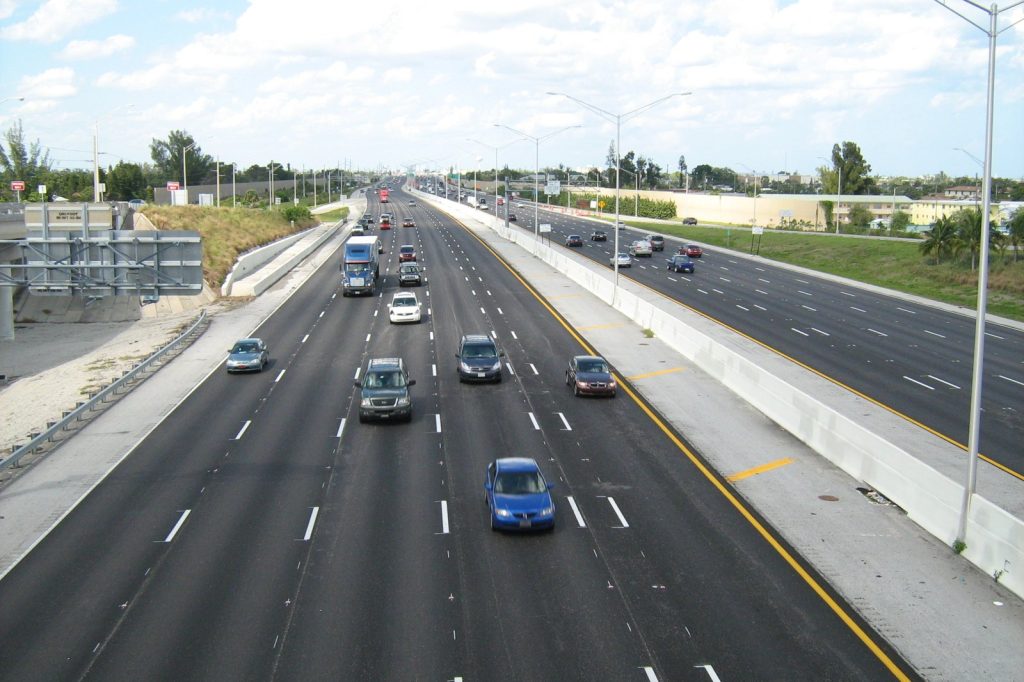
Boca Raton, April 11, 2025 — cybernewschronicle.com — The man on the ground was just unlucky. Standing near Interstate 95 in Boca Raton on April 11, 2025, he was struck by debris or fire or something else thrown out from a falling Cessna 310. He survived.
The three people inside the airplane did not. That single injured person is the only reason this crash is not a total loss statistic.
It is the detail that turns a routine aviation tragedy into a community problem. A plane goes down in an empty field, it is an accident. A plane goes down on a major highway during the day, and suddenly the crash is a public safety event.
One person on the ground got hurt. That means the boundaries of the incident stretched beyond the cockpit.
It means the crash did not stay contained. The Cessna 310 itself is an old machine. Production ran from 1954 to 1980.
Over six thousand units were built. The U.S. military flew them as the L-27 and later the U-3. That history is a double-edged sword.
A well-maintained 310 can fly for decades. But the fleet is aging.
Every crash of an older aircraft raises the same question: was it the pilot, the maintenance, the weather, or just the accumulated wear of a machine built before the internet existed? Investigators have not said yet. They are just starting.
Boca Raton Airport sits right there. The plane was headed toward it or away from it.
The report does not specify. What is clear is that the aircraft did not make it to the runway. It hit the interstate.
That is a short distance to fail. A few hundred feet, maybe a mile. The margin for error in aviation is supposed to be larger than that.
When it shrinks to the width of a highway, people notice. The environmental angle is real.
A twin-engine airplane burning avgas crashes onto asphalt. Fuel spills. Hydraulic fluid leaks.
Metal and plastic and wiring scatter across the road. Cleanup crews have to deal with that.
The report mentions the push for renewable energy in aviation. That push is driven by energy security and cost savings, not just by environmental idealism. But every crash like this one makes the case a little sharper.
Fossil fuels are not just a climate problem. They are a spill problem. A fire problem.
A toxic residue problem on a public highway. The community now waits for answers.
The National Transportation Safety Board will dig through wreckage. They will look at engine components, control cables, the pilot’s medical history, the weather at the exact minute of the crash. They will produce a report months from now.
That report will assign a cause. It will not undo the three deaths or the one injury.
It will not clean the pavement. It will just say what happened. Boca Raton is a wealthy area.
Airports in wealthy areas tend to have good maintenance standards. That does not guarantee anything. Machines fail.
People make mistakes. The Cessna 310 is a proven design, but proven does not mean perfect.
The military used it for liaison and utility missions. Civilian pilots used it for business travel and personal flying. It was a workhorse.
Workhorses break down eventually. The injured person on the ground is the one link between the aviation world and the ordinary world.
Everyone else on I-95 that day drove away. He did not. He got caught in someone else’s disaster.
Investigators will want to know exactly how. Was he in a car? Was he a pedestrian?
Was he standing outside his vehicle? The report does not say.
It just says one person on the ground was injured. That is the fact that matters for everyone who was not in the plane.




