
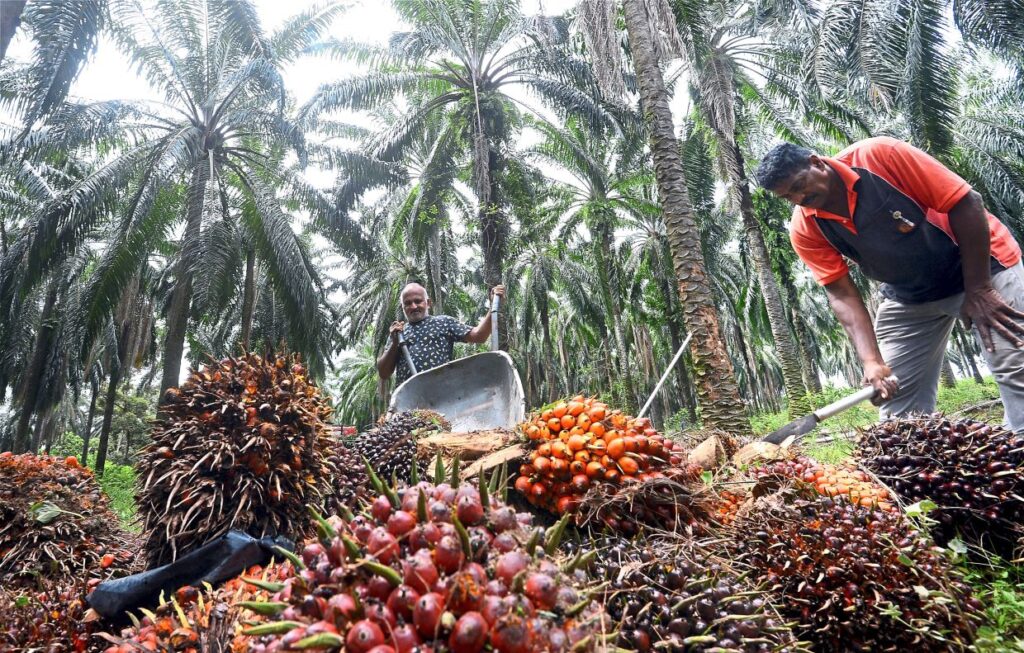
In the rural communities of Malaysia and Indonesia, the lives of palm oil farmers and their families are deeply intertwined with the fluctuating prices of the commodity. The volatility in palm oil prices can have a significant impact on their livelihoods, affecting their ability to make ends meet and plan for the future. As Boustead Plantations Bhd, a leading player in the industry, expects continued volatility in palm oil prices for the rest of the year, the communities that rely on this crop are bracing themselves for potential challenges.
The company’s projection is based on high stock levels in Malaysia and Indonesia, which are likely to influence the direction of palm oil prices. Following a fall in profitability in the most recent quarter, Boustead Plantations Bhd is cautious about the outlook for the remainder of the year.
The firm attributes the decline in profitability to high production costs, which have been driven by higher minimum wages, as well as increased fertilizer and diesel prices. These costs are expected to continue to be a burden throughout the year, making it essential for the company to manage its expenses efficiently.
Challenges and Opportunities
The profitability of Boustead Plantations Bhd is closely tied to the crude palm oil (CPO) price direction and crop production. In a filing with Bursa Malaysia, the company stated that its profitability is based on these two key factors. Despite the challenges, the company is hopeful that its ongoing efficient cost management and crop enhancement measures will bring favorable results in 2022.
The deployment of Plantation Performance Improvement Programs has already led to some improvements in fresh fruit bunch (FFB) yield in the Peninsular Malaysia and Sabah regions this year. The conflict between Ukraine and Russia, climatic changes in Europe, China, India, and the US, as well as price increases in other crops, are potential factors that could cause a global crop shortage.
These external factors can have a significant impact on the palm oil industry, and Boustead Plantations Bhd is closely monitoring the situation. The company reported a net loss of RM352,000 for the third quarter that ended on September 30, 2022, compared to a net profit of RM95.56 million in the quarter of FY21. Reduced FFB production and palm product pricing resulted in an RM1.4 million profit from operations, down from RM133.1 million in the comparable quarter previous year.
Financial Performance
The financial performance of Boustead Plantations Bhd has been affected by the volatility in palm oil prices. Revenue for the quarter was RM240.25 million, down from RM293.77 million in the corresponding period last year. Lower palm product prices had a negative impact on the prices of FFB, CPO, and palm kernel.
However, in the nine months leading up to September 30, 2022, Boustead Plantations’ net profit was RM508.02 million on revenue of RM913.37 million, up from RM156.16 million in the same period of 2021 and RM708.49 million in revenue. As the palm oil industry continues to navigate the challenges of volatile prices and high production costs, Boustead Plantations Bhd is focusing on efficient cost management and crop enhancement measures to drive growth.
The company’s efforts to improve FFB yield and reduce expenses are expected to yield positive results in the long term. As the industry looks to the future, it is essential to monitor the factors that could impact palm oil prices, including global crop shortages and climatic changes. The next quarter will be crucial in determining the direction of the industry, and stakeholders will be watching closely to see how Boustead Plantations Bhd and other players in the industry respond to the challenges and opportunities ahead.




