
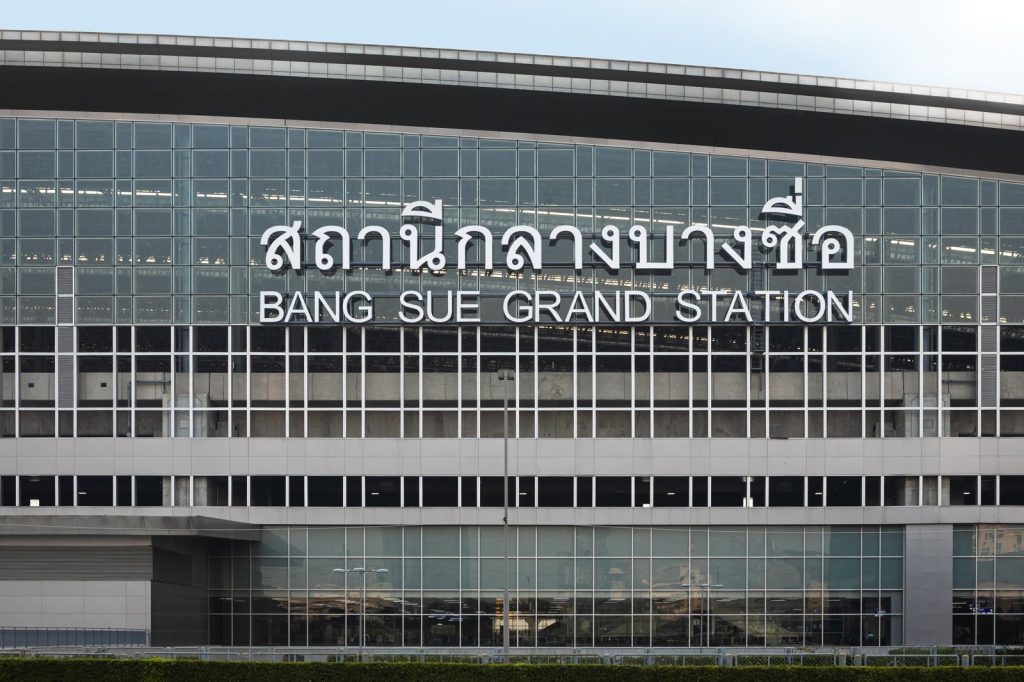
A refrigerated train carrying 286 tonnes of Chinese vegetables arrived at Bangkok’s Bang Sue station 55 hours after departing Kunming, marking the first scheduled round-trip service on the China-Laos-Thailand rail corridor. The train maintained temperatures of 2 degrees Celsius for leafy greens and 12 degrees Celsius for citrus, with sensors monitored from a control room in Yunnan province throughout the journey.
The service, operated by China Railway Kunming Group, now runs three times weekly on a fixed schedule. After unloading in Bangkok, the train returned to Kunming loaded with Thai fruit. The 19 cold-chain containers that departed on 7 February established the operating pattern: departures from Kunming at dawn every Tuesday, Thursday, and Saturday.
For growers near Kunming who faced rising freight costs, the financial impact is clear. A 20-foot refrigerated container now costs approximately US $2,800 to Bangkok, compared to US $3,500 for the previous truck-and-rail route that required two transshipments and took up to 80 hours. This represents a 20 percent cost reduction and a 24-hour decrease in delivery time.
Logistics firms such as ZTO Express Southeast Asia, contracted to manage the cold chain, can now demonstrate to Bangkok supermarkets that cabbage left Yunnan less than 48 hours earlier. This freshness guarantee provides a concrete competitive advantage.
Beijing officials view the new service as strengthening China’s position in a regional supply chain handling over US $100 billion in annual trade between China and the ten-member Association of Southeast Asian Nations. The route requires Chinese customs clearance at Mohan on the Laos border, followed by a 420-kilometer journey on the China-Laos Railway to Thanaleng outside Vientiane. There, containers transfer to metre-gauge wagons for the final 220 kilometers to Bangkok.
This transfer point represents a break of gauge between standard and metre rail, creating a bottleneck where the previous road-rail combination lost both time and money. The fixed schedule and dedicated cold-chain handling have reduced those losses.
The consequences extend across multiple sectors. Thai fruit exporters gain a faster, cheaper route to Chinese consumers. Chinese vegetable growers secure reliable access to Bangkok markets. Logistics firms obtain a proof of concept for potential clients. The China-Laos Railway, operational since 2021, receives additional traffic and revenue. The entire corridor achieves tighter integration with Beijing’s trade network.
Key developments to monitor include whether the three-times-weekly frequency expands, whether other perishable goods such as meat, seafood, or dairy begin using the route, whether cost savings persist as volumes increase, whether the Thanaleng transfer accelerates or becomes a permanent chokepoint, and whether other Chinese cities connect to the schedule.




