
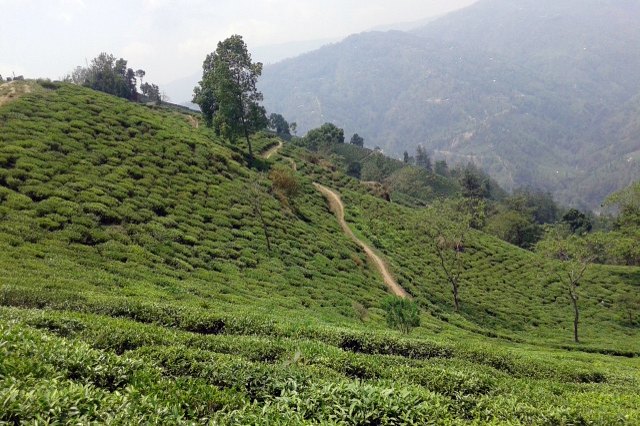
KATHMANDU — For the family farmers who grow Ilam tea on steep eastern hillsides, or the apple orchard owners in the cold highlands of Marpha, the law has never been on their side. That could change. Nepal is rewriting its intellectual property rules for the first time in 60 years.
The current framework dates to 1965. The internet did not exist.
Startups did not exist. Artificial intelligence did not exist. The global economy ran on factories and freight, not ideas and branding.
Nepal’s law stayed frozen through all of it. The proposed Intellectual Property Bill tries to drag the country into the present.
It covers trade secrets. It covers integrated circuit designs. It covers traditional knowledge.
It sets up modern administrative systems. It aligns Nepal with international IP standards. And for communities across the country, the section on geographical indications may matter most.
Geographical indications — GIs in legal shorthand — protect products tied to a specific place and its traditional methods. Ilam tea gets its character from the mist and soil of Ilam district.
Marpha apples grow only in that cold pocket of Mustang. Gulmi coffee comes from a specific set of hillside farms. Bhaktapur Juju Dhau, the dense sweet yogurt, relies on local techniques and local milk.
Under the old law, none of that had legal standing. Anyone could sell something labeled “Marpha apples” or “Ilam tea” and face no consequences.
The reputation built over generations meant nothing in court. The reform reflects a hard economic reality. Growth in the 21st century does not run on raw materials alone.
It runs on knowledge, on branding, on the ability to stop others from stealing your name. Countries that protect these things attract investment. Countries that do not watch their best products get copied and undercut.
Nepal has watched that happen for decades. The new bill is an attempt to close the gap.
It is not just about farmers and food. Startups get legal recognition for the first time. Trade secrets — the formulas, processes and customer lists that give a business its edge — become protectable.
Integrated circuit designs, the blueprints for the chips in every modern device, enter the legal framework. Traditional knowledge, the accumulated expertise of indigenous communities, gets a formal shield.
Enforcement gets stronger too. A modern administrative system means faster processing and clearer rules. International alignment means Nepal’s protections carry weight beyond its borders.
A Nepali entrepreneur holding a patent or a GI registration can take action if someone in another country tries to steal it. None of this is automatic. The bill exists on paper.
Implementation is the hard part. Courts need to understand the new rules.
Officials need training. Small producers need to know what a GI is and how to apply for one. The law can create the structure, but it cannot make people use it.
Still, the shift is significant. For the first time in 60 years, the legal system recognizes that a farmer in Gulmi, a tea processor in Ilam and a yogurt maker in Bhaktapur are doing something worth protecting.
The old law treated them as invisible. The new one, if it works, gives them standing.
{“@context”: “https://schema.org”, “@type”: “NewsArticle”, “headline”: “Nepal’s new IP law aims to protect farmers’ traditional products and brands”, “description”: “KATHMANDU — For the family farmers who grow Ilam tea on steep eastern hillsides, or the apple orchard owners in the cold highlands of Marpha,…”, “datePublished”: “2026-07-02T12:08:00+00:00T09:30:00+00:00”, “author”: {“@type”: “Person”, “name”: “Muhammad Asim”}, “publisher”: {“@type”: “Organization”, “name”: “InfoPulse Today”, “url”: “https://newsfeed.infopulsetoday.com/”}}




