
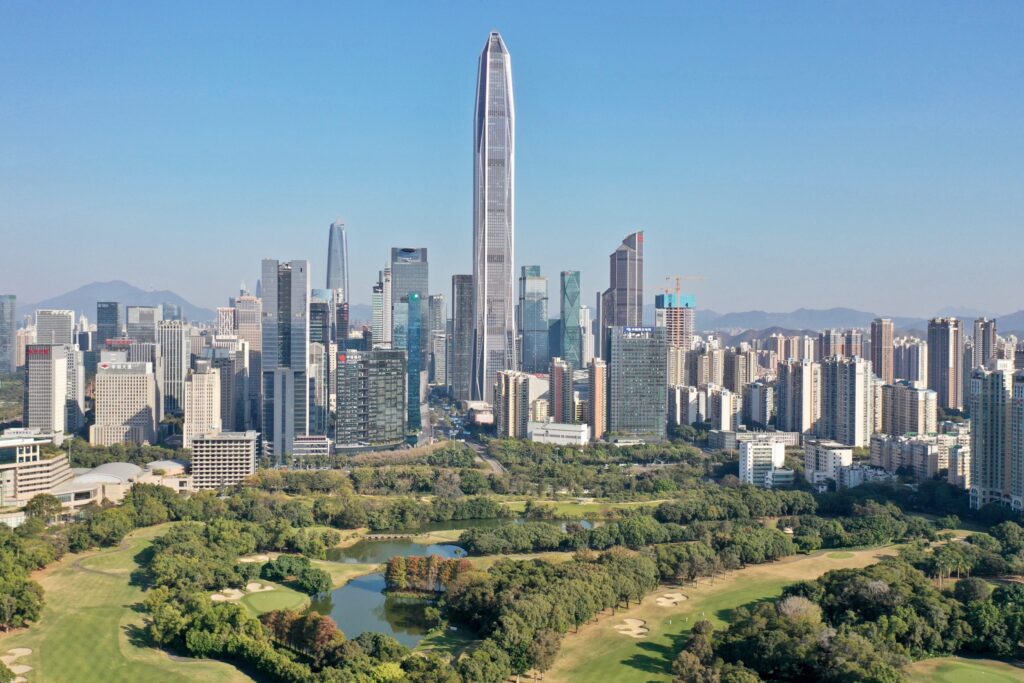
SHENZHEN, July 20 — Shenzhen, the Chinese special economic zone that has grown into a global trading powerhouse, now finds itself wrestling with the reality of increased US tariffs while leaning on a manufacturing base that is diversified.
The city, with a 2020 population of 17.5 million, is the third-most-populous urban area in China, trailing only Shanghai and Beijing, and its nominal GDP now sits among the top ten largest economies in the world — a feat that would have seemed fanciful when its modern incarnation began in the early 1980s. Back then, under reform and opening up, Shenzhen was designated a special economic zone.
It has since surged past Hong Kong and Singapore in GDP, and its Port of Shenzhen is the fourth-busiest container port on the planet. As of 2026, the city ranks as the No. 1 mainland Chinese city for foreign trade, competing with trading heavyweights such as Singapore. The Shenzhen Stock Exchange is one of the largest by market capitalisation, and the city sits within the Guangdong Free-Trade Zone.
The list of major technology corporations headquartered here is a roll call of Chinese industrial might: Huawei, Tencent, DJI, Oppo, and BYD — the latter making Shenzhen the largest automobile manufacturing city in China. For all the noise about Western efforts to decouple supply chains, the city’s economy remains heavily reliant on exports.
It is now adapting by leveraging its diversified manufacturing base, advanced technology sector, and deep integration with global supply chains.
Skyscrapers, headquarters, and a younger workforce
The city has the second-largest number of skyscrapers of any city in the world, and it hosts the seventh-most Fortune Global 500 headquarters. Its population skews younger and includes many migrants from across China — a demographic edge that keeps labour supply relatively flexible. The name Shenzhen itself, it would seem, is a piece of quiet irony: originally meaning “deep drain,” the name was selected in 1978 by Xi Zhongxun, Party Secretary of Guangdong at the time.
The salient point for business observers is that Shenzhen is not a one-trick pony. Its diversified industrial base — from drones and smartphones to electric vehicles and social media platforms — gives it options as tariffs rise.
But the US administration has made clear that it intends to press ahead with trade restrictions. Whether Shenzhen’s strategy of deepening supply-chain integration can offset that pressure remains the open question. For now, the city’s economic weight is undeniable.
Its GDP surpasses that of many nations, and its port continues to hum. But the adaptation story will be one to watch: a metropolis that rose from a deep drain to a global trading giant now has to prove it can navigate choppier geopolitical waters.




