
NEW DELHI, July 26 — The 8th Pay Commission of India, whose recommendations will reshape the compensation of central government employees and pensioners, is expected to deliver its findings in the coming months. The body affects a workforce of considerable size: approximately 3.4 million central government employees (according to 2022 data from the Ministry of Finance) and 5.2 million pensioners, distributed across ministries, departments, and the defence services. For all the noise that typically surrounds such exercises, the salient point is the sheer scale of the state machinery involved.
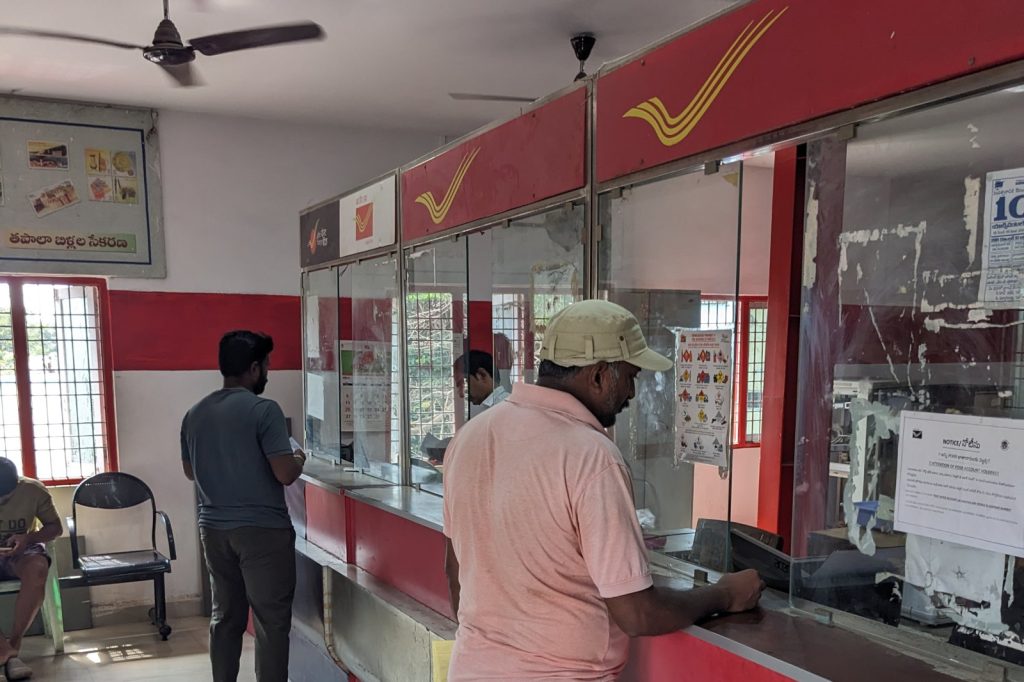
The largest single employer among central government categories is the Indian Railways, with over 1.2 million employees. The Department of Posts employs around 300,000, and the Ministry of Defence, including its civilian staff, represents another substantial bloc.
These numbers, drawn from pre-2022 figures, have likely shifted only modestly since then.
The mechanics of pay revision
Pay commissions are a long-standing Indian institutional mechanism. They set basic pay scales, allowances — including dearness allowance, house rent allowance, and travel allowance — and pension structures for central government personnel. The 7th Pay Commission, which reported in 2015 and took effect from 2016, introduced a uniform pay matrix ranging from Level 1 (entry-level clerical) to Level 18 (secretary-level).
It applied a “fitment factor” of 2.57 to consolidate existing pay and allowances into a single basic pay figure. Notably, around 60 percent of employees were concentrated in Levels 1 to 5 — the lower rungs of the hierarchy.
The 8th Pay Commission is now expected to review this matrix. The source material indicates it will consider inflationary adjustments and address anomalies reported since the 7th Commission’s implementation in 2016. That is a central bureaucratic task, but also an economic one: government salary and pension bills are a significant component of public expenditure.
The 7th Commission’s recommendations increased the annual salary and pension bill by about Rs 1.02 lakh crore, equivalent to approximately 1.5 percent of India’s gross domestic product at the time.
Budgetary implications
The financial impact of the 8th Commission’s decisions will similarly be substantial. The source notes that these decisions will have major budgetary implications and will influence government spending patterns. A pay revision of that magnitude does not occur in a fiscal vacuum; it affects everything from state-level wage demands to the centre’s ability to fund other programmes.
For all the noise about specific allowance rates or fitment multipliers, the broader consequence is the redistribution of public resources toward compensation for the government’s own workforce. It would seem that the timing of the 8th Pay Commission’s deliberation — formally set in motion by the government in early 2026 — places it against a backdrop of moderate inflation and modest GDP growth.
The precise recommendations, when they emerge, will be parsed not just by the current and former employees directly affected, but by state governments, public sector enterprises, and even private sector firms that often benchmark their own salary structures to central government scales. The commission’s work is, in essence, a negotiation within a closed system: the government as employer, the government as regulator, and the government as fiscal steward.
The numbers involved are large enough to matter for aggregate demand — 3.4 million employees and 5.2 million pensioners constitute a significant consumer base. But the source material does not offer speculation on the precise outcome; it confines itself to the known parameters: the review of the pay matrix, the correction of anomalies, and the inevitable budgetary arithmetic.
For now, the 8th Pay Commission remains a work in progress. What is clear is that its final report will directly affect more than eight million individuals, indirectly influence the compensation norms of others in state and central public sector jobs, and carry a fiscal imprint measured in a fraction of the country’s GDP. The next few months will show whether the commission’s recommendations tilt toward salary expansion at the lower levels — where a large share of employees sit — or toward restructuring at the upper end.
Either way, the Treasury will have to account for it.
Sources
{“@context”: “https://schema.org”, “@type”: “NewsArticle”, “headline”: “Central Government Employee Data: 3.4 Million Served by Pay Commissions”, “description”: “NEW DELHI, July 26 — The 8th Pay Commission of India, whose recommendations will reshape the compensation of central government employees and pensioners, is expected…”, “datePublished”: “2026-07-26T09:30:00+00:00”, “author”: {“@type”: “Person”, “name”: “Ethan Smith”}, “publisher”: {“@type”: “Organization”, “name”: “InfoPulse Today”, “url”: “https://newsfeed.infopulsetoday.com/”}, “citation”: [{“@type”: “CreativeWork”, “url”: “https://en.wikipedia.org/wiki/Civil_Services_of_India”}]}




