
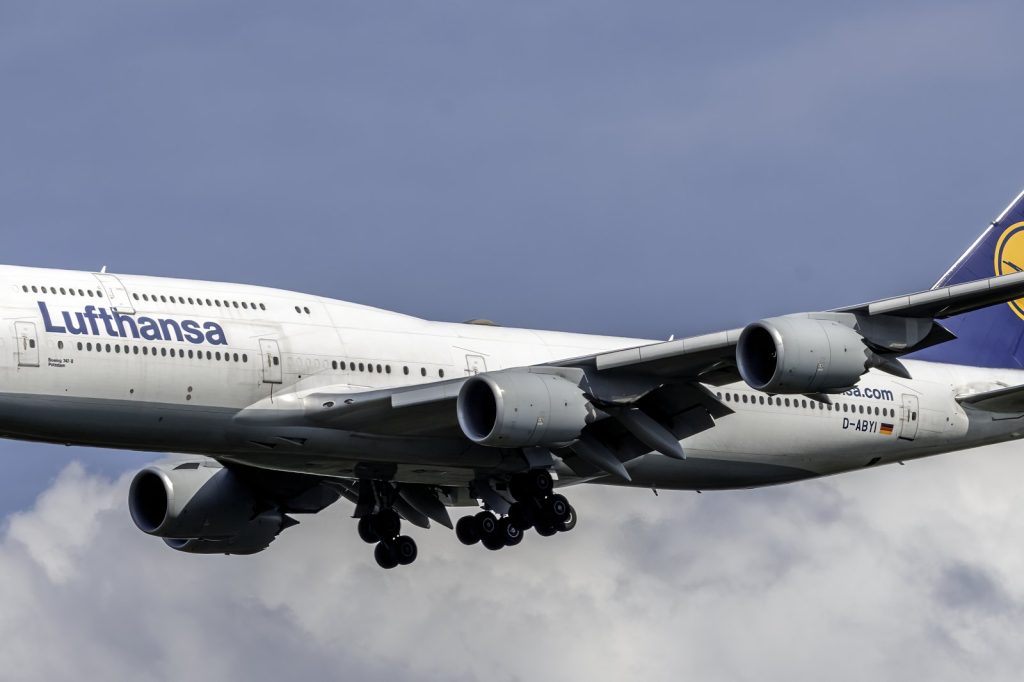
SEATTLE, July 10 — The last Boeing 747 rolled off the assembly line four years ago, but the aircraft that reshaped global aviation is still rewriting the economics of flight in retrospect. The numbers tell a story that the spin cannot obscure. The 747 was the world’s first wide-body airliner, first flown on February 9, 1969, and introduced by Pan Am on January 22, 1970.
Under the leadership of Boeing engineer Joe Sutter, the design team created that distinctive hump upper deck. The Pratt & Whitney JT9D engines were the first high-bypass turbofans — the mechanical core of a bet that paid off.
Here is the claim that matters: the 747 reduced the cost of air travel by 30 to 50 percent compared to earlier jets. The mechanics here are straightforward. A single aircraft carrying up to 366 passengers in a three-class configuration — and over 500 in high-density layouts — could spread the fixed costs of fuel, crew, and airport fees across far more seats than any previous commercial jet.
That arithmetic enabled mass tourism. Before the 747, flying was a luxury; after it, a mechanism for moving millions.
The catch is that the 747 did not just change how people flew. It changed what airlines could charge. The cost reduction was not a marketing slogan; it was a structural shift in the industry’s unit economics.
Follow the money: lower seat-mile costs meant lower ticket prices, which meant more passengers, which meant more routes, which meant more planes. Over 1,500 747s were built. Production ended in 2022.
The variants tell the story of a platform that kept evolving. The 747-400 arrived in 1989, the 747-8 in 2011.
Each iteration squeezed more efficiency from the same basic architecture. The aircraft also served as Air Force One — the VC-25A — and as a cargo freighter. The freighter role is the one that still matters: the 747’s nose-loading capability and range make it a workhorse for air freight even as passenger airlines have moved on.
On closer reading, the retirement timeline reveals the pattern. Delta retired its 747s in 2017.
United did the same in 2017. British Airways followed in 2020. The major airlines walked away, but the aircraft did not disappear.
Many 747s continue flying as freighters, their passenger seats stripped out, their economics still viable for cargo operators who care about volume and range, not cabin configuration. The 747’s legacy is not nostalgia. It is a case study in how a single engineering decision — the wide-body, the high-bypass engine, the double-deck hump — created a cascade of consequences that remade an entire industry.
The cost of air travel dropped by a third to a half. That is not a sentiment.
That is arithmetic. What to watch next is whether the 747’s successors — the 777, the 787, the A350 — can match that kind of structural impact. The 747 proved that a single aircraft can reset the economics of an entire mode of transport.
The bar is that high.
{“@context”: “https://schema.org”, “@type”: “NewsArticle”, “headline”: “Boeing 747: The ‘Jumbo Jet’ That Democratized Global Air Travel”, “description”: “SEATTLE, July 10 — The last Boeing 747 rolled off the assembly line four years ago, but the aircraft that reshaped global aviation is still…”, “datePublished”: “2026-07-10T09:30:00+00:00”, “author”: {“@type”: “Person”, “name”: “Beatrice Ferrari”}, “publisher”: {“@type”: “Organization”, “name”: “InfoPulse Today”, “url”: “https://newsfeed.infopulsetoday.com/”}}




